Voetsch Karen, Sequeira Sonia, Chavez Amy Holmes
Centers for Disease Control and Prevention, 4770 Buford Hwy, Atlanta, GA 30341. Email:
National Center for Chronic Disease Prevention and Health Promotion, Centers for Disease Control and Prevention, Atlanta, Georgia; Oak Ridge Institute for Science and Education, Oak Ridge, Tennessee.
Prev Chronic Dis. 2016 Mar 31;13:E43. doi: 10.5888/pcd13.150509.
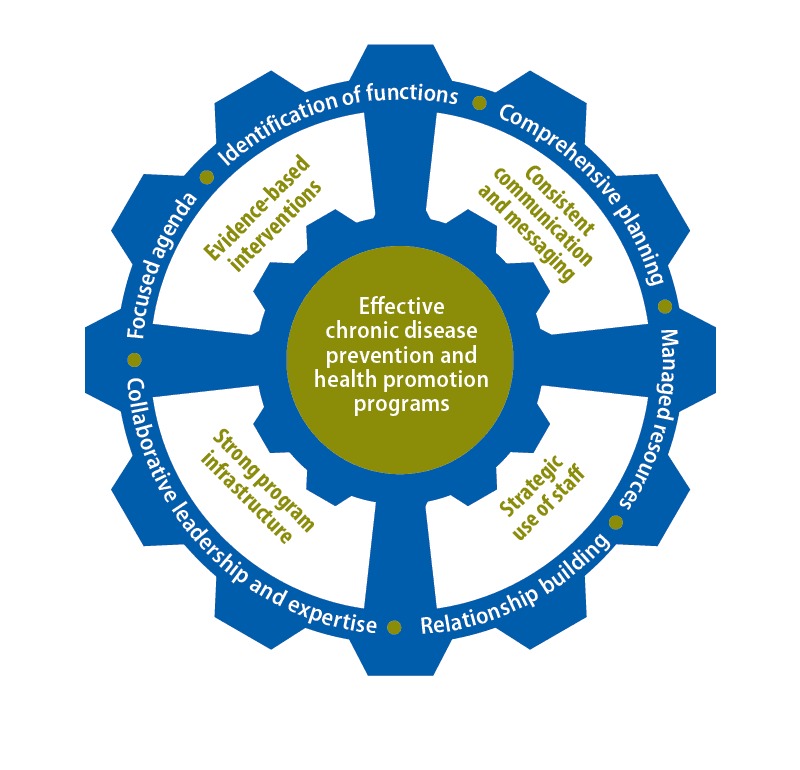
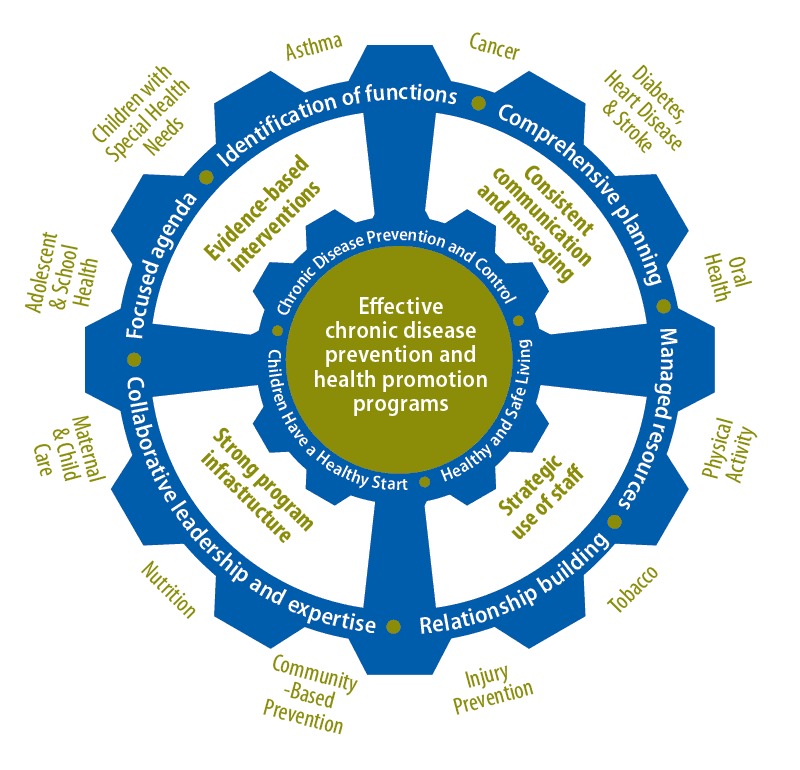
In 2012, the Centers for Disease Control and Prevention provided funding and technical assistance to all states and territories to implement the Coordinated Chronic Disease Program, marking the first time that all state health departments had federal resources to coordinate chronic disease prevention and control programs. This article describes lessons learned from this initiative and identifies key elements of a coordinated approach. We analyzed 80 programmatic documents from 21 states and conducted semistructured interviews with 7 chronic disease directors. Six overarching themes emerged: 1) focused agenda, 2) identification of functions, 3) comprehensive planning, 4) collaborative leadership and expertise, 5) managed resources, and 6) relationship building. These elements supported 4 essential activities: 1) evidence-based interventions, 2) strategic use of staff, 3) consistent communication, and 4) strong program infrastructure. On the basis of these elements and activities, we propose a conceptual model that frames overarching concepts, skills, and strategies needed to coordinate state chronic disease prevention and control programs.
2012年,疾病控制与预防中心向所有州和领地提供资金及技术援助,以实施慢性病协调项目,这标志着所有州卫生部门首次获得联邦资源来协调慢性病预防与控制项目。本文介绍了从该倡议中吸取的经验教训,并确定了协调方法的关键要素。我们分析了来自21个州的80份项目文件,并对7位慢性病主任进行了半结构化访谈。出现了六个总体主题:1)重点议程,2)职能识别,3)全面规划,4)协作式领导与专业知识,5)资源管理,6)关系建立。这些要素支持了四项基本活动:1)基于证据的干预措施,2)员工的战略利用,3)持续沟通,4)强大的项目基础设施。基于这些要素和活动,我们提出了一个概念模型,该模型构建了协调州慢性病预防与控制项目所需的总体概念、技能和策略。