Butler James S, Chan Amy, Costelha Susete, Fishman Shannon, Willoughby Jennifer L S, Borland Todd D, Milstein Stuart, Foster Donald J, Gonçalves Paula, Chen Qingmin, Qin June, Bettencourt Brian R, Sah Dinah W, Alvarez Rene, Rajeev Kallanthottathil G, Manoharan Muthiah, Fitzgerald Kevin, Meyers Rachel E, Nochur Saraswathy V, Saraiva Maria J, Zimmermann Tracy S
a Alnylam Pharmaceuticals , Cambridge , MA , USA .
b Instituto de Investigação e Inovação em Saúde, Universidade do Porto , Porto , Portugal .
Amyloid. 2016 Jun;23(2):109-18. doi: 10.3109/13506129.2016.1160882. Epub 2016 Mar 31.
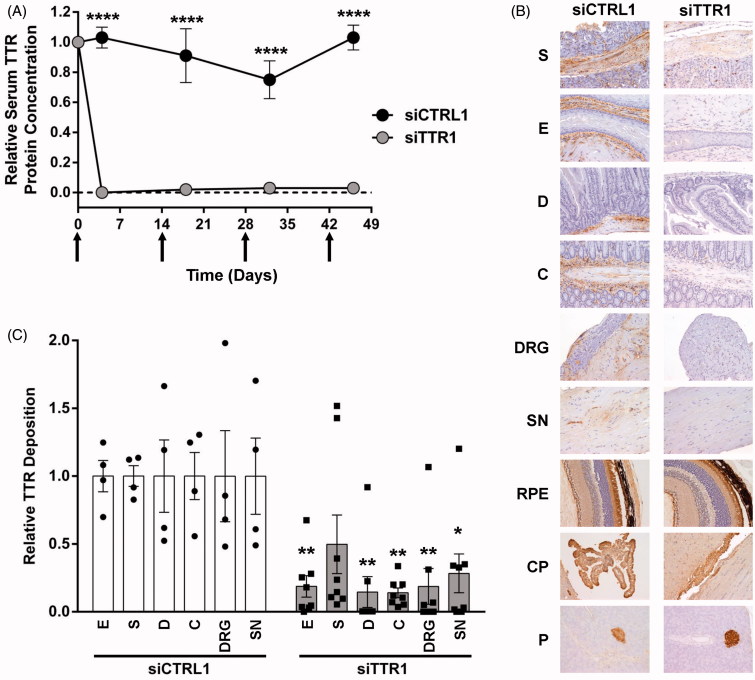
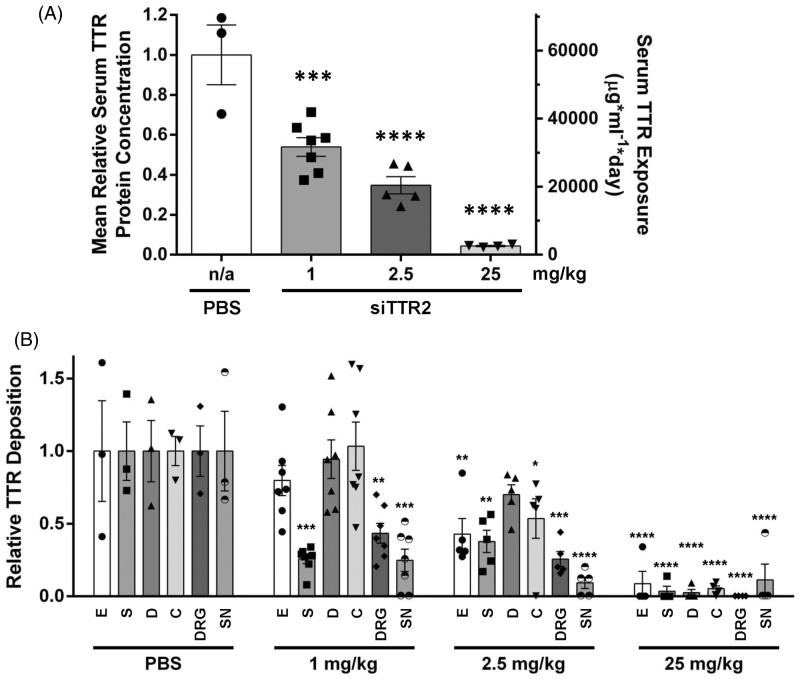
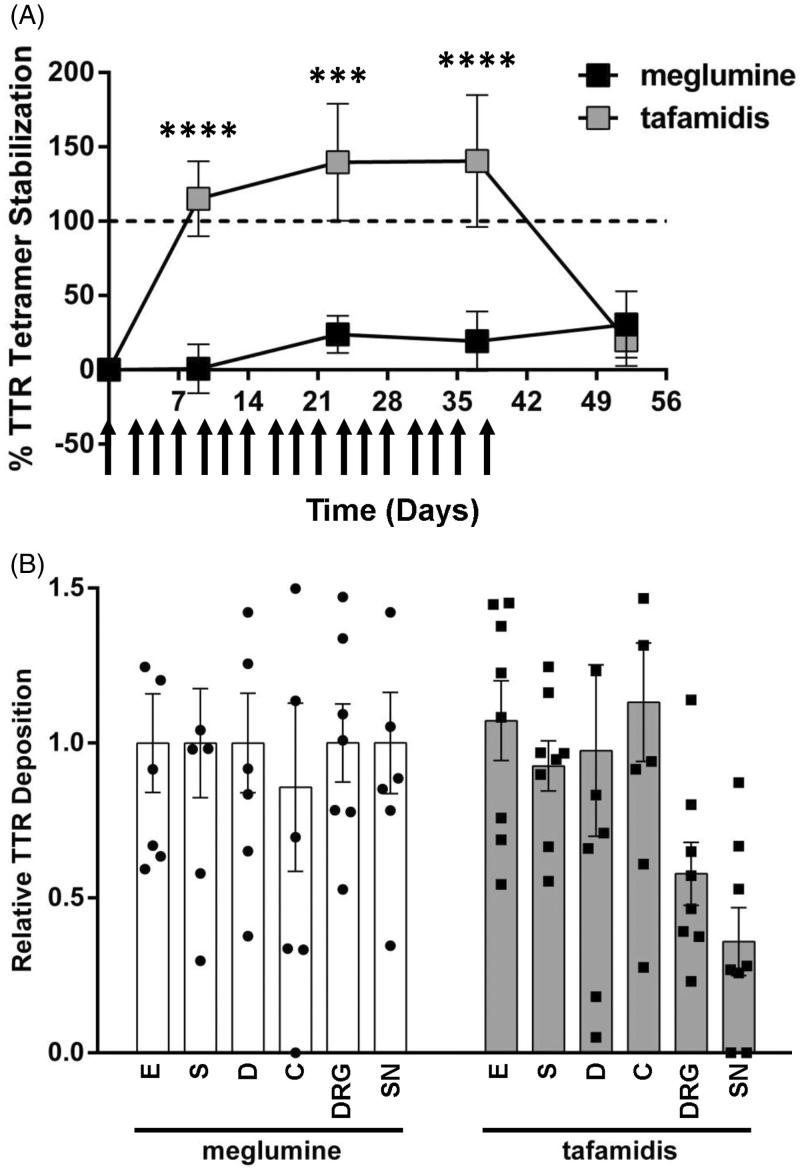
ATTR amyloidosis is a systemic, debilitating and fatal disease caused by transthyretin (TTR) amyloid accumulation. RNA interference (RNAi) is a clinically validated technology that may be a promising approach to the treatment of ATTR amyloidosis. The vast majority of TTR, the soluble precursor of TTR amyloid, is expressed and synthesized in the liver. RNAi technology enables robust hepatic gene silencing, the goal of which would be to reduce systemic levels of TTR and mitigate many of the clinical manifestations of ATTR that arise from hepatic TTR expression. To test this hypothesis, TTR-targeting siRNAs were evaluated in a murine model of hereditary ATTR amyloidosis. RNAi-mediated silencing of hepatic TTR expression inhibited TTR deposition and facilitated regression of existing TTR deposits in pathologically relevant tissues. Further, the extent of deposit regression correlated with the level of RNAi-mediated knockdown. In comparison to the TTR stabilizer, tafamidis, RNAi-mediated TTR knockdown led to greater regression of TTR deposits across a broader range of affected tissues. Together, the data presented herein support the therapeutic hypothesis behind TTR lowering and highlight the potential of RNAi in the treatment of patients afflicted with ATTR amyloidosis.
转甲状腺素蛋白(TTR)淀粉样变性是一种由转甲状腺素蛋白淀粉样物质积累引起的全身性、使人衰弱的致命疾病。RNA干扰(RNAi)是一种经过临床验证的技术,可能是治疗转甲状腺素蛋白淀粉样变性的一种有前景的方法。绝大多数转甲状腺素蛋白淀粉样物质的可溶性前体TTR在肝脏中表达和合成。RNAi技术能够实现强大的肝脏基因沉默,其目标是降低全身TTR水平,并减轻因肝脏TTR表达而产生的许多转甲状腺素蛋白淀粉样变性的临床表现。为了验证这一假设,在遗传性转甲状腺素蛋白淀粉样变性小鼠模型中评估了靶向TTR的小干扰RNA(siRNA)。RNAi介导的肝脏TTR表达沉默抑制了TTR沉积,并促进了病理相关组织中现有TTR沉积物的消退。此外,沉积物消退的程度与RNAi介导的敲低水平相关。与TTR稳定剂他氟米特相比,RNAi介导的TTR敲低在更广泛的受影响组织中导致TTR沉积物的更大消退。总之,本文提供的数据支持降低TTR背后的治疗假设,并突出了RNAi在治疗转甲状腺素蛋白淀粉样变性患者中的潜力。