Zhong Lin, Li Hao, Li Zhiqiang, Shi Baojie, Wang PuSen, Wang ChunGuang, Fan Junwei, Sun Hongcheng, Wang Peiwen, Qin Xuebin, Peng Zhihai
Department of General Surgery, Shanghai Jiao Tong University Affiliated First People's Hospital, 85 Wu Jing Road, 200080, China.
Bio-X Institutes, Key Laboratory for the Genetics of Developmental and Neuropsychiatric Disorders, Shanghai Jiao Tong University, Shanghai, China.
Sci Rep. 2016 Apr 11;6:24121. doi: 10.1038/srep24121.
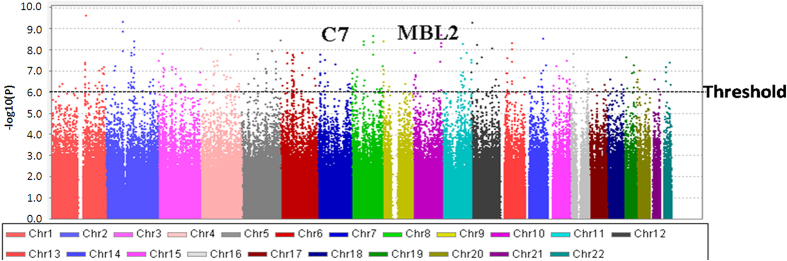
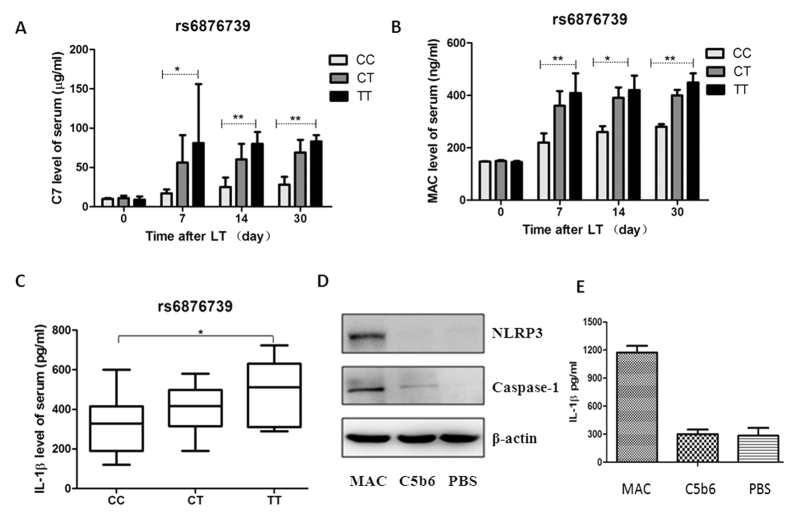
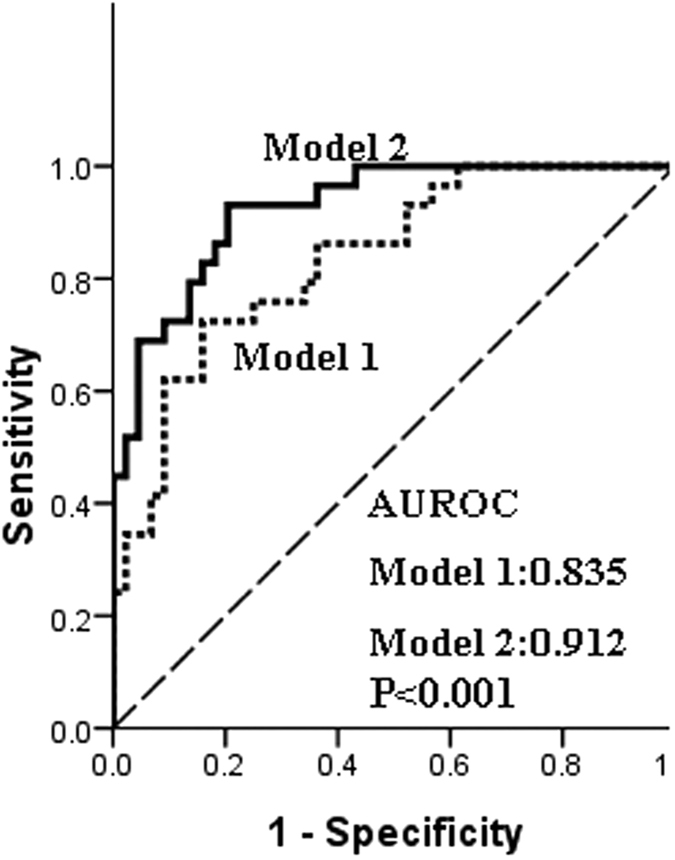
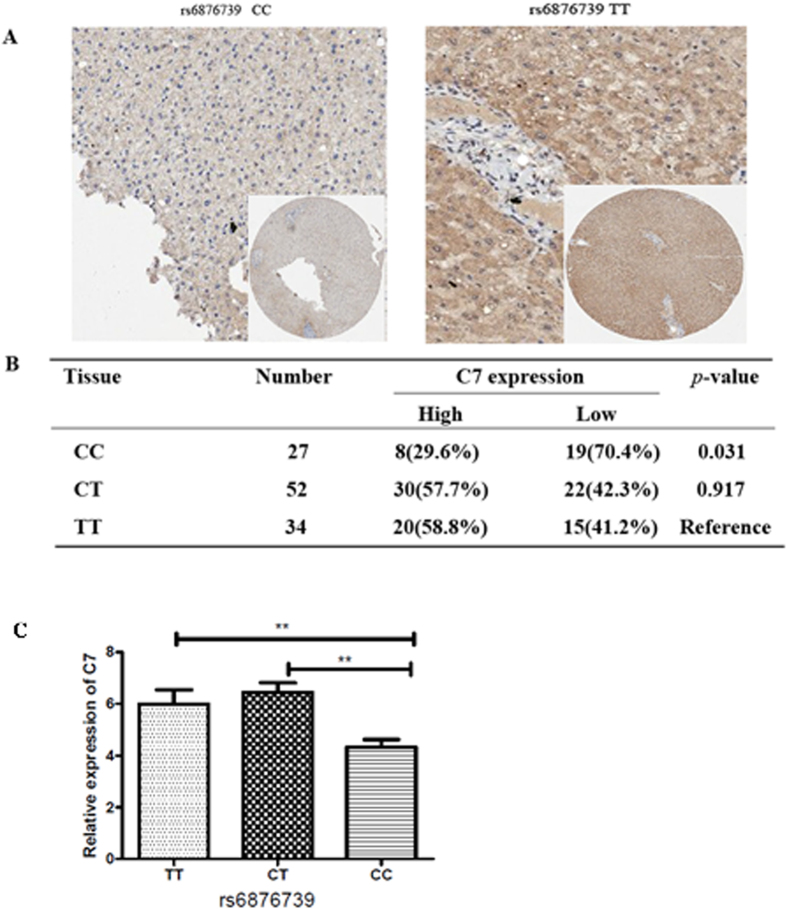
Post-transplantation infection causes high mortality and remains a significant challenge. High clinical risk factors for bacterial infection in recipients are often found in critically ill patients. However, for some recipients, bacterial infections are inevitable. It is conceivable that this susceptibility may be related to the genetics of the donor and recipient. Using expression quantitative trait loci (eQTL) analysis, we found that the C7 rs6876739 CC genotypes and mannan-binding lectin (MBL2) gene polymorphisms of liver donors were significantly associated with bacterial infection in recipients. In an extended validation group of 113 patients, donor C7 rs6876739 genetic variation was an independent risk factor for bacterial infection. The donor C7 rs6876739 CC genotype was associated with lower levels of recipient C7 protein, soluble membrane attack complex (MAC), and IL-1β expression compared with the donor C7 rs6876739 TT genotype. In vitro, the MAC significantly triggered NLRP3 inflammasome activation and IL-1β release, suggesting that the mechanism by which C7 defends against bacteria may involve MAC formation, leading to NLRP3 inflammasome activation and IL-1β release. Our findings may be helpful in identifying transplantation recipients at risk of bacterial infection prior to surgery and may contribute to novel infection prevention strategies and the improvement of postoperative outcomes.
移植后感染导致高死亡率,仍然是一个重大挑战。接受者发生细菌感染的高临床风险因素常见于重症患者。然而,对于一些接受者来说,细菌感染是不可避免的。可以想象,这种易感性可能与供体和受体的基因有关。通过表达数量性状位点(eQTL)分析,我们发现肝脏供体的C7 rs6876739 CC基因型和甘露糖结合凝集素(MBL2)基因多态性与接受者的细菌感染显著相关。在一个由113名患者组成的扩大验证组中,供体C7 rs6876739基因变异是细菌感染的独立危险因素。与供体C7 rs6876739 TT基因型相比,供体C7 rs6876739 CC基因型与接受者较低水平的C7蛋白、可溶性膜攻击复合物(MAC)和IL-1β表达相关。在体外,MAC显著触发NLRP3炎性小体激活和IL-1β释放,这表明C7抵御细菌的机制可能涉及MAC形成,导致NLRP3炎性小体激活和IL-1β释放。我们的研究结果可能有助于在手术前识别有细菌感染风险的移植接受者,并可能有助于制定新的感染预防策略和改善术后结果。