Guo Wei, Guan Xiao, Pan Xiaodong, Sun Xiongshan, Wang Fangjie, Ji Yan, Huang Pei, Deng Yafei, Zhang Qi, Han Qi, Yi Ping, Namaka Michael, Liu Ya, Deng Youcai, Li Xiaohui
Institute of Materia Medica, College of Pharmacy, Third Military Medical University, Chongqing 400038, China.
Department of Pharmacy, Southwest Hospital, Third Military Medical University, Chongqing 400038, China.
PLoS One. 2016 Apr 13;11(4):e0153434. doi: 10.1371/journal.pone.0153434. eCollection 2016.
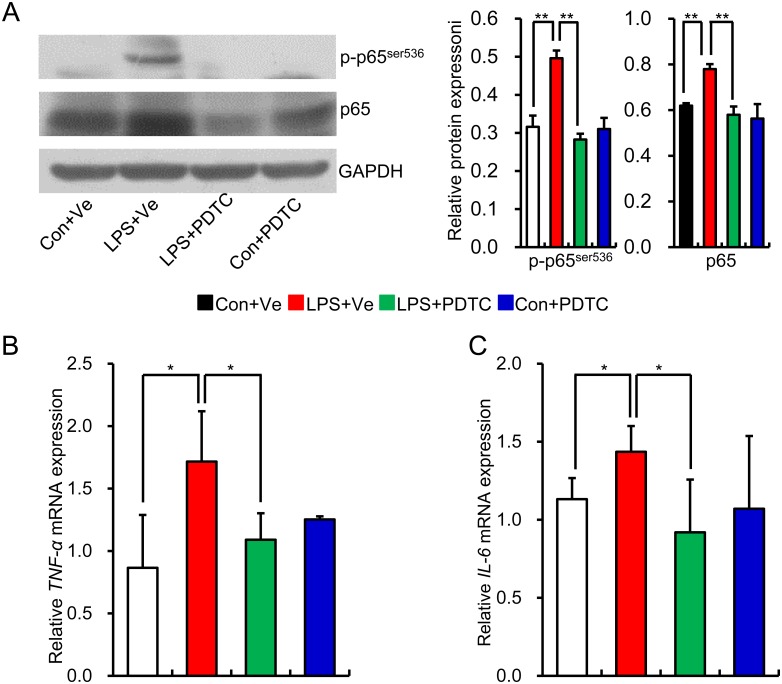
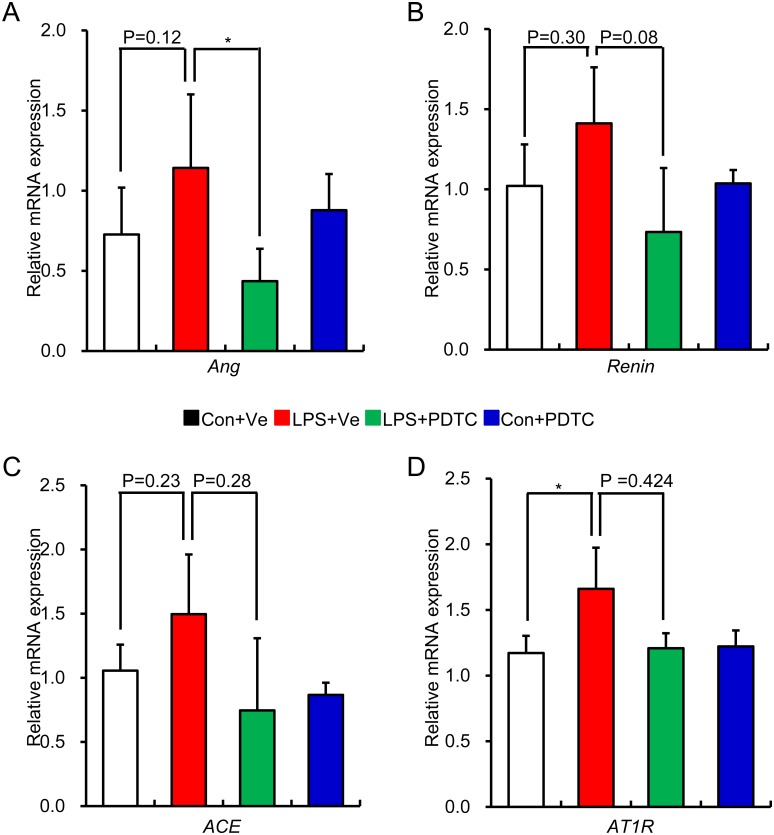
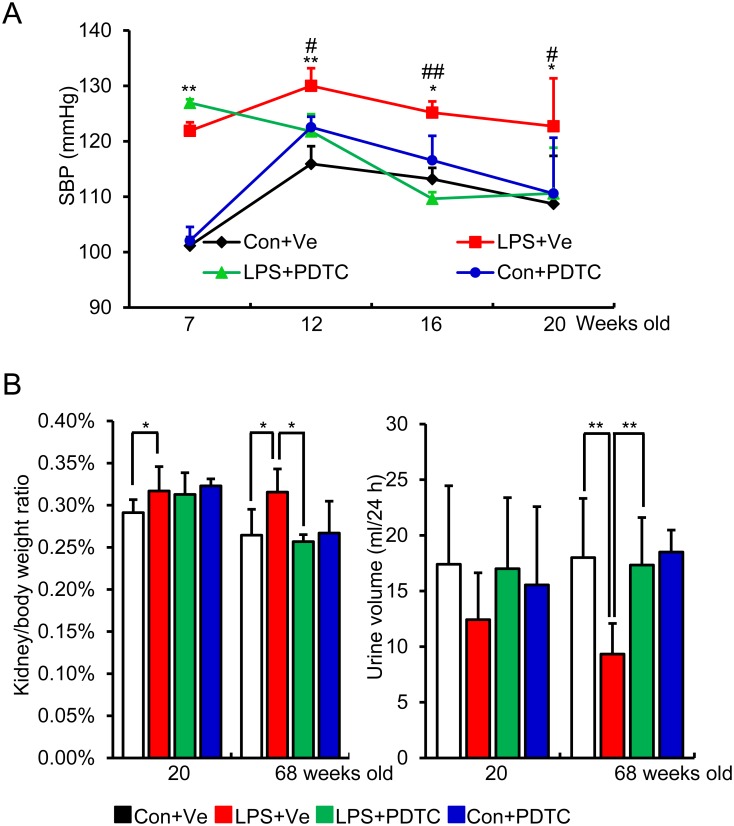
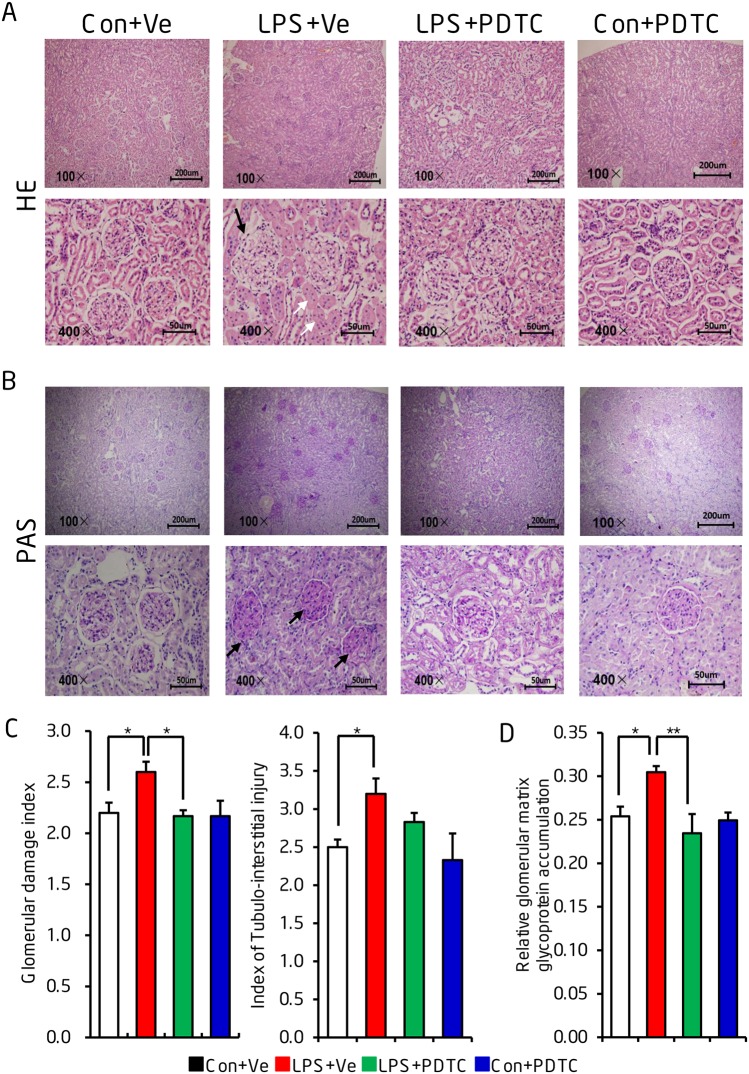
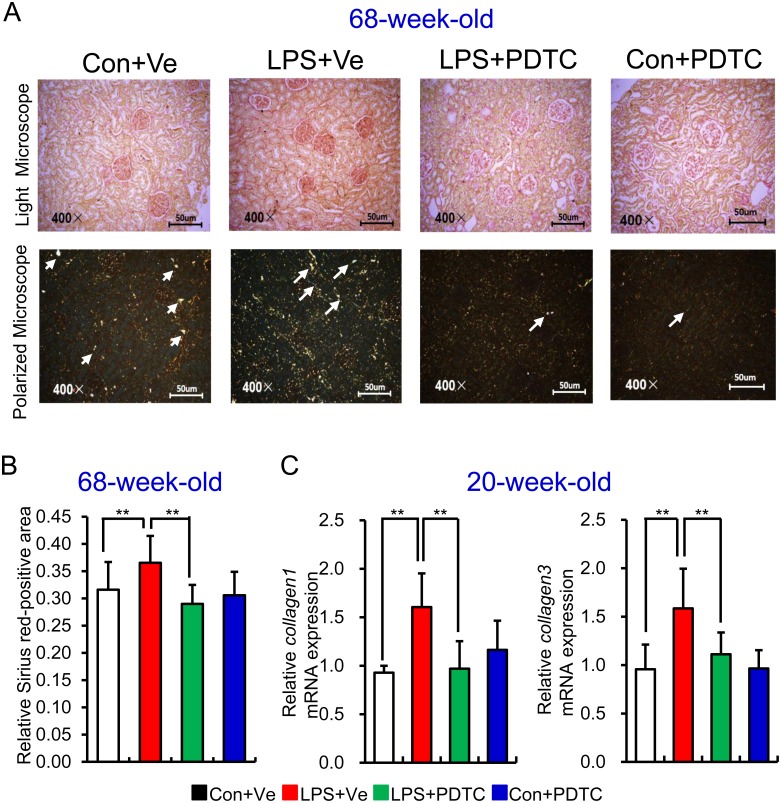
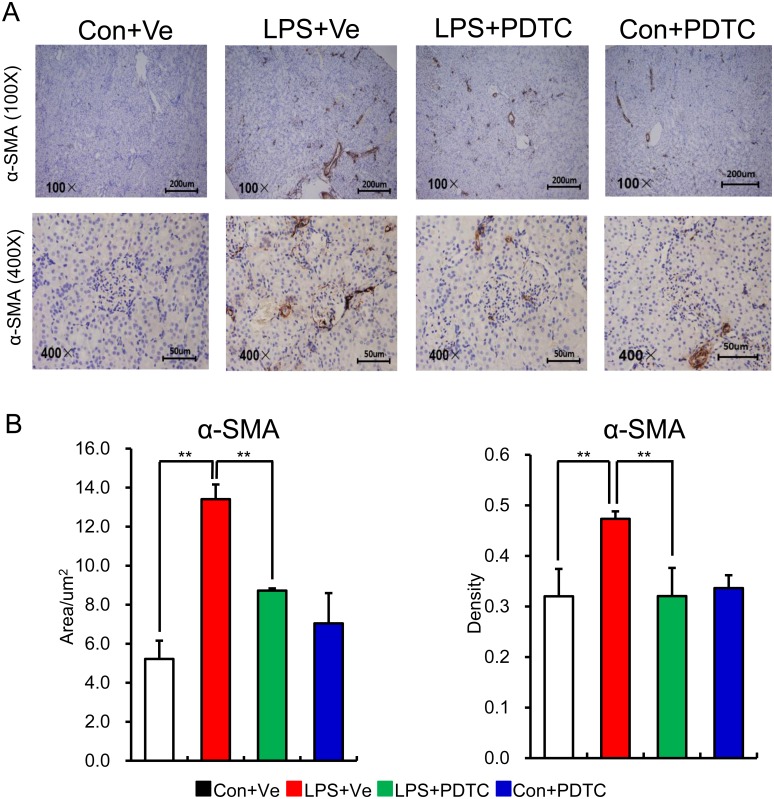
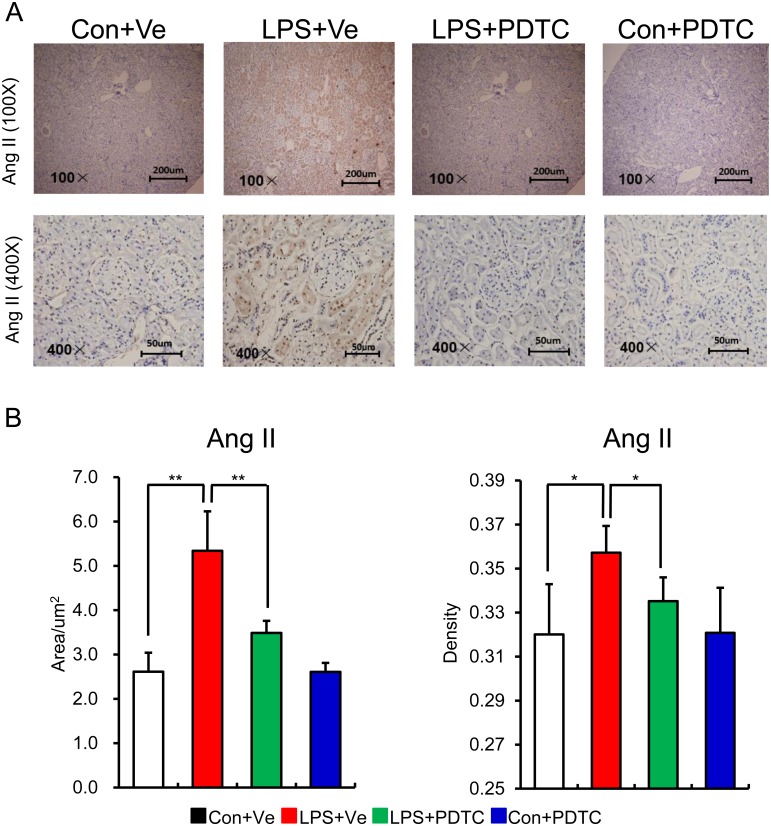
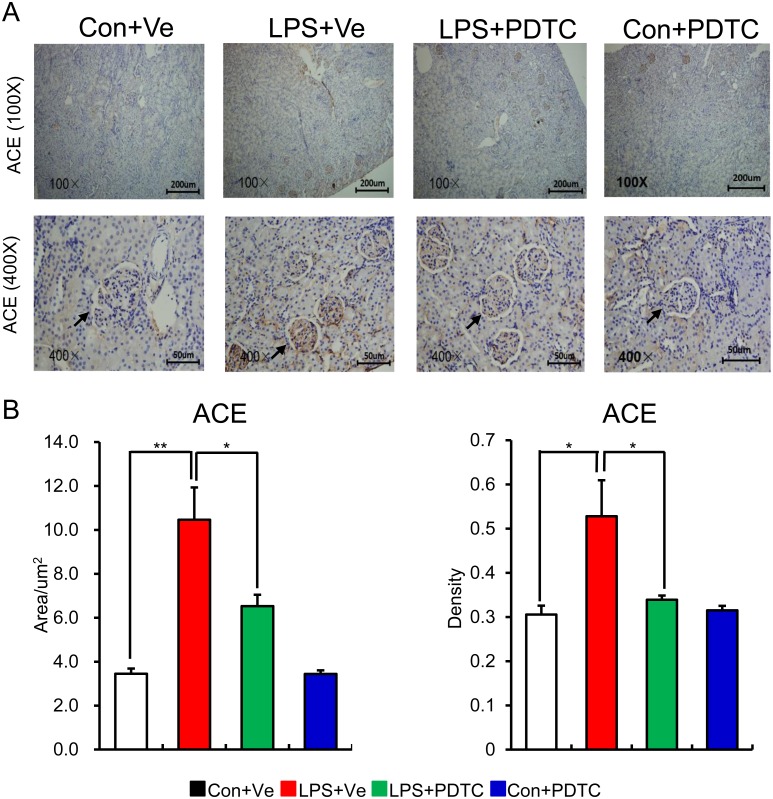
Prenatal exposure to an inflammatory stimulus has been shown to cause renal damage in offspring. Our present study explored the role of intra-renal NF-κB activation in the development of progressive renal fibrosis in offspring that underwent prenatal exposure to an inflammatory stimulus. Time-dated pregnant rats were treated with saline (control group) or 0.79 mg/kg lipopolysaccharide (LPS) through intra-peritoneal injection on gestational day 8, 10 and 12. At the age of 7 weeks, offspring from control or LPS group were treated with either tap water (Con+Ve or LPS+Ve group) or pyrollidine dithiocarbamate (PDTC, 120 mg/L), a NF-κB inhibitor, via drinking water starting (Con+PDTC or LPS+PDTC group), respectively, till the age of 20 or 68 weeks. The gross structure of kidney was assessed by hematoxylin-eosin, periodic acid-Schiff staining and Sirius red staining. The expression levels of TNF-α, IL-6, α-smooth muscle actin (α-SMA) and renin-angiotensin system (RAS) genes were determined by real time polymerase chain reaction and/or immunohistochemical staining. Our data showed that post-natal persistent PDTC administration efficiently repressed intra-renal NF-κB activation, TNF-α and IL-6 expression. Post-natal PDTC also prevented intra-renal glycogen deposition and collagenous fiber generation as evident by the reduced expression of collagen III and interstitial α-SMA in offspring of prenatal LPS exposure. Furthermore, post-natal PDTC administration reversed the intra-renal renin-angiotensin system (RAS) over-activity in offspring of prenatal LPS exposure. In conclusion, prenatal inflammatory exposure results in offspring's intra-renal NF-κB activation along with inflammation which cross-talked with excessive RAS activation that caused exacerbation of renal fibrosis and dysfunction in the offspring. Thus, early life prevention of NF-κB activation may be a potential preventive strategy for chronic renal inflammation and progressive renal damage.
产前暴露于炎症刺激已被证明会导致后代肾损伤。我们目前的研究探讨了肾内NF-κB激活在产前暴露于炎症刺激的后代进行性肾纤维化发展中的作用。在妊娠第8、10和12天,对妊娠大鼠腹腔注射生理盐水(对照组)或0.79 mg/kg脂多糖(LPS)。在7周龄时,对照组或LPS组的后代分别通过饮用自来水(Con+Ve或LPS+Ve组)或吡咯烷二硫代氨基甲酸盐(PDTC,120 mg/L),一种NF-κB抑制剂(Con+PDTC或LPS+PDTC组),直至20或68周龄。通过苏木精-伊红染色、高碘酸-希夫染色和天狼星红染色评估肾脏的大体结构。通过实时聚合酶链反应和/或免疫组织化学染色测定肿瘤坏死因子-α(TNF-α)、白细胞介素-6(IL-6)、α-平滑肌肌动蛋白(α-SMA)和肾素-血管紧张素系统(RAS)基因的表达水平。我们的数据表明,产后持续给予PDTC可有效抑制肾内NF-κB激活、TNF-α和IL-6表达。产后给予PDTC还可防止肾内糖原沉积和胶原纤维生成,这在产前LPS暴露后代中胶原III和间质α-SMA表达降低中得到明显体现。此外,产后给予PDTC可逆转产前LPS暴露后代肾内肾素-血管紧张素系统(RAS)的过度激活。总之,产前炎症暴露导致后代肾内NF-κB激活以及炎症,炎症与过度的RAS激活相互作用,导致后代肾纤维化和功能障碍加剧。因此,早期预防NF-κB激活可能是预防慢性肾炎症和进行性肾损伤的潜在策略。