• 文献检索
  • 文档翻译
  • 深度研究
  • 学术资讯
  • Suppr Zotero 插件Zotero 插件
  • 邀请有礼
  • 套餐&价格
  • 历史记录
应用&插件
Suppr Zotero 插件Zotero 插件浏览器插件Mac 客户端Windows 客户端微信小程序
定价
高级版会员购买积分包购买API积分包
服务
文献检索文档翻译深度研究API 文档MCP 服务
关于我们
关于 Suppr公司介绍联系我们用户协议隐私条款
关注我们

Suppr 超能文献

核心技术专利:CN118964589B侵权必究
粤ICP备2023148730 号-1Suppr @ 2026

文献检索

告别复杂PubMed语法,用中文像聊天一样搜索,搜遍4000万医学文献。AI智能推荐,让科研检索更轻松。

立即免费搜索

文件翻译

保留排版,准确专业,支持PDF/Word/PPT等文件格式,支持 12+语言互译。

免费翻译文档

深度研究

AI帮你快速写综述,25分钟生成高质量综述,智能提取关键信息,辅助科研写作。

立即免费体验

疑似寨卡病毒相关先天性感染和小头畸形的临床特征及神经影像学(CT和MRI)表现:回顾性病例系列研究

Clinical features and neuroimaging (CT and MRI) findings in presumed Zika virus related congenital infection and microcephaly: retrospective case series study.

作者信息

de Fatima Vasco Aragao Maria, van der Linden Vanessa, Brainer-Lima Alessandra Mertens, Coeli Regina Ramos, Rocha Maria Angela, Sobral da Silva Paula, Durce Costa Gomes de Carvalho Maria, van der Linden Ana, Cesario de Holanda Arthur, Valenca Marcelo Moraes

机构信息

Centro Diagnostico Multimagem, Rua Frei Matias Tevis, 194, Ilha do Leite Recife Pernambuco 52010-450, Brazil; Medical School, Mauricio de Nassau University, Recife, Pernambuco, Brazil

Association for Assistance of Disabled Children, Recife, Brazil; Barão de Lucena Hospital, Recife, Brazil.

出版信息

BMJ. 2016 Apr 13;353:i1901. doi: 10.1136/bmj.i1901.

DOI:10.1136/bmj.i1901
PMID:27075009
原文链接:https://pmc.ncbi.nlm.nih.gov/articles/PMC4830901/
Abstract

OBJECTIVE

To report radiological findings observed in computed tomography (CT) and magnetic resonance imaging (MRI) scans of the first cases of congenital infection and microcephaly presumably associated with the Zika virus in the current Brazilian epidemic.

DESIGN

Retrospective study with a case series.

SETTING

Association for Assistance of Disabled Children (AACD), Pernambuco state, Brazil.

PARTICIPANTS

23 children with a diagnosis of congenital infection presumably associated with the Zika virus during the Brazilian microcephaly epidemic.

MAIN OUTCOME MEASURES

Types of abnormalities and the radiological pattern of lesions identified on CT and MRI brain scans.

RESULTS

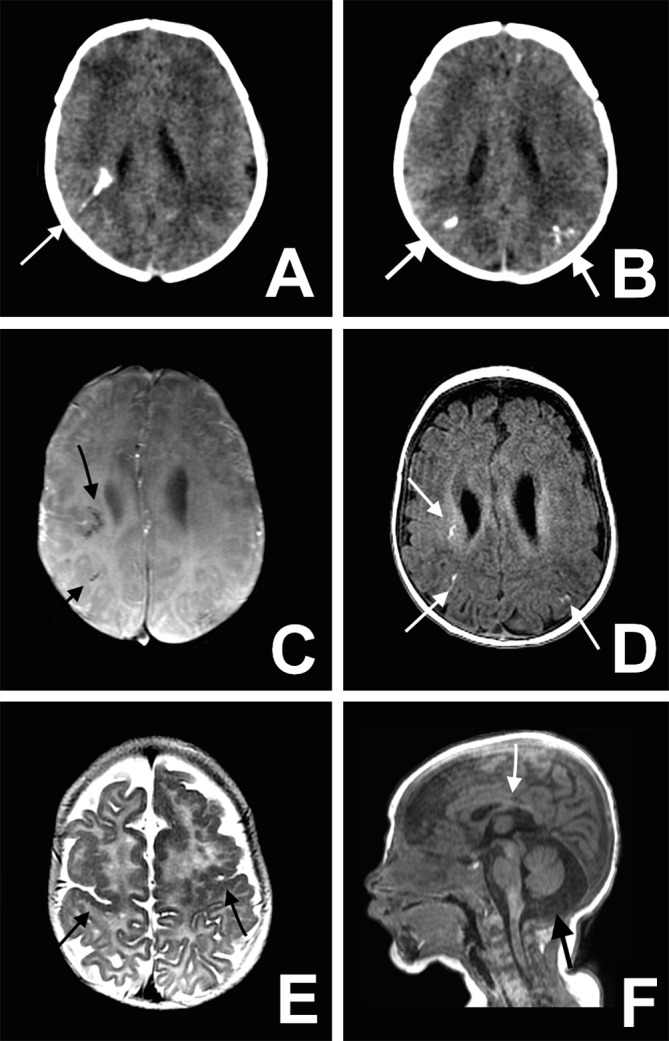
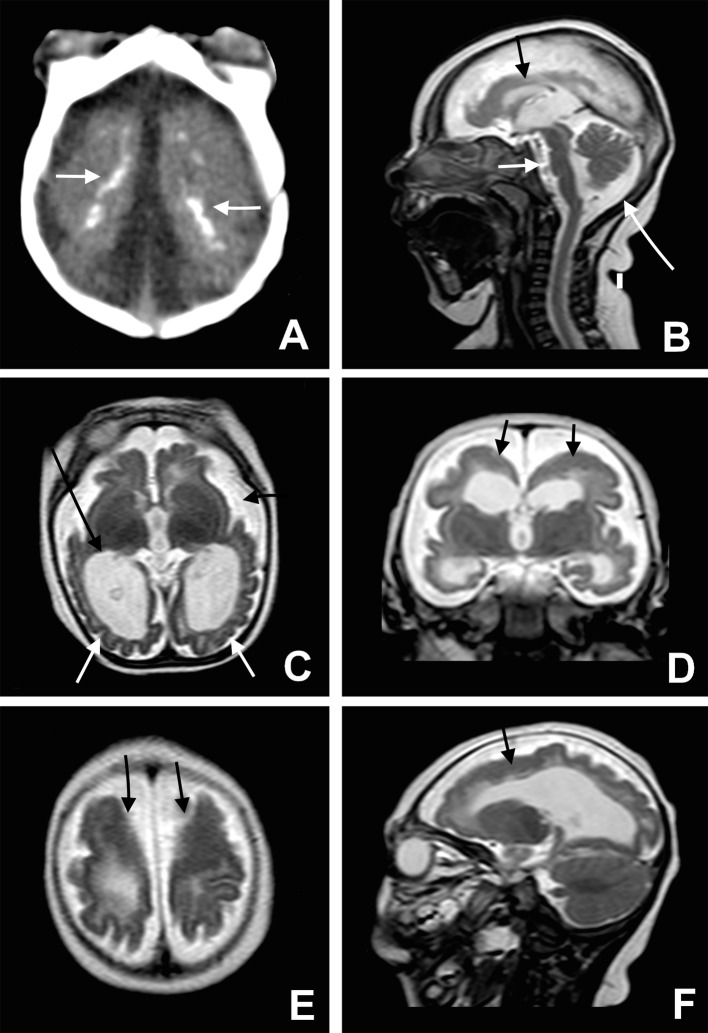
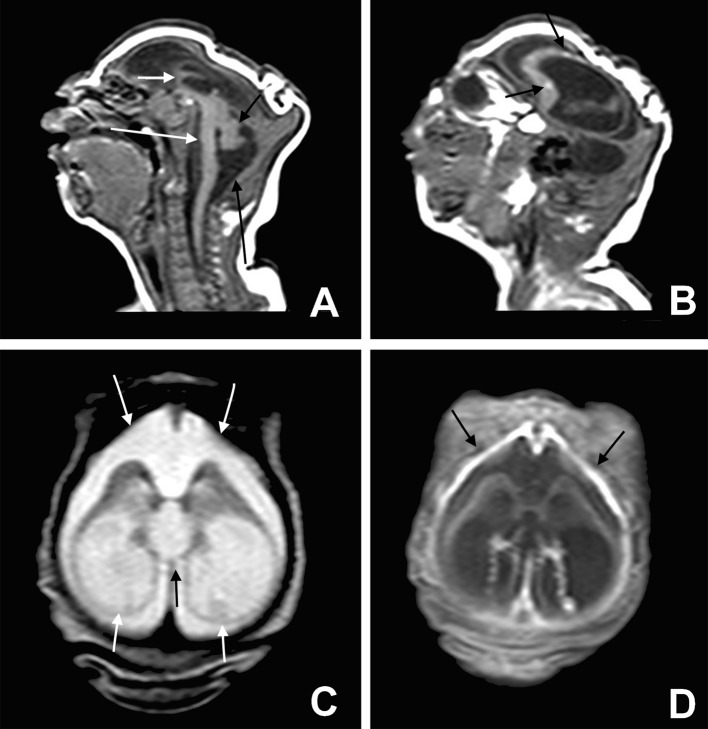
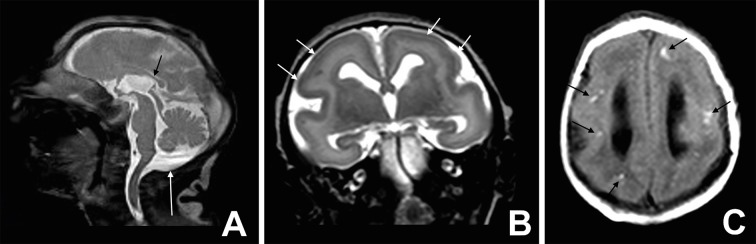
Six of the 23 children tested positive for IgM antibodies to Zika virus in cerebrospinal fluid. The other 17 children met the protocol criteria for congenital infection presumably associated with the Zika virus, even without being tested for IgM antibodies to the virus--the test was not yet available on a routine basis. Of the 23 children, 15 underwent CT, seven underwent both CT and MRI, and one underwent MRI. Of the 22 children who underwent CT, all had calcifications in the junction between cortical and subcortical white matter, 21 (95%) had malformations of cortical development, 20 (91%) had a decreased brain volume, 19 (86%) had ventriculomegaly, and 11 (50%) had hypoplasia of the cerebellum or brainstem. Of the eight children who underwent MRI, all had calcifications in the junction between cortical and subcortical white matter, malformations of cortical development occurring predominantly in the frontal lobes, and ventriculomegaly. Seven of the eight (88%) children had enlarged cisterna magna, seven (88%) delayed myelination, and six each (75%) a moderate to severe decrease in brain volume, simplified gyral pattern, and abnormalities of the corpus callosum (38% hypogenesis and 38% hypoplasia). Malformations were symmetrical in 75% of the cases.

CONCLUSION

Severe cerebral damage was found on imaging in most of the children in this case series with congenital infection presumably associated with the Zika virus. The features most commonly found were brain calcifications in the junction between cortical and subcortical white matter associated with malformations of cortical development, often with a simplified gyral pattern and predominance of pachygyria or polymicrogyria in the frontal lobes. Additional findings were enlarged cisterna magna, abnormalities of corpus callosum (hypoplasia or hypogenesis), ventriculomegaly, delayed myelination, and hypoplasia of the cerebellum and the brainstem.

摘要

目的

报告在计算机断层扫描(CT)和磁共振成像(MRI)扫描中观察到的,与当前巴西疫情中寨卡病毒相关的首批先天性感染和小头畸形病例的影像学表现。

设计

病例系列回顾性研究。

地点

巴西伯南布哥州残疾儿童援助协会(AACD)。

参与者

23名在巴西小头畸形疫情期间被诊断为可能与寨卡病毒相关的先天性感染儿童。

主要观察指标

CT和MRI脑部扫描中识别出的异常类型及病变的影像学特征。

结果

23名儿童中,6名脑脊液中寨卡病毒IgM抗体检测呈阳性。另外17名儿童符合可能与寨卡病毒相关的先天性感染的方案标准,即便未进行该病毒IgM抗体检测——该检测尚未常规开展。23名儿童中,15名接受了CT检查,7名同时接受了CT和MRI检查,1名接受了MRI检查。在接受CT检查的22名儿童中,所有人在皮质与皮质下白质交界处均有钙化,21名(95%)有皮质发育畸形,20名(91%)脑容量减小,19名(86%)有脑室扩大,11名(50%)有小脑或脑干发育不全。在接受MRI检查的8名儿童中,所有人在皮质与皮质下白质交界处均有钙化,皮质发育畸形主要发生在额叶,且有脑室扩大。8名儿童中有7名(88%)有小脑延髓池扩大,7名(88%)有髓鞘形成延迟现象,6名儿童(75%)各有脑容量中度至重度减小、脑回模式简化以及胼胝体异常(38%发育不全和38%发育不良)。75%的病例中畸形为对称性。

结论

在该病例系列中,大多数可能与寨卡病毒相关的先天性感染儿童经影像学检查发现有严重脑损伤。最常见的特征是皮质与皮质下白质交界处的脑钙化,伴有皮质发育畸形,常伴有脑回模式简化,额叶多为巨脑回或多小脑回。其他表现包括小脑延髓池扩大、胼胝体异常(发育不全或发育不良)、脑室扩大、髓鞘形成延迟以及小脑和脑干发育不全。
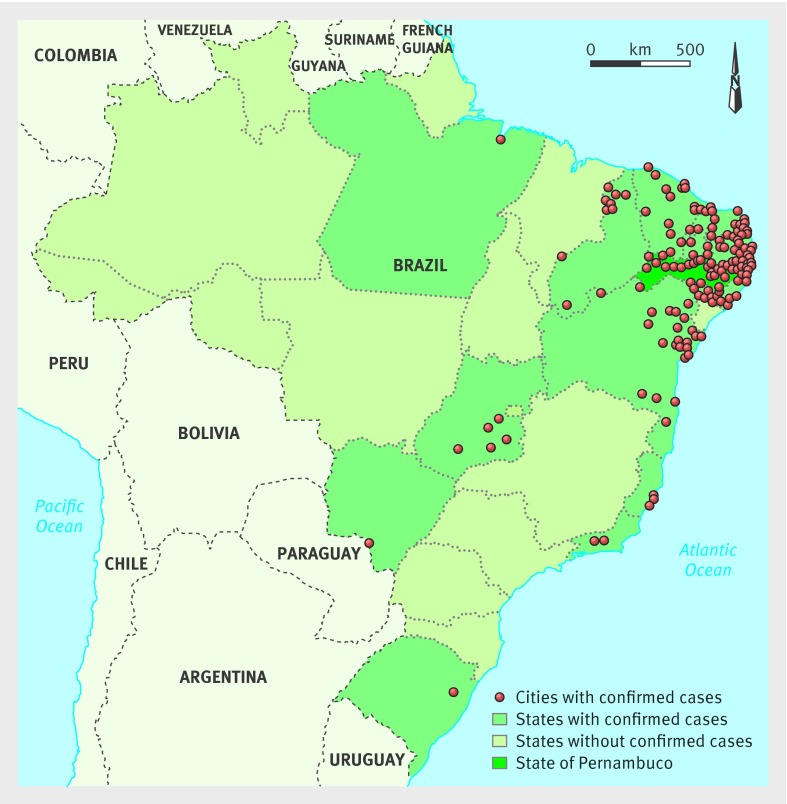
https://cdn.ncbi.nlm.nih.gov/pmc/blobs/0db6/4830901/ddb72028ab57/defm032348.f5_default.jpg
https://cdn.ncbi.nlm.nih.gov/pmc/blobs/0db6/4830901/60968a8d11d4/defm032348.f1_default.jpg
https://cdn.ncbi.nlm.nih.gov/pmc/blobs/0db6/4830901/f6cf7e03ffd8/defm032348.f2_default.jpg
https://cdn.ncbi.nlm.nih.gov/pmc/blobs/0db6/4830901/35e6b4f2b3f2/defm032348.f3_default.jpg
https://cdn.ncbi.nlm.nih.gov/pmc/blobs/0db6/4830901/38a434af10c4/defm032348.f4_default.jpg
https://cdn.ncbi.nlm.nih.gov/pmc/blobs/0db6/4830901/ddb72028ab57/defm032348.f5_default.jpg
https://cdn.ncbi.nlm.nih.gov/pmc/blobs/0db6/4830901/60968a8d11d4/defm032348.f1_default.jpg
https://cdn.ncbi.nlm.nih.gov/pmc/blobs/0db6/4830901/f6cf7e03ffd8/defm032348.f2_default.jpg
https://cdn.ncbi.nlm.nih.gov/pmc/blobs/0db6/4830901/35e6b4f2b3f2/defm032348.f3_default.jpg
https://cdn.ncbi.nlm.nih.gov/pmc/blobs/0db6/4830901/38a434af10c4/defm032348.f4_default.jpg
https://cdn.ncbi.nlm.nih.gov/pmc/blobs/0db6/4830901/ddb72028ab57/defm032348.f5_default.jpg

相似文献

1
Clinical features and neuroimaging (CT and MRI) findings in presumed Zika virus related congenital infection and microcephaly: retrospective case series study.疑似寨卡病毒相关先天性感染和小头畸形的临床特征及神经影像学(CT和MRI)表现:回顾性病例系列研究
BMJ. 2016 Apr 13;353:i1901. doi: 10.1136/bmj.i1901.
2
Congenital Zika syndrome with arthrogryposis: retrospective case series study.先天性寨卡综合征合并关节挛缩症:回顾性病例系列研究
BMJ. 2016 Aug 9;354:i3899. doi: 10.1136/bmj.i3899.
3
Follow-up brain imaging of 37 children with congenital Zika syndrome: case series study.37例先天性寨卡综合征患儿的脑部影像学随访:病例系列研究
BMJ. 2017 Oct 13;359:j4188. doi: 10.1136/bmj.j4188.
4
Nonmicrocephalic Infants with Congenital Zika Syndrome Suspected Only after Neuroimaging Evaluation Compared with Those with Microcephaly at Birth and Postnatally: How Large Is the Zika Virus "Iceberg"?仅在神经影像学评估后才被怀疑患有先天性寨卡综合征的非小头畸形婴儿与出生时及出生后患有小头畸形的婴儿相比:寨卡病毒“冰山”有多大?
AJNR Am J Neuroradiol. 2017 Jul;38(7):1427-1434. doi: 10.3174/ajnr.A5216. Epub 2017 May 18.
5
Updated Imaging Findings in Congenital Zika Syndrome: A Disease Story That is Still Being Written.先天性寨卡综合征的最新影像学发现:一个仍在书写的疾病故事。
Top Magn Reson Imaging. 2019 Feb;28(1):1-14. doi: 10.1097/RMR.0000000000000193.
6
Congenital cerebral malformations and dysfunction in fetuses and newborns following the 2013 to 2014 Zika virus epidemic in French Polynesia.2013年至2014年法属波利尼西亚寨卡病毒疫情后胎儿和新生儿的先天性脑畸形及功能障碍
Euro Surveill. 2016;21(13). doi: 10.2807/1560-7917.ES.2016.21.13.30181.
7
Description of 13 Infants Born During October 2015-January 2016 With Congenital Zika Virus Infection Without Microcephaly at Birth - Brazil.2015 年 10 月至 2016 年 1 月期间出生的 13 名先天性寨卡病毒感染婴儿描述,出生时无脑小畸形-巴西。
MMWR Morb Mortal Wkly Rep. 2016 Dec 2;65(47):1343-1348. doi: 10.15585/mmwr.mm6547e2.
8
Clinical assessment and brain findings in a cohort of mothers, fetuses and infants infected with ZIKA virus.临床评估及 Zika 病毒感染的母婴胎脑研究。
Am J Obstet Gynecol. 2018 Apr;218(4):440.e1-440.e36. doi: 10.1016/j.ajog.2018.01.012. Epub 2018 Jan 17.
9
Neuroimaging findings associated with congenital Zika virus syndrome: case series at the time of first epidemic outbreak in Pernambuco State, Brazil.与先天性寨卡病毒综合征相关的神经影像学表现:巴西伯南布哥州首次疫情爆发时的病例系列
Childs Nerv Syst. 2018 May;34(5):957-963. doi: 10.1007/s00381-017-3682-9. Epub 2017 Dec 5.
10
Lessons Learned at the Epicenter of Brazil's Congenital Zika Epidemic: Evidence From 87 Confirmed Cases.巴西先天性寨卡疫情震中吸取的教训:87 例确诊病例的证据。
Clin Infect Dis. 2017 May 15;64(10):1302-1308. doi: 10.1093/cid/cix166.

引用本文的文献

1
Role of non-human primate models in accelerating research and developing countermeasures against Zika virus infection.非人灵长类动物模型在加速寨卡病毒感染研究及开发应对措施中的作用。
Lancet Microbe. 2025 Jun;6(6):101030. doi: 10.1016/j.lanmic.2024.101030. Epub 2025 Feb 27.
2
Neurological, Radiological, Visual, and Auditory Findings in Children with Intrauterine Exposure to the Zika Virus.子宫内暴露于寨卡病毒的儿童的神经、放射、视觉和听觉检查结果
Viruses. 2025 Feb 9;17(2):238. doi: 10.3390/v17020238.
3
Prenatal phenotype of PNKP-related microcephaly, seizures, and developmental delay: A case report and literature review.

本文引用的文献

1
Zika Virus Infects Human Cortical Neural Progenitors and Attenuates Their Growth.寨卡病毒感染人类皮质神经祖细胞并抑制其生长。
Cell Stem Cell. 2016 May 5;18(5):587-90. doi: 10.1016/j.stem.2016.02.016. Epub 2016 Mar 4.
2
Zika Virus Associated with Microcephaly.寨卡病毒与小头症相关。
N Engl J Med. 2016 Mar 10;374(10):951-8. doi: 10.1056/NEJMoa1600651. Epub 2016 Feb 10.
3
Possible Association Between Zika Virus Infection and Microcephaly - Brazil, 2015.寨卡病毒感染与小头症之间的可能关联 - 巴西,2015 年。
与PNKP相关的小头畸形、癫痫和发育迟缓的产前表型:病例报告及文献综述
Medicine (Baltimore). 2025 Jan 17;104(3):e41300. doi: 10.1097/MD.0000000000041300.
4
Association between congenital Zika syndrome and hospitalizations during early childhood: a nationwide cohort study.先天性寨卡综合征与幼儿期住院之间的关联:一项全国性队列研究。
Int J Infect Dis. 2025 Apr;153:107780. doi: 10.1016/j.ijid.2025.107780. Epub 2025 Jan 9.
5
Follow-up brain MRI of infants with and without congenital Zika virus infection: paving the way for a thorough understanding of the consequences of Zika virus infection.先天性寨卡病毒感染婴儿与未感染婴儿的脑部MRI随访:为全面了解寨卡病毒感染的后果铺平道路。
Radiol Bras. 2024 Dec 11;57:e12. doi: 10.1590/0100-3984.2024.57.e12. eCollection 2024 Jan-Dec.
6
Brain MRI in infants exposed to the Zika virus, with one-year follow-up: expanding the phenotype.对感染寨卡病毒的婴儿进行脑部磁共振成像检查,并进行一年的随访:扩展表型。
Radiol Bras. 2024 Nov 7;57:e20240014. doi: 10.1590/0100-3984.2024.0014. eCollection 2024 Jan-Dec.
7
Application of diceCT to Study the Development of the Zika Virus-Infected Mouse Brain.应用体素 CT 研究寨卡病毒感染小鼠脑的发育。
Viruses. 2024 Aug 20;16(8):1330. doi: 10.3390/v16081330.
8
Clinical spectrum of congenital Zika virus infection in Brazil: Update and issues for research development.巴西先天性 Zika 病毒感染的临床谱:更新及研究进展问题。
Rev Soc Bras Med Trop. 2024 Jul 29;57:e00301. doi: 10.1590/0037-8682-0153-2024. eCollection 2024.
9
High-Risk Areas for Congenital Zika Syndrome in Rio de Janeiro: Spatial Cluster Detection.里约热内卢先天性寨卡综合征的高危地区:空间聚类检测
Trop Med Infect Dis. 2024 May 7;9(5):105. doi: 10.3390/tropicalmed9050105.
10
Long-term visual and neurodevelopmental outcomes in children with Congenital Zika Syndrome after undergoing strabismus surgery.先天性寨卡综合征患儿斜视手术后的长期视觉和神经发育结局
Strabismus. 2024 Jun;32(2):91-101. doi: 10.1080/09273972.2024.2346551. Epub 2024 May 21.
MMWR Morb Mortal Wkly Rep. 2016 Jan 29;65(3):59-62. doi: 10.15585/mmwr.mm6503e2.
4
Zika virus intrauterine infection causes fetal brain abnormality and microcephaly: tip of the iceberg?寨卡病毒宫内感染会导致胎儿脑部异常和小头畸形:这只是冰山一角?
Ultrasound Obstet Gynecol. 2016 Jan;47(1):6-7. doi: 10.1002/uog.15831.
5
Zika Virus Outbreak, Bahia, Brazil.巴西巴伊亚州寨卡病毒疫情
Emerg Infect Dis. 2015 Oct;21(10):1885-6. doi: 10.3201/eid2110.150847.
6
Congenital abnormalities of the posterior fossa.后颅窝先天性异常。
Radiographics. 2015 Jan-Feb;35(1):200-20. doi: 10.1148/rg.351140038.
7
Evidence of perinatal transmission of Zika virus, French Polynesia, December 2013 and February 2014.2013年12月至2014年2月法属波利尼西亚寨卡病毒围产期传播的证据。
Euro Surveill. 2014 Apr 3;19(13):20751.
8
Intracranial calcification in childhood: a review of aetiologies and recognizable phenotypes.儿童颅内钙化:病因及可识别表型综述
Dev Med Child Neurol. 2014 Jul;56(7):612-26. doi: 10.1111/dmcn.12359. Epub 2013 Dec 30.
9
Neuroinvasive flavivirus infections.神经侵袭性黄病毒感染。
Rev Med Virol. 2012 Mar;22(2):69-87. doi: 10.1002/rmv.712. Epub 2011 Nov 16.
10
Intracranial ultrasound abnormalities and fetal cytomegalovirus infection: report of 8 cases and review of the literature.颅内超声异常与胎儿巨细胞病毒感染:8 例病例报告及文献复习。
Fetal Diagn Ther. 2011;30(2):141-9. doi: 10.1159/000330636. Epub 2011 Sep 29.