Harati Kamran, Daigeler Adrien, Hirsch Tobias, Jacobsen Frank, Behr Björn, Wallner Christoph, Lehnhardt Marcus, Becerikli Mustafa
Department of Plastic Surgery, Burn Center, Hand Center, Sarcoma Reference Center, BG-University Hospital Bergmannsheil, D-44789 Bochum, Germany.
Int J Mol Med. 2016 Jun;37(6):1535-41. doi: 10.3892/ijmm.2016.2556. Epub 2016 Apr 11.
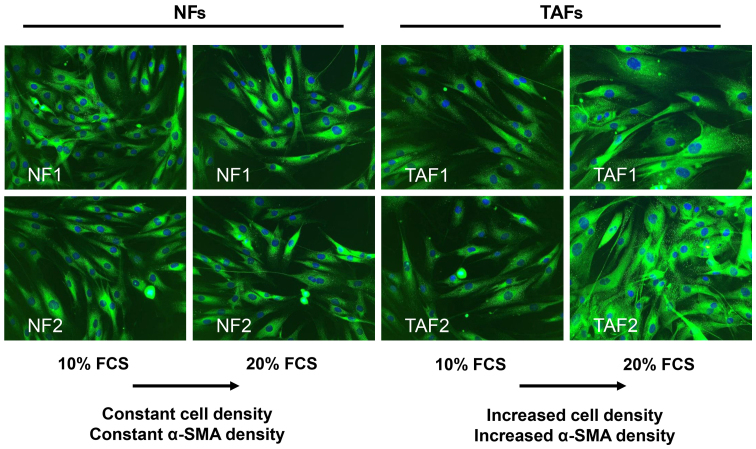
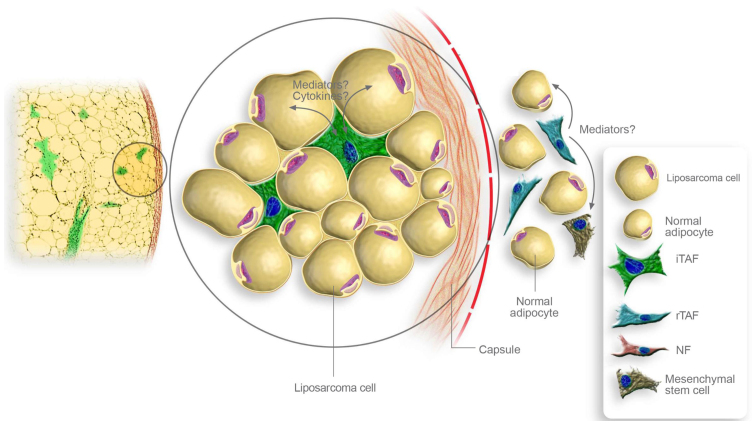
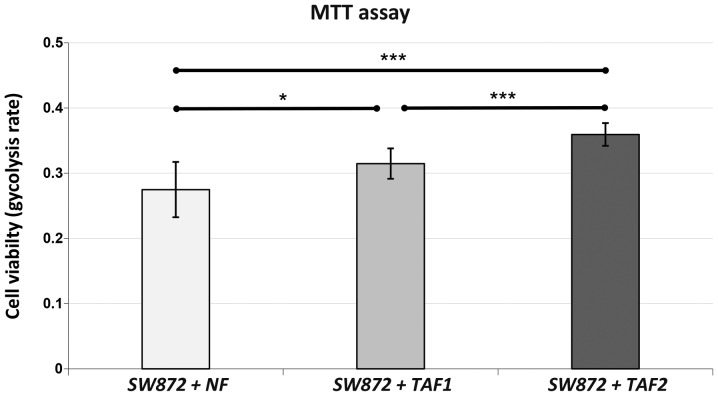
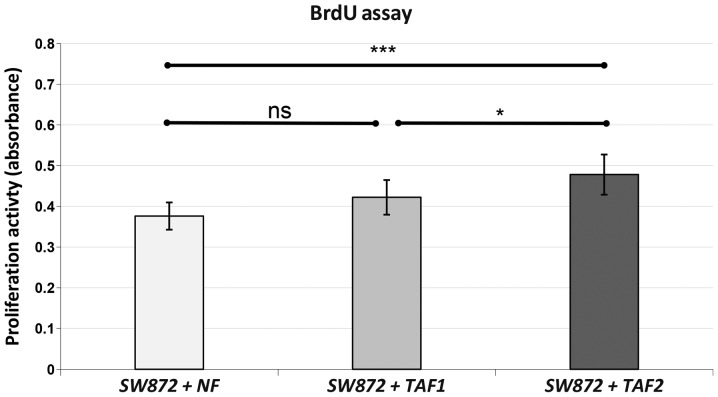
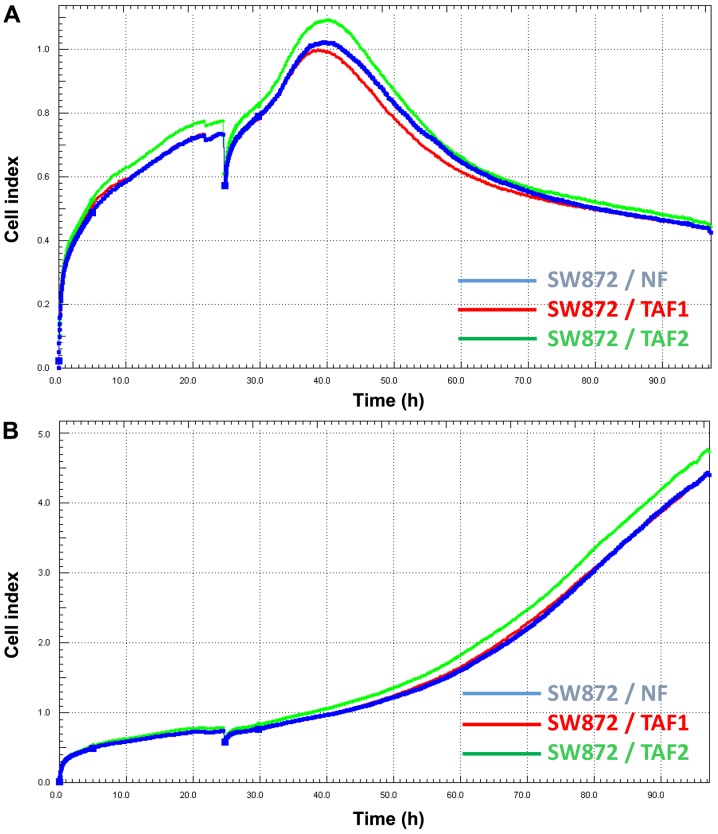
The reasons for the distinct chemoresistance of liposarcomas and their high risk of local recurrence still remain unclear. Depending on the histological subtype of liposarcoma, first-line therapy with the cytostatic agent, doxorubicin, only achieves response rates of approximately 36%. Approximatley 70% of all local recurrences develop in spite of complete surgical resection of the primary tumor with microscopically negative margins. In this study, we aimed to assess the influence of tumor-associated fibroblasts (TAFs) obtained from surgically removed liposarcomas on the well-established human liposarcoma SW872 cell line. Intratumoral TAFs were isolated from intermediate- and high-grade liposarcoma samples. The human liposarcoma cell line, SW872, was co-cultured with the corresponding TAFs or with dermal fibroblasts as a control. The proliferation (by BrdU assay), cell viability (by MTT assay) and sensitivity to doxorubicin (using the iCELLigence system) of the co-cultured SW872 cells were examined. The SW872 cells exhibited a significant increase in proliferation and viability when co-cultured with the TAFs. As detected by real-time cell analysis, the SW872 cells co-cultured with the TAFs exhibited a diminished response towards doxorubicin. Notably, co-culture with TAFs obtained from high-grade liposarcoma samples resulted in higher proliferation and increased chemoresistance than co-culture with TAFs obtained from intermediate-grade liposarcoma samples. The findings of the present study thus indicate that TAFs from liposarcomas enhance the proliferation and decrease the chemosensitivity of SW872 liposarcoma cells significantly compared with normal fibroblasts from the dermis. TAFs from more malignant liposarcomas promoted tumor cell proliferation and chemoresistance more strikingly than TAFs from less malignant liposarcomas. These data provide evidence for the influence of the tumor microenvironment on liposarcoma and support for further investigations in patients with different liposarcoma subentities, assessing the influence of TAFs on tumor progression.
脂肪肉瘤具有独特的化疗耐药性及其局部复发风险高的原因仍不清楚。根据脂肪肉瘤的组织学亚型,使用细胞毒性药物阿霉素进行一线治疗,仅能达到约36%的缓解率。尽管对原发性肿瘤进行了手术切除且显微镜下切缘阴性,但仍有大约70%的局部复发发生。在本研究中,我们旨在评估从手术切除的脂肪肉瘤中获得的肿瘤相关成纤维细胞(TAF)对成熟的人脂肪肉瘤SW872细胞系的影响。从高级别和中级别脂肪肉瘤样本中分离出瘤内TAF。将人脂肪肉瘤细胞系SW872与相应的TAF或与真皮成纤维细胞作为对照进行共培养。检测共培养的SW872细胞的增殖(通过BrdU检测)、细胞活力(通过MTT检测)以及对阿霉素的敏感性(使用iCELLigence系统)。与TAF共培养时,SW872细胞的增殖和活力显著增加。通过实时细胞分析检测发现,与TAF共培养的SW872细胞对阿霉素的反应减弱。值得注意的是,与从中级别脂肪肉瘤样本中获得的TAF共培养相比,与从高级别脂肪肉瘤样本中获得的TAF共培养导致更高程度的增殖和化疗耐药性增加。本研究结果表明,与来自真皮的正常成纤维细胞相比,脂肪肉瘤中的TAF显著增强了SW872脂肪肉瘤细胞的增殖并降低了其化学敏感性。来自恶性程度更高的脂肪肉瘤的TAF比来自恶性程度较低的脂肪肉瘤的TAF更显著地促进肿瘤细胞增殖和化疗耐药性。这些数据为肿瘤微环境对脂肪肉瘤的影响提供了证据,并支持对不同脂肪肉瘤亚型患者进行进一步研究,以评估TAF对肿瘤进展的影响。