Liang M, Lee M C, O'Neill J, Dickenson A H, Iannetti G D
School of Medical Imaging, Tianjin Medical University, Tianjin, China; Department of Neuroscience, Physiology and Pharmacology, University College London, London, United Kingdom; and
Division of Anaesthesia, University of Cambridge, Cambridge, United Kingdom.
J Neurophysiol. 2016 Aug 1;116(2):286-95. doi: 10.1152/jn.00013.2016. Epub 2016 Apr 20.
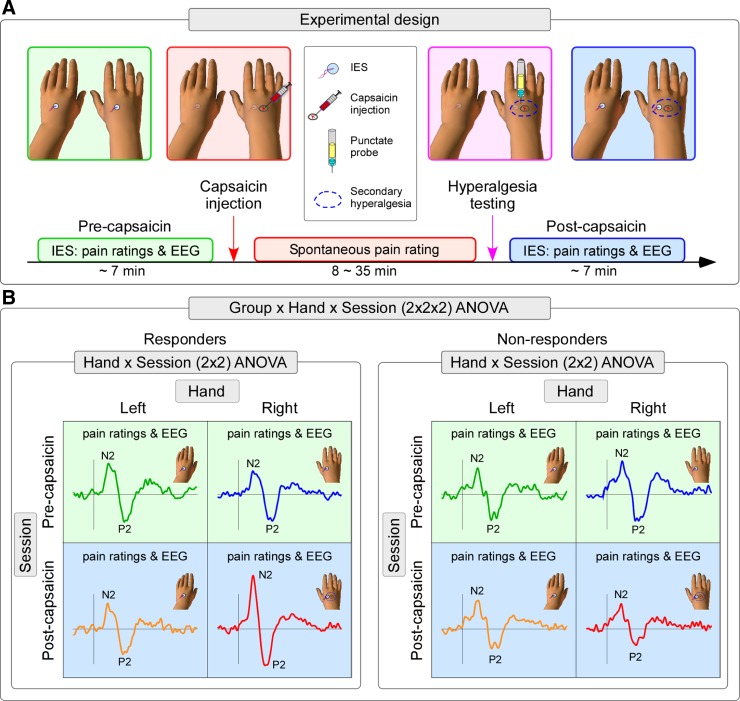
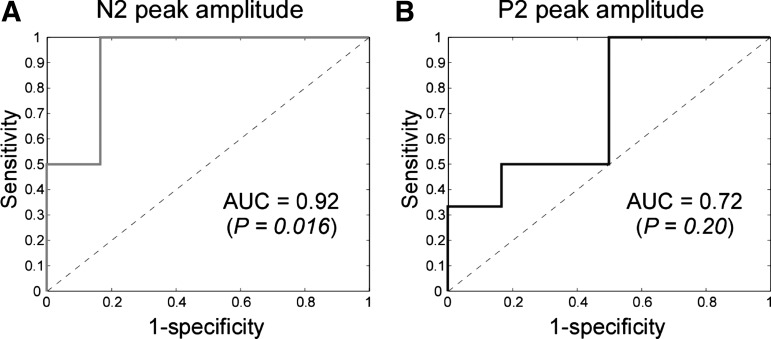
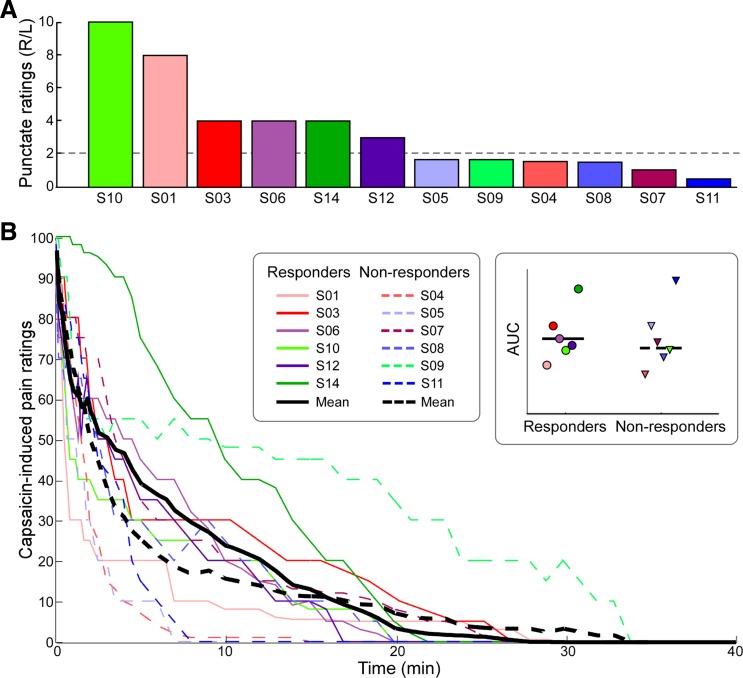
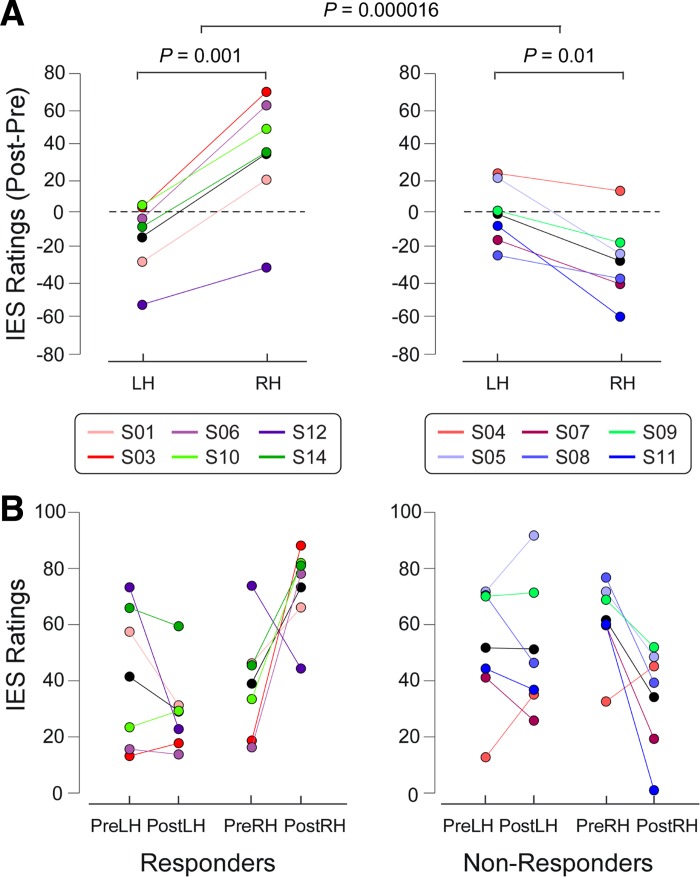
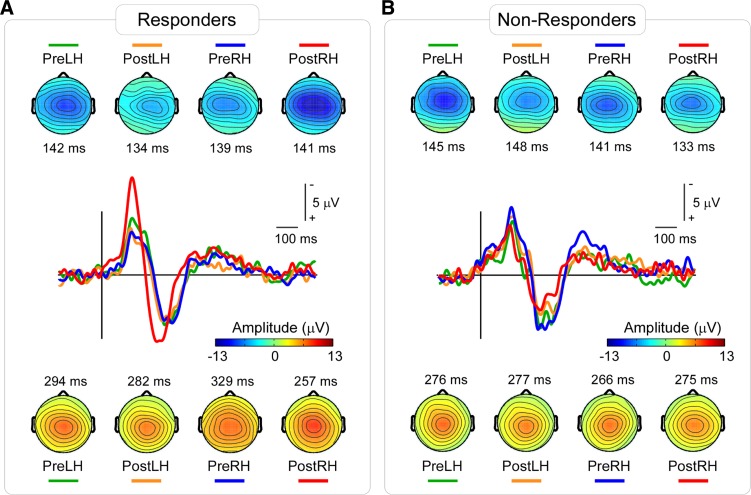
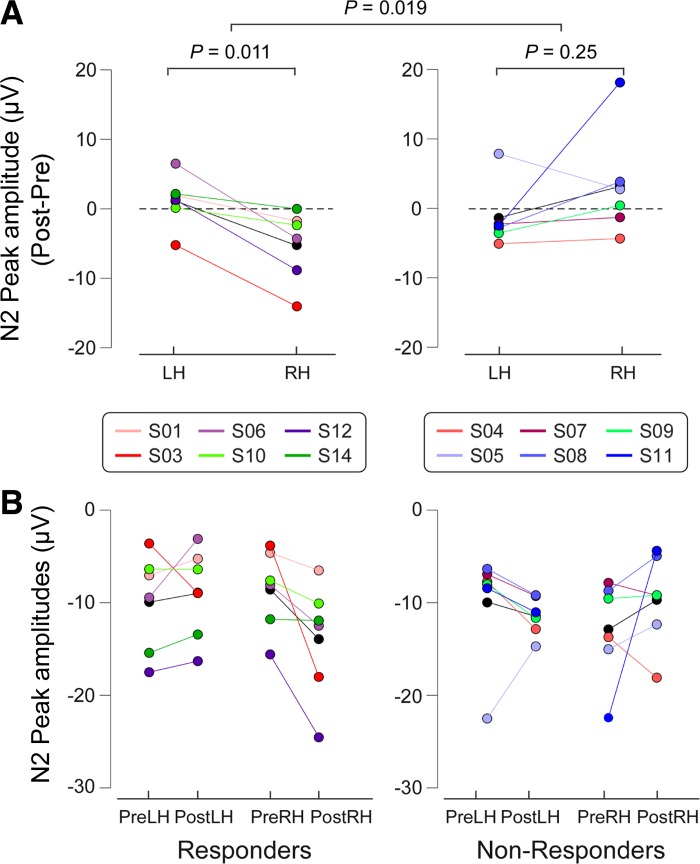
Central sensitization (CS), the increased sensitivity of the central nervous system to somatosensory inputs, accounts for secondary hyperalgesia, a typical sign of several painful clinical conditions. Brain potentials elicited by mechanical punctate stimulation using flat-tip probes can provide neural correlates of CS, but their signal-to-noise ratio is limited by poor synchronization of the afferent nociceptive input. Additionally, mechanical punctate stimulation does not activate nociceptors exclusively. In contrast, low-intensity intraepidermal electrical stimulation (IES) allows selective activation of type II Aδ-mechano-heat nociceptors (II-AMHs) and elicits reproducible brain potentials. However, it is unclear whether hyperalgesia from IES occurs and coexists with secondary mechanical punctate hyperalgesia, and whether the magnitude of the electroencephalographic (EEG) responses evoked by IES within the hyperalgesic area is increased. To address these questions, we explored the modulation of the psychophysical and EEG responses to IES by intraepidermal injection of capsaicin in healthy human subjects. We obtained three main results. First, the intensity of the sensation elicited by IES was significantly increased in participants who developed robust mechanical punctate hyperalgesia after capsaicin injection (i.e., responders), indicating that hyperalgesia from IES coexists with punctate mechanical hyperalgesia. Second, the N2 peak magnitude of the EEG responses elicited by IES was significantly increased after the intraepidermal injection of capsaicin in responders only. Third, a receiver-operator characteristics analysis showed that the N2 peak amplitude is clearly predictive of the presence of CS. These findings suggest that the EEG responses elicited by IES reflect secondary hyperalgesia and therefore represent an objective correlate of CS.
中枢敏化(CS)是指中枢神经系统对躯体感觉输入的敏感性增加,它是几种疼痛临床病症的典型体征——继发性痛觉过敏的原因。使用平头探针进行机械点状刺激所引发的脑电位能够提供CS的神经关联,但它们的信噪比受到传入伤害性输入同步性差的限制。此外,机械点状刺激并非仅激活伤害感受器。相比之下,低强度表皮内电刺激(IES)能够选择性激活II型Aδ机械热伤害感受器(II-AMHs)并引发可重复的脑电位。然而,尚不清楚IES所致的痛觉过敏是否会出现并与继发性机械点状痛觉过敏共存,以及在痛觉过敏区域内由IES诱发的脑电图(EEG)反应的幅度是否会增加。为了解决这些问题,我们在健康人类受试者中探究了通过表皮内注射辣椒素对IES的心理物理学和EEG反应的调节作用。我们获得了三个主要结果。第一,在注射辣椒素后出现强烈机械点状痛觉过敏的参与者(即反应者)中,IES所引发的感觉强度显著增加,这表明IES所致的痛觉过敏与点状机械痛觉过敏共存。第二,仅在反应者中,表皮内注射辣椒素后,由IES诱发的EEG反应的N2峰幅度显著增加。第三,受试者工作特征分析表明,N2峰幅度能够明确预测CS的存在。这些发现表明,IES诱发的EEG反应反映了继发性痛觉过敏,因此代表了CS的客观关联。