Mognol G P, Carneiro F R G, Robbs B K, Faget D V, Viola J P B
Programa de Biologia Celular, Instituto Nacional de Câncer, Rio de Janeiro, Brazil.
Department of Signaling and Gene Expression, La Jolla Institute for Allergy and Immunology, La Jolla, CA, USA.
Cell Death Dis. 2016 Apr 21;7(4):e2199. doi: 10.1038/cddis.2016.97.
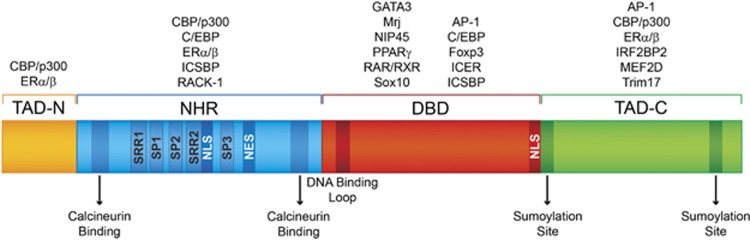
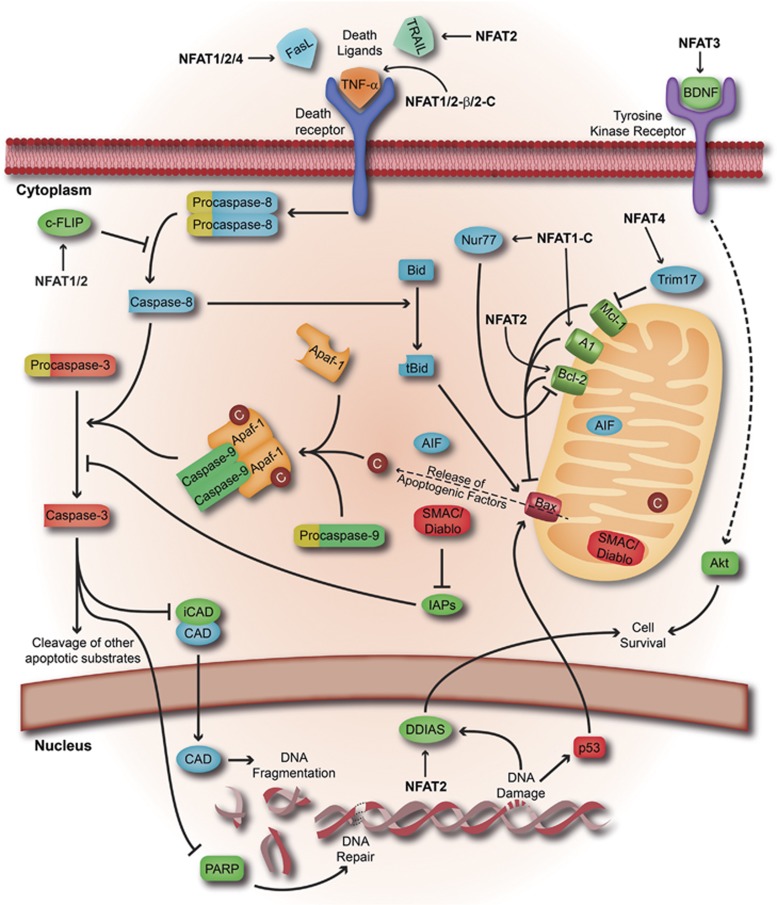
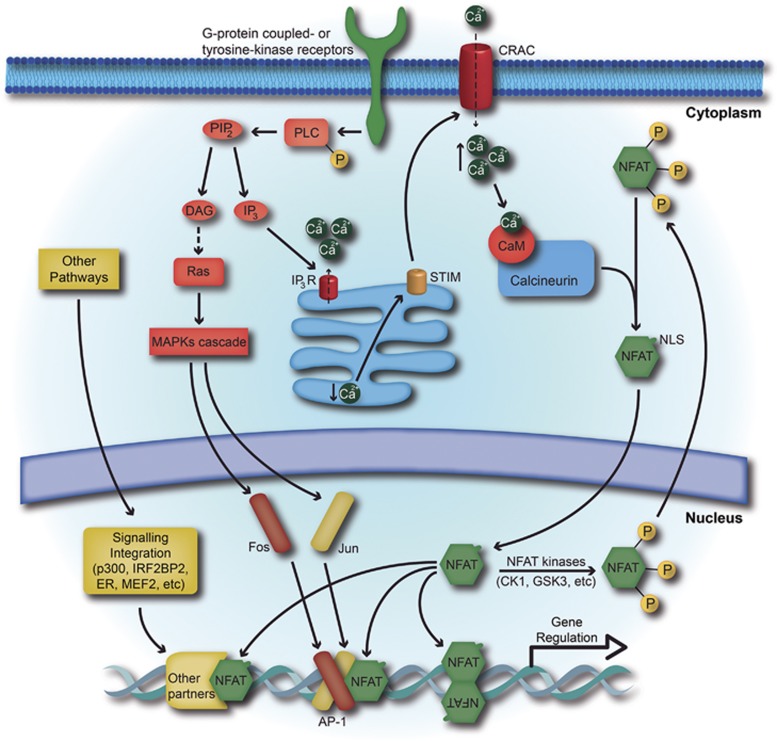
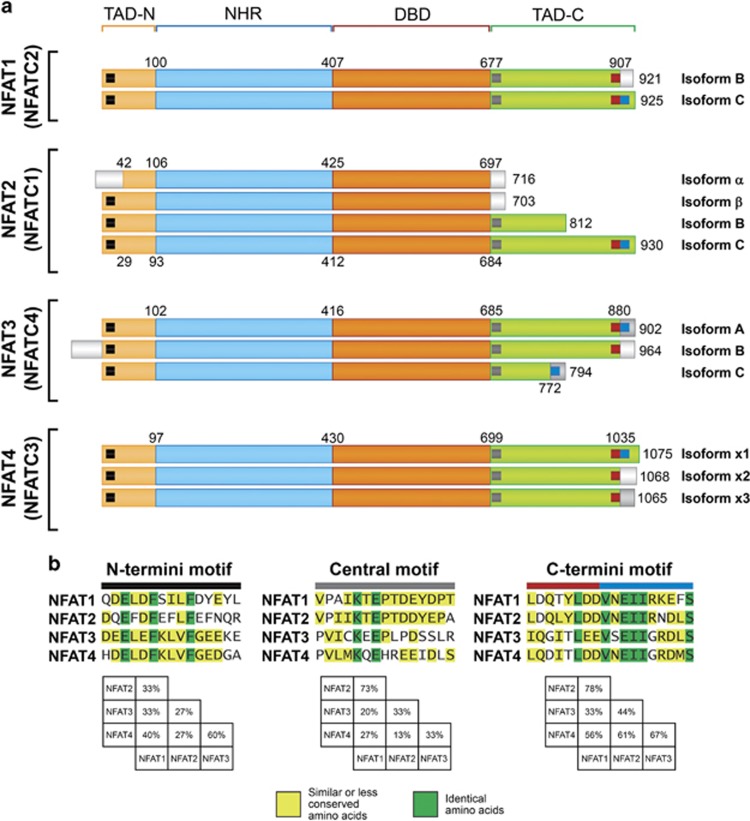
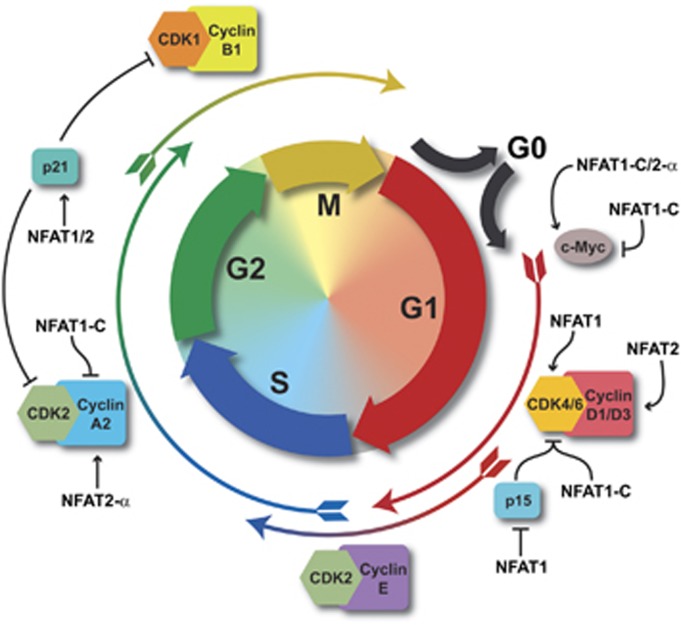
The NFAT (nuclear factor of activated T cells) family of transcription factors consists of four Ca(2+)-regulated members (NFAT1-NFAT4), which were first described in T lymphocytes. In addition to their well-documented role in T lymphocytes, where they control gene expression during cell activation and differentiation, NFAT proteins are also expressed in a wide range of cells and tissue types and regulate genes involved in cell cycle, apoptosis, angiogenesis and metastasis. The NFAT proteins share a highly conserved DNA-binding domain (DBD), which allows all NFAT members to bind to the same DNA sequence in enhancers or promoter regions. The same DNA-binding specificity suggests redundant roles for the NFAT proteins, which is true during the regulation of some genes such as IL-2 and p21. However, it has become increasingly clear that different NFAT proteins and even isoforms can have unique functions. In this review, we address the possible reasons for these distinct roles, particularly regarding N- and C-terminal transactivation regions (TADs) and the partner proteins that interact with these TADs. We also discuss the genes regulated by NFAT during cell cycle regulation and apoptosis and the role of NFAT during tumorigenesis.
活化T细胞核因子(NFAT)转录因子家族由四个受Ca(2+)调节的成员(NFAT1 - NFAT4)组成,它们最初是在T淋巴细胞中被描述的。除了在T淋巴细胞中众所周知的作用,即它们在细胞活化和分化过程中控制基因表达外,NFAT蛋白也在广泛的细胞和组织类型中表达,并调节参与细胞周期、细胞凋亡、血管生成和转移的基因。NFAT蛋白共享一个高度保守的DNA结合结构域(DBD),这使得所有NFAT成员都能结合到增强子或启动子区域的相同DNA序列上。相同的DNA结合特异性表明NFAT蛋白具有冗余作用,在调节某些基因如白细胞介素-2和p21时确实如此。然而,越来越清楚的是,不同的NFAT蛋白甚至异构体都可以具有独特的功能。在这篇综述中,我们探讨了这些不同作用的可能原因,特别是关于N端和C端反式激活区域(TADs)以及与这些TADs相互作用的伙伴蛋白。我们还讨论了在细胞周期调节和细胞凋亡过程中受NFAT调节的基因以及NFAT在肿瘤发生过程中的作用。