Liang Chu-Ting, Huang Hsien-Bin, Wang Chih-Ching, Chen Yi-Ru, Chang Chi-Fon, Shiao Ming-Shi, Chen Yi-Cheng, Lin Ta-Hsien
Department of Life Sciences and Institute of Genome Sciences, National Yang-Ming University, Taipei, Taiwan, R.O.C.
Basic Research Division, Medical Research Department, Taipei Veterans General Hospital, Taipei, Taiwan, R.O.C.
PLoS One. 2016 Apr 22;11(4):e0154327. doi: 10.1371/journal.pone.0154327. eCollection 2016.
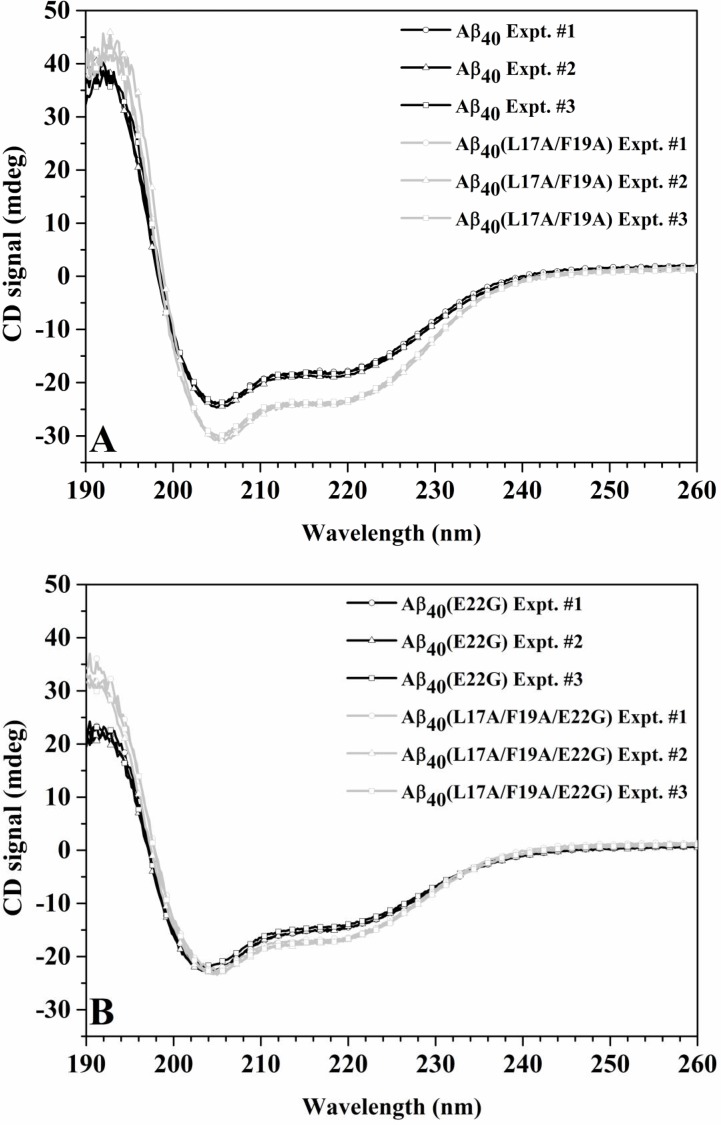
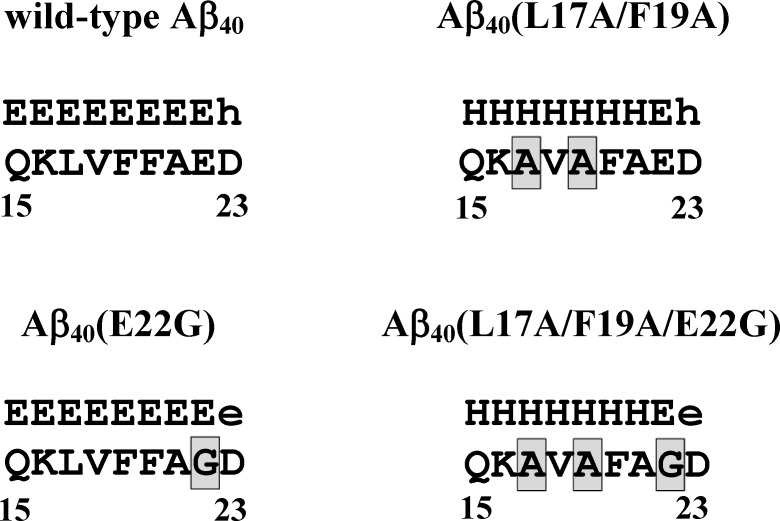
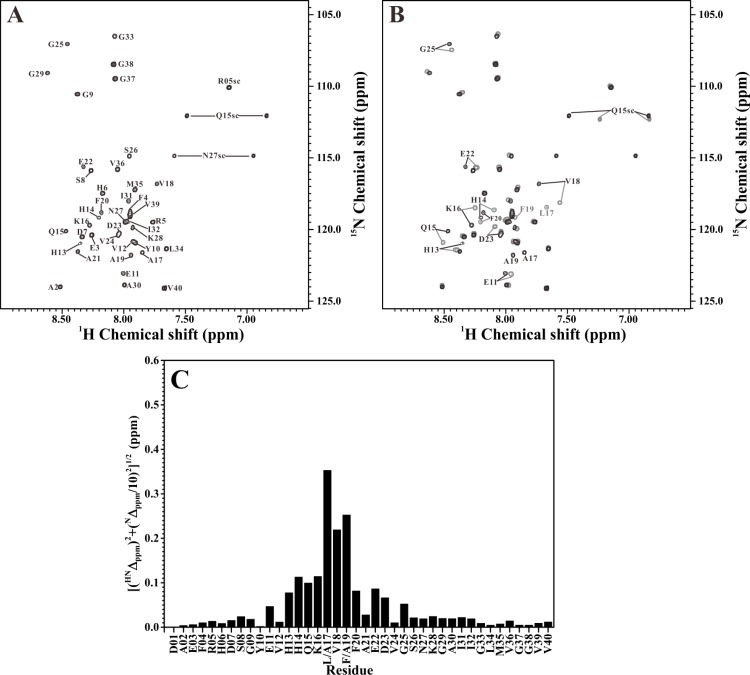
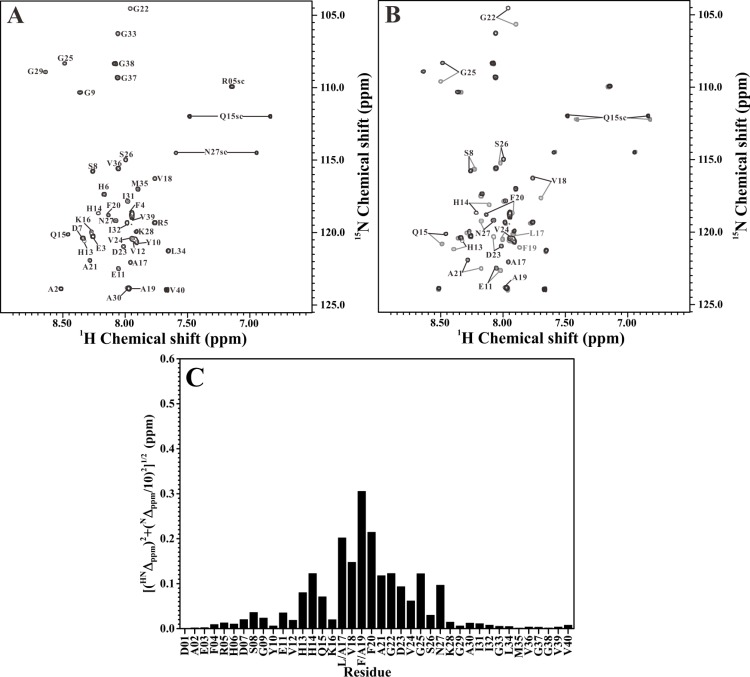
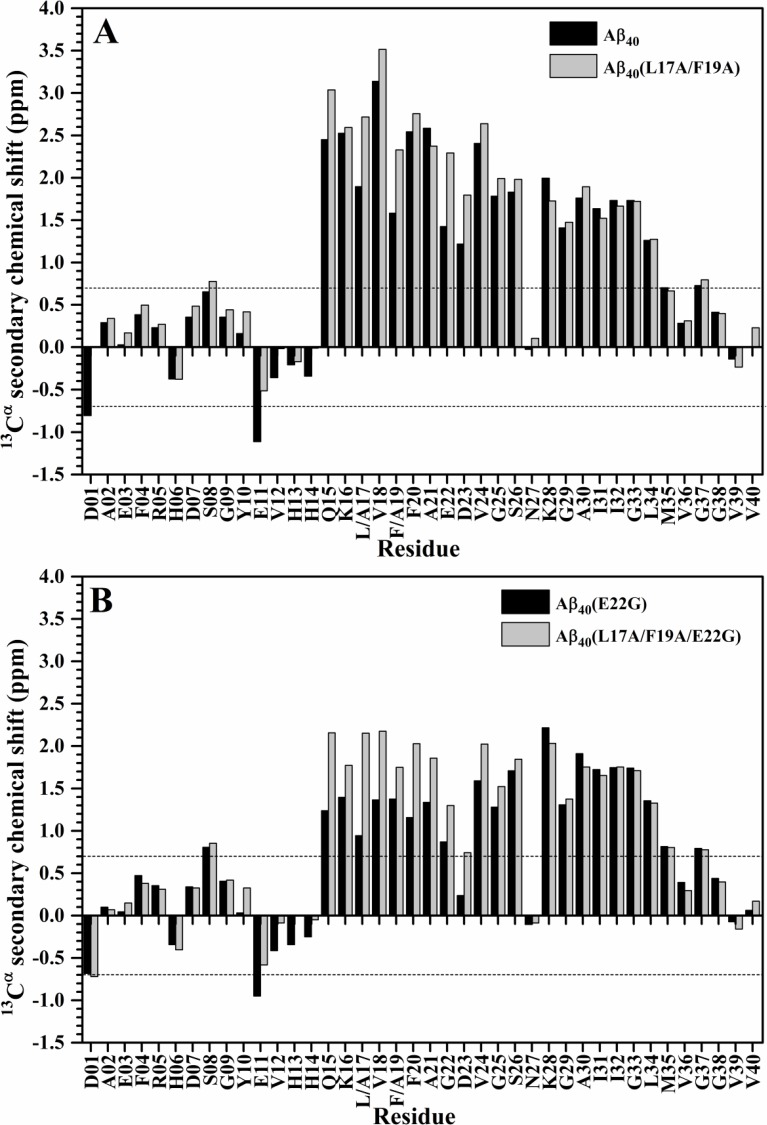
β-amyloid peptide (Aβ) aggregation has been thought to be associated with the pathogenesis of Alzheimer's disease. Recently, we showed that L17A/F19A substitutions may increase the structural stability of wild-type and Arctic-type Aβ40 and decrease the rates of structural conversion and fibril formation. However, the underlying mechanism for the increase of structural stability as a result of the alanine substitutions remained elusive. In this study, we apply nuclear magnetic resonance and circular dichroism spectroscopies to characterize the Aβ40 structure, demonstrating that L17A/F19A substitutions can augment the α-helicity of the residues located in the α/β-discordant segment (resides 15 to 23) of both wild-type and Arctic-type Aβ40. These results provide a structural basis to link the α-helicity of the α/β-discordant segment with the conformational conversion propensity of Aβ.
β-淀粉样肽(Aβ)聚集被认为与阿尔茨海默病的发病机制有关。最近,我们发现L17A/F19A替换可能会增加野生型和北极型Aβ40的结构稳定性,并降低结构转化和纤维形成的速率。然而,丙氨酸替换导致结构稳定性增加的潜在机制仍然不清楚。在本研究中,我们应用核磁共振和圆二色光谱来表征Aβ40的结构,证明L17A/F19A替换可以增强野生型和北极型Aβ40位于α/β不一致区段(残基15至23)的残基的α-螺旋性。这些结果为将α/β不一致区段的α-螺旋性与Aβ的构象转化倾向联系起来提供了结构基础。