Shah M Y, Martinez-Garcia E, Phillip J M, Chambliss A B, Popovic R, Ezponda T, Small E C, Will C, Phillip M P, Neri P, Bahlis N J, Wirtz D, Licht J D
Division of Hematology/Oncology, Northwestern University Feinberg School of Medicine, Chicago, IL, USA.
Department of Chemical and Biomolecular Engineering, Institute for Nanobiotechnology, Johns Hopkins University, Baltimore, MD, USA.
Oncogene. 2016 Nov 10;35(45):5905-5915. doi: 10.1038/onc.2016.116. Epub 2016 Apr 25.
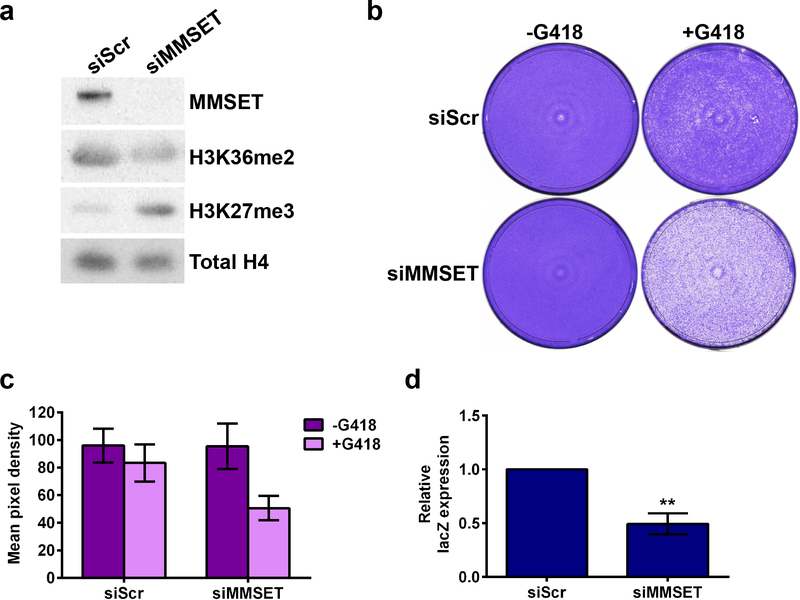
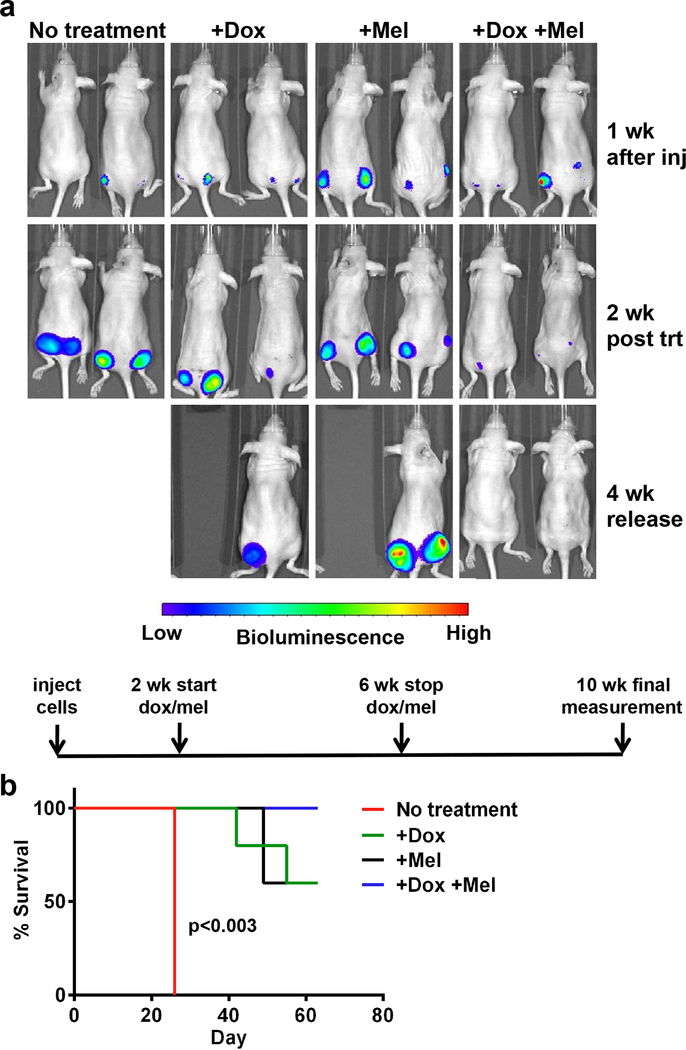
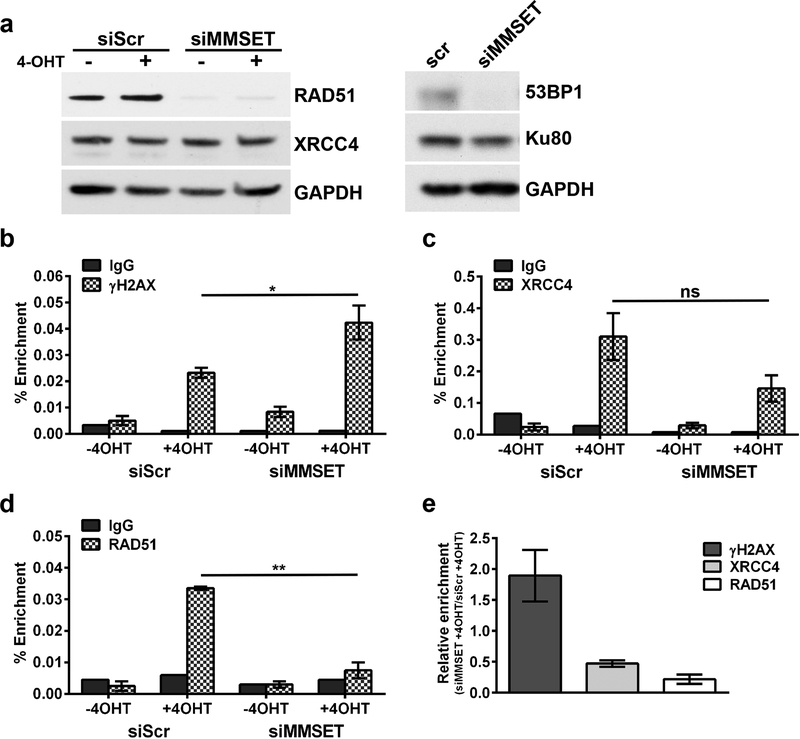
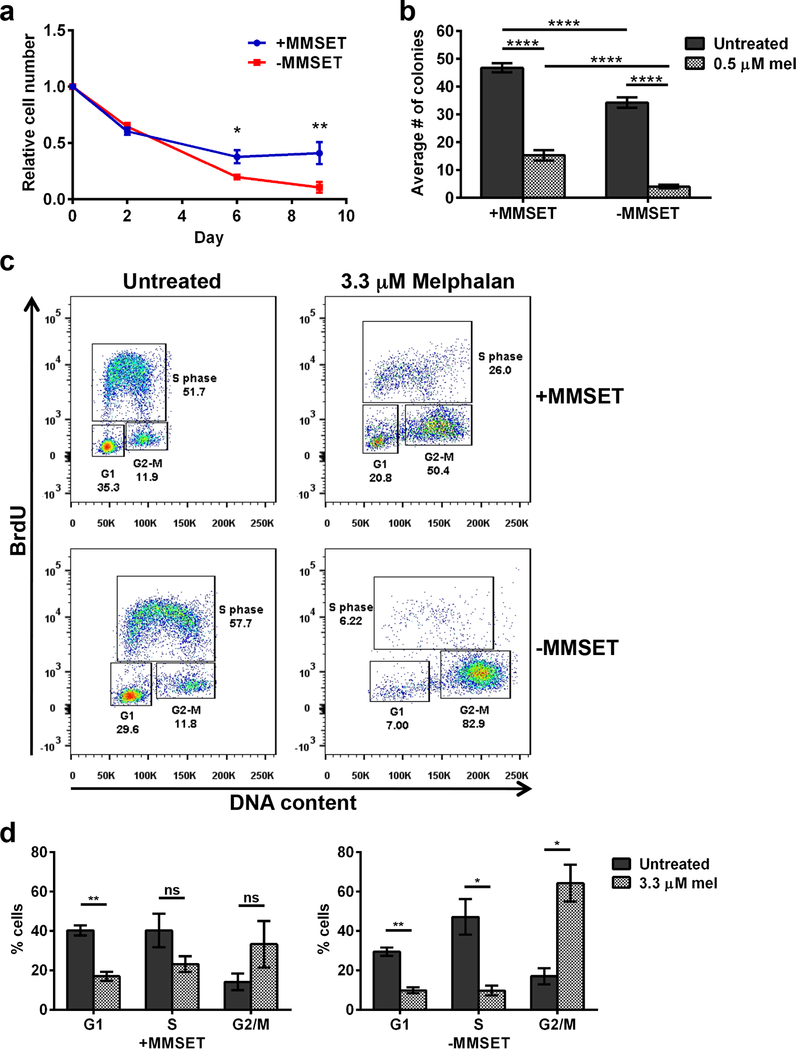
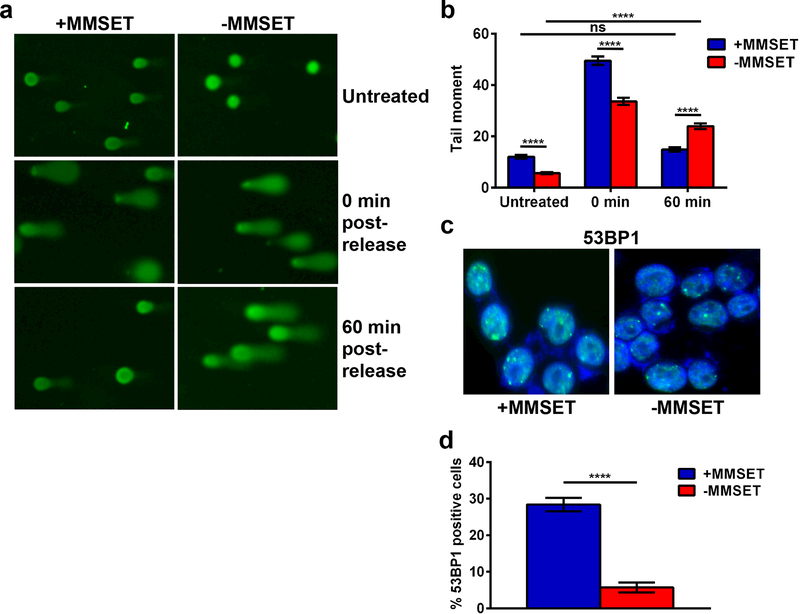
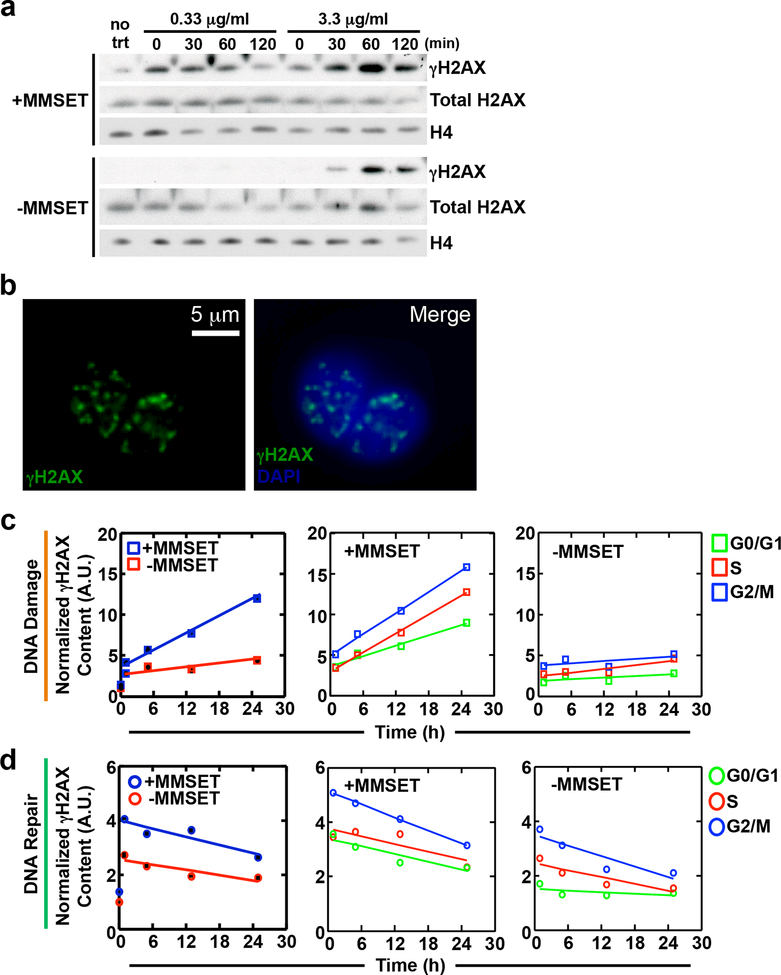
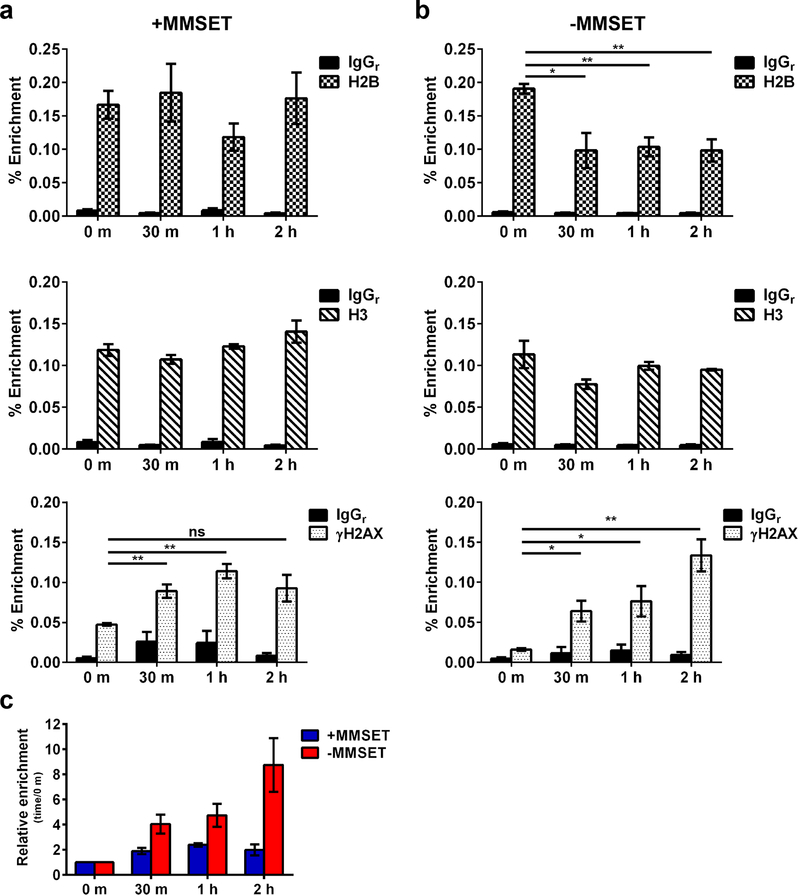
MMSET/WHSC1 is a histone methyltransferase (HMT) overexpressed in t(4;14)+ multiple myeloma (MM) patients, believed to be the driving factor in the pathogenesis of this MM subtype. MMSET overexpression in MM leads to an increase in histone 3 lysine 36 dimethylation (H3K36me2), and a decrease in histone 3 lysine 27 trimethylation (H3K27me3), as well as changes in proliferation, gene expression and chromatin accessibility. Prior work linked methylation of histones to the ability of cells to undergo DNA damage repair. In addition, t(4;14)+ patients frequently relapse after regimens that include DNA damage-inducing agents, suggesting that MMSET may play a role in DNA damage repair and response. In U2OS cells, we found that MMSET is required for efficient non-homologous end joining as well as homologous recombination. Loss of MMSET led to loss of expression of several DNA repair proteins, as well as decreased recruitment of DNA repair proteins to sites of DNA double-strand breaks (DSBs). By using genetically matched MM cell lines that had either high (pathological) or low (physiological) expression of MMSET, we found that MMSET-high cells had increased damage at baseline. Upon addition of a DNA-damaging agent, MMSET-high cells repaired DNA damage at an enhanced rate and continued to proliferate, whereas MMSET-low cells accumulated DNA damage and entered cell cycle arrest. In a murine xenograft model using t(4;14)+ KMS11 MM cells harboring an inducible MMSET shRNA, depletion of MMSET enhanced the efficacy of chemotherapy, inhibiting tumor growth and extending survival. These findings help explain the poorer prognosis of t(4;14) MM and further validate MMSET as a potential therapeutic target in MM and other cancers.
MMSET/WHSC1是一种组蛋白甲基转移酶(HMT),在t(4;14)+多发性骨髓瘤(MM)患者中过表达,被认为是该MM亚型发病机制的驱动因素。MM中MMSET的过表达导致组蛋白3赖氨酸36二甲基化(H3K36me2)增加,组蛋白3赖氨酸27三甲基化(H3K27me3)减少,以及增殖、基因表达和染色质可及性的变化。先前的研究将组蛋白甲基化与细胞进行DNA损伤修复的能力联系起来。此外,t(4;14)+患者在接受包括DNA损伤诱导剂的治疗方案后经常复发,这表明MMSET可能在DNA损伤修复和反应中起作用。在U2OS细胞中,我们发现高效的非同源末端连接以及同源重组需要MMSET。MMSET的缺失导致几种DNA修复蛋白的表达丧失,以及DNA修复蛋白向DNA双链断裂(DSB)位点的募集减少。通过使用具有高(病理)或低(生理)MMSET表达的基因匹配MM细胞系,我们发现MMSET高表达的细胞在基线时损伤增加。加入DNA损伤剂后,MMSET高表达的细胞以更快的速度修复DNA损伤并继续增殖,而MMSET低表达的细胞积累DNA损伤并进入细胞周期停滞。在使用携带可诱导MMSET shRNA的t(4;14)+ KMS11 MM细胞的小鼠异种移植模型中,MMSET的缺失增强了化疗效果,抑制肿瘤生长并延长生存期。这些发现有助于解释t(4;14) MM较差的预后,并进一步验证MMSET作为MM和其他癌症潜在治疗靶点的作用。