Osis Gunars, Handlogten Mary E, Lee Hyun-Wook, Hering-Smith Kathleen S, Huang Weitao, Romero Michael F, Verlander Jill W, Weiner I David
Division of Nephrology, Hypertension and Renal Transplantation, University of Florida College of Medicine, Gainesville, Florida.
Renal Division, Tulane University College of Medicine, New Orleans, Louisiana.
Physiol Rep. 2016 Apr;4(8). doi: 10.14814/phy2.12778.
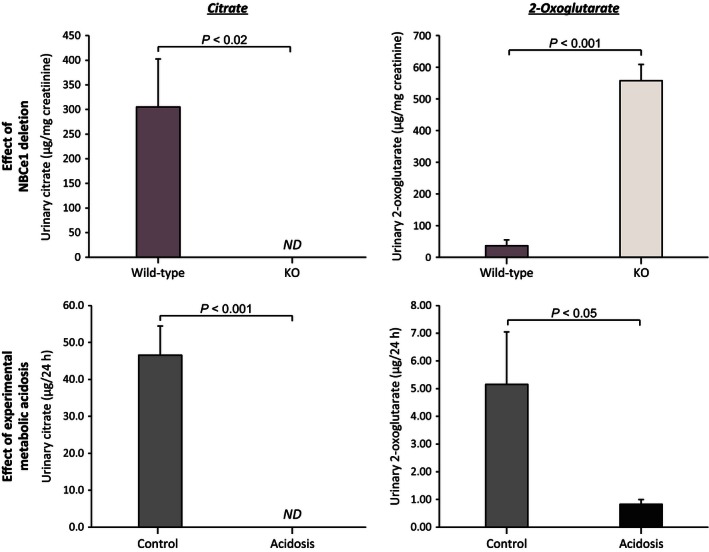
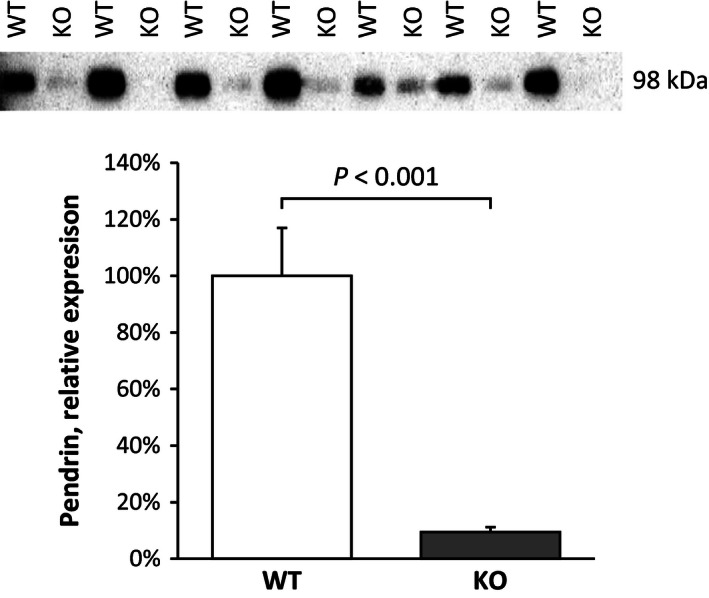
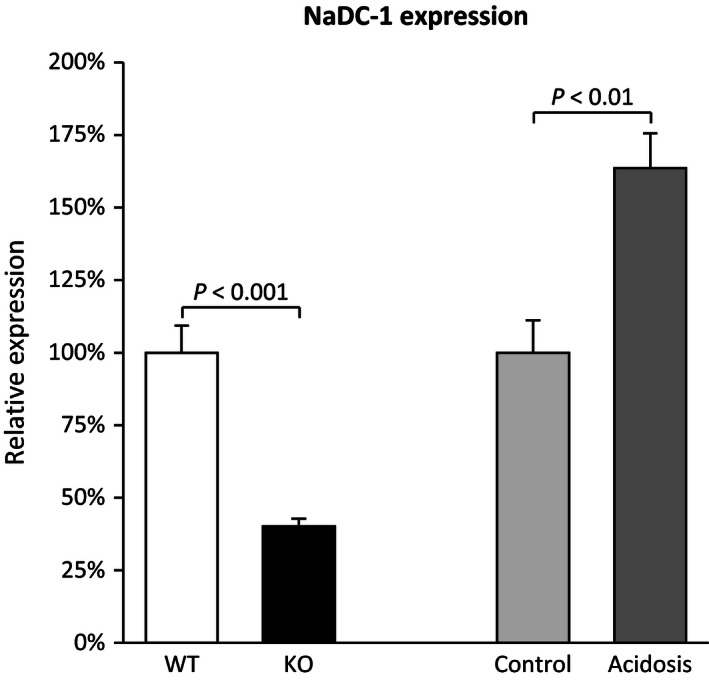
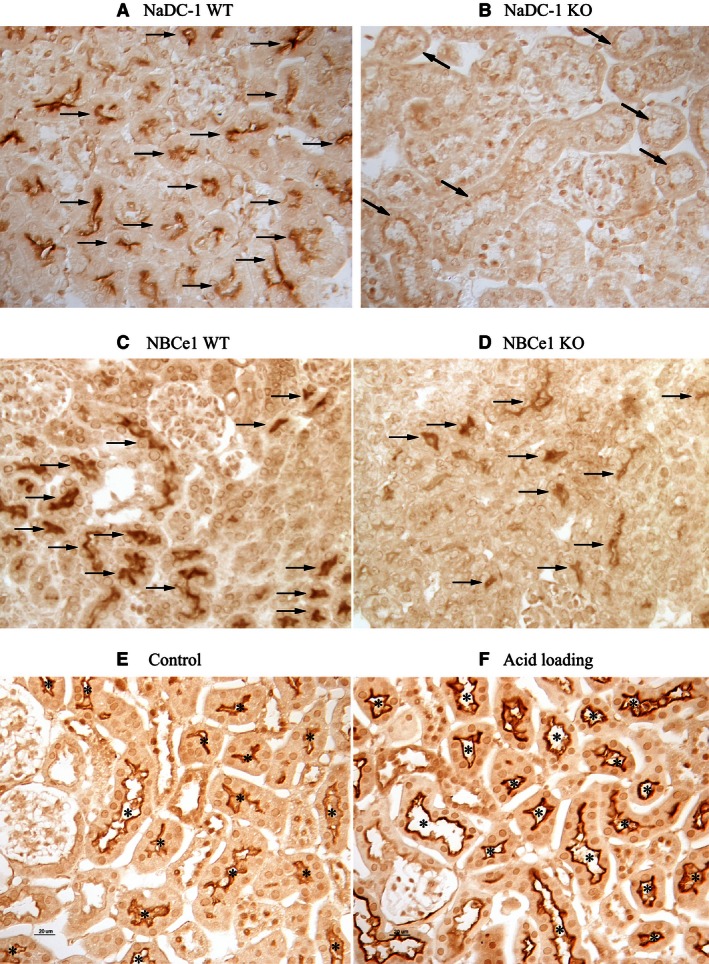
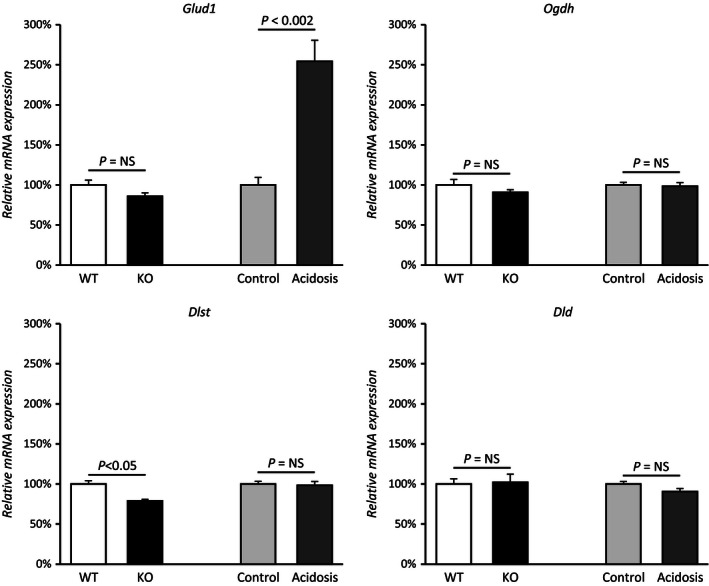
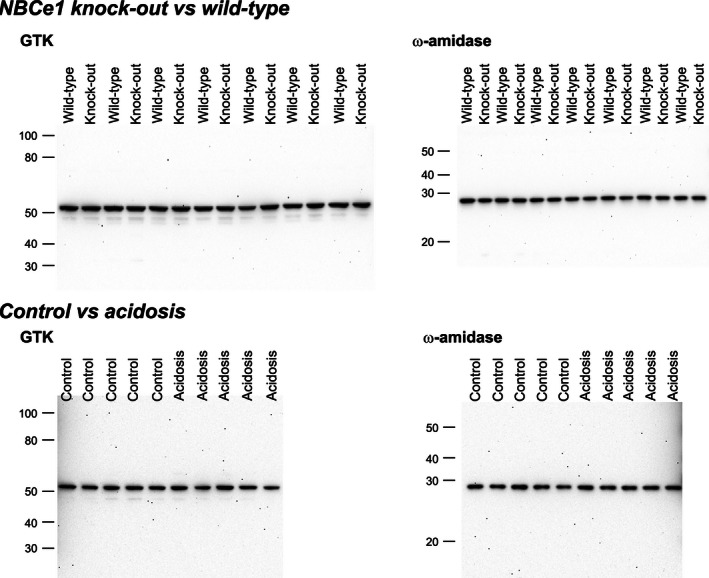
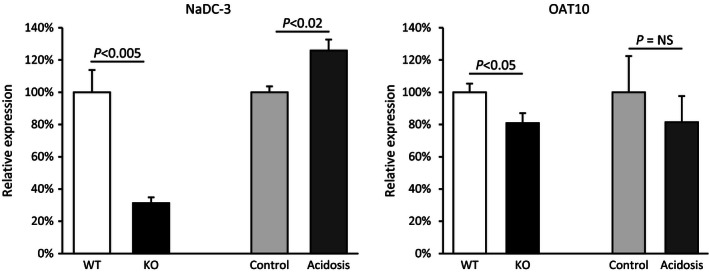
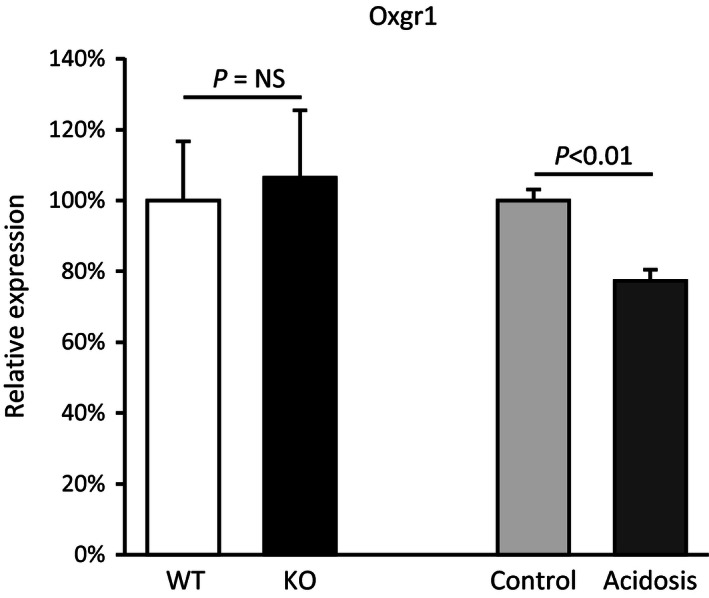
The bicarbonate transporter, NBCe1 (SLC4A4), is necessary for at least two components of the proximal tubule contribution to acid-base homeostasis, filtered bicarbonate reabsorption, and ammonia metabolism. This study's purpose was to determine NBCe1's role in a third component of acid-base homeostasis, organic anion metabolism, by studying mice with NBCe1 deletion. Because NBCe1 deletion causes metabolic acidosis, we also examined acid-loaded wild-type adult mice to determine if the effects of NBCe1 deletion were specific to NBCe1 deletion or were a non-specific effect of the associated metabolic acidosis. Both NBCe1 KO and acid-loading decreased citrate excretion, but in contrast to metabolic acidosis alone, NBCe1 KO decreased expression of the apical citrate transporter, NaDC-1. Thus, NBCe1 expression is necessary for normal NaDC-1 expression, and NBCe1 deletion induces a novel citrate reabsorptive pathway. Second, NBCe1 KO increased 2-oxoglutarate excretion. This could not be attributed to the metabolic acidosis as experimental acidosis decreased excretion. Increased 2-oxoglutarate excretion could not be explained by changes in plasma 2-oxoglutarate levels, the glutaminase I or the glutaminase II generation pathways, 2-oxoglutarate metabolism, its putative apical 2-oxoglutarate transporter, OAT10, or its basolateral transporter, NaDC-3.
(1) NBCe1 is necessary for normal proximal tubule NaDC-1 expression; (2) NBCe1 deletion results in stimulation of a novel citrate reabsorptive pathway; and (3) NBCe1 is necessary for normal 2-oxoglutarate metabolism through mechanisms independent of expression of known transport and metabolic pathways.
碳酸氢盐转运体NBCe1(SLC4A4)对于近端小管在酸碱平衡、滤过碳酸氢盐重吸收和氨代谢方面的至少两个组成部分是必需的。本研究的目的是通过研究缺失NBCe1的小鼠来确定NBCe1在酸碱平衡的第三个组成部分——有机阴离子代谢中的作用。由于缺失NBCe1会导致代谢性酸中毒,我们还检测了酸负荷的野生型成年小鼠,以确定缺失NBCe1的影响是特异性针对NBCe1缺失,还是相关代谢性酸中毒的非特异性影响。NBCe1基因敲除(KO)和酸负荷均降低了柠檬酸盐排泄,但与单独的代谢性酸中毒不同,NBCe1基因敲除降低了顶端柠檬酸盐转运体NaDC-1的表达。因此,NBCe1的表达对于正常的NaDC-1表达是必需的,且缺失NBCe1会诱导一种新的柠檬酸盐重吸收途径。其次,NBCe1基因敲除增加了2-氧代戊二酸的排泄。这不能归因于代谢性酸中毒,因为实验性酸中毒会降低排泄。血浆2-氧代戊二酸水平、谷氨酰胺酶I或谷氨酰胺酶II生成途径、2-氧代戊二酸代谢、其假定的顶端2-氧代戊二酸转运体OAT10或其基底外侧转运体NaDC-3的变化均无法解释2-氧代戊二酸排泄的增加。
(1)NBCe1对于近端小管正常的NaDC-1表达是必需的;(2)缺失NBCe1会导致一种新的柠檬酸盐重吸收途径被激活;(3)NBCe1对于正常的2-氧代戊二酸代谢是必需的,其机制独立于已知转运和代谢途径的表达。