
从贝壳堆到贝壳丘:美国佛罗里达州西南部人工岛土墩礁的地质考古学
From Shell Midden to Midden-Mound: The Geoarchaeology of Mound Key, an Anthropogenic Island in Southwest Florida, USA.
作者信息
Thompson Victor D, Marquardt William H, Cherkinsky Alexander, Roberts Thompson Amanda D, Walker Karen J, Newsom Lee A, Savarese Michael
机构信息
Center for Archaeological Sciences and Department of Anthropology, University of Georgia, Athens, Georgia, United States of America.
Florida Museum of Natural History, University of Florida, Gainesville, Florida, United States of America.
出版信息
PLoS One. 2016 Apr 28;11(4):e0154611. doi: 10.1371/journal.pone.0154611. eCollection 2016.
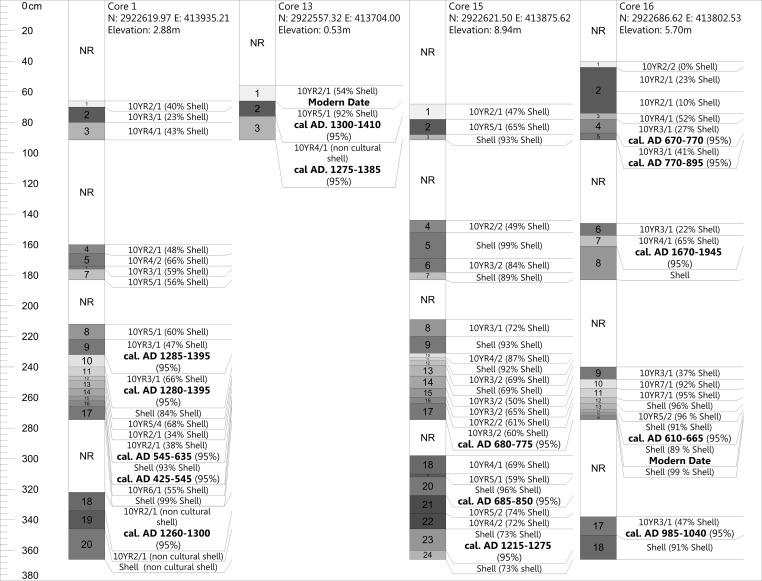
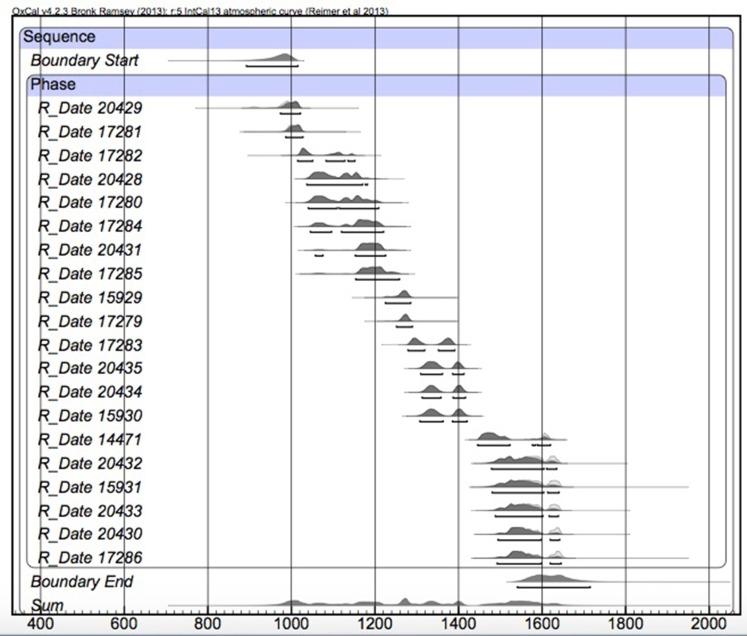
Mound Key was once the capital of the Calusa Kingdom, a large Pre-Hispanic polity that controlled much of southern Florida. Mound Key, like other archaeological sites along the southwest Gulf Coast, is a large expanse of shell and other anthropogenic sediments. The challenges that these sites pose are largely due to the size and areal extent of the deposits, some of which begin up to a meter below and exceed nine meters above modern sea levels. Additionally, the complex depositional sequences at these sites present difficulties in determining their chronology. Here, we examine the development of Mound Key as an anthropogenic island through systematic coring of the deposits, excavations, and intensive radiocarbon dating. The resulting data, which include the reversals of radiocarbon dates from cores and dates from mound-top features, lend insight into the temporality of site formation. We use these insights to discuss the nature and scale of human activities that worked to form this large island in the context of its dynamic, environmental setting. We present the case that deposits within Mound Key's central area accumulated through complex processes that represent a diversity of human action including midden accumulation and the redeposition of older sediments as mound fill.
芒德岛曾是卡卢萨王国的首都,卡卢萨王国是一个前西班牙时期的大型政体,控制着佛罗里达州南部的大部分地区。芒德岛与墨西哥湾西南海岸的其他考古遗址一样,是一大片贝壳和其他人为沉积物。这些遗址带来的挑战主要源于沉积物的规模和面积范围,其中一些沉积物在现代海平面以下一米处开始,在现代海平面以上超过九米。此外,这些遗址复杂的沉积层序在确定其年代顺序方面存在困难。在这里,我们通过对沉积物进行系统取芯、挖掘和密集的放射性碳测年,研究芒德岛作为一个人工岛的发展过程。由此得到的数据,包括岩芯放射性碳年代的反转以及山顶特征的年代,有助于深入了解遗址形成的时间性。我们利用这些见解,在其动态的环境背景下,讨论形成这个大岛的人类活动的性质和规模。我们提出这样一个观点,即芒德岛中心区域的沉积物是通过复杂的过程积累起来的,这些过程代表了人类活动的多样性,包括垃圾堆积和旧沉积物作为土堆填充物的再沉积。





 Zotero 插件