Huang Qichao, Zhan Lei, Cao Haiyan, Li Jibin, Lyu Yinghua, Guo Xu, Zhang Jing, Ji Lele, Ren Tingting, An Jiaze, Liu Bingrong, Nie Yongzhan, Xing Jinliang
a State Key Laboratory of Cancer Biology and Experimental Teaching Center of Basic Medicine, Fourth Military Medical University , Xi'an , China.
b Department of Gastroenterology , Second Affiliated Hospital of Harbin Medical University , Harbin , China.
Autophagy. 2016 Jun 2;12(6):999-1014. doi: 10.1080/15548627.2016.1166318. Epub 2016 Apr 28.
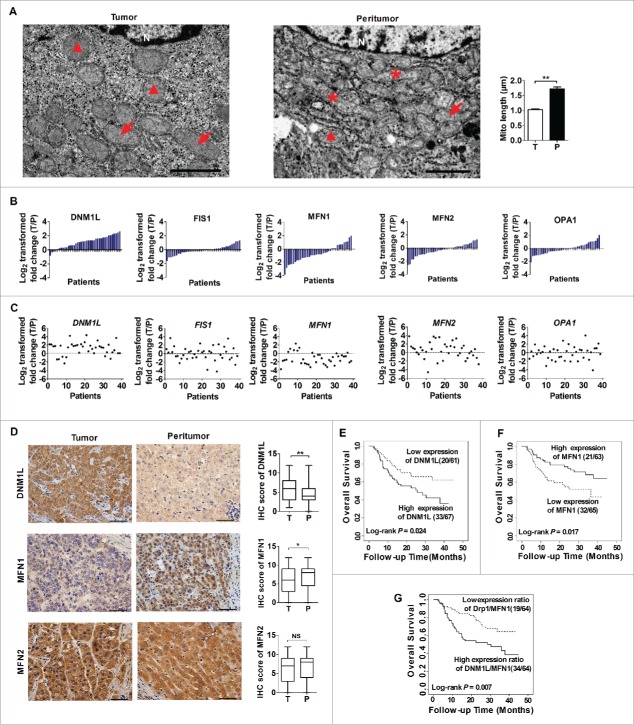
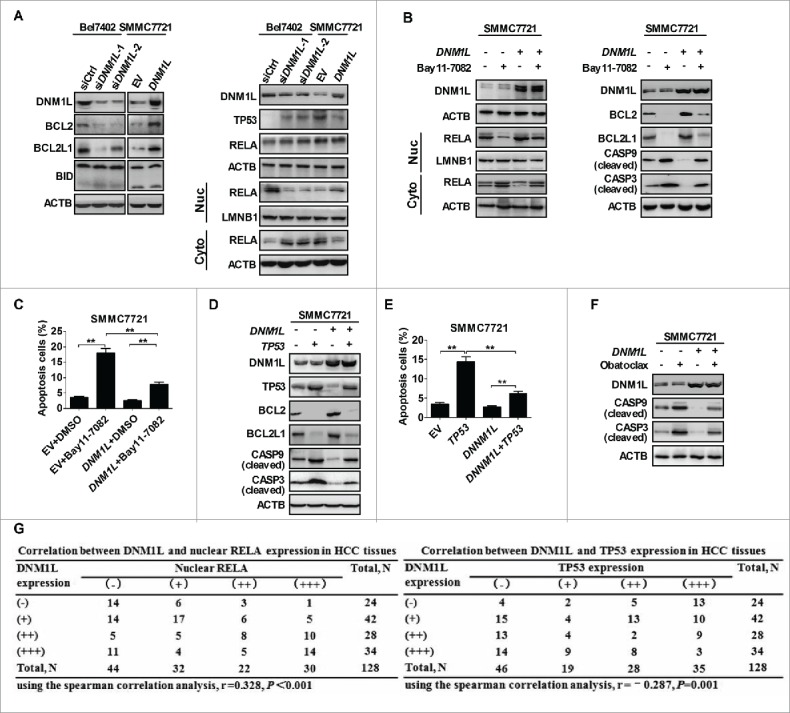
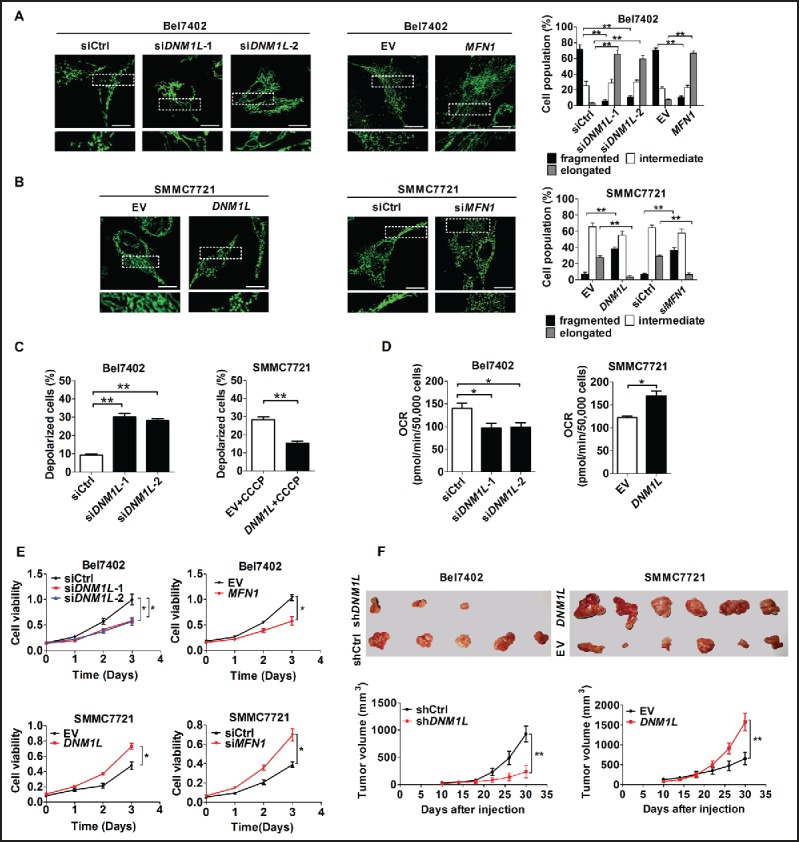
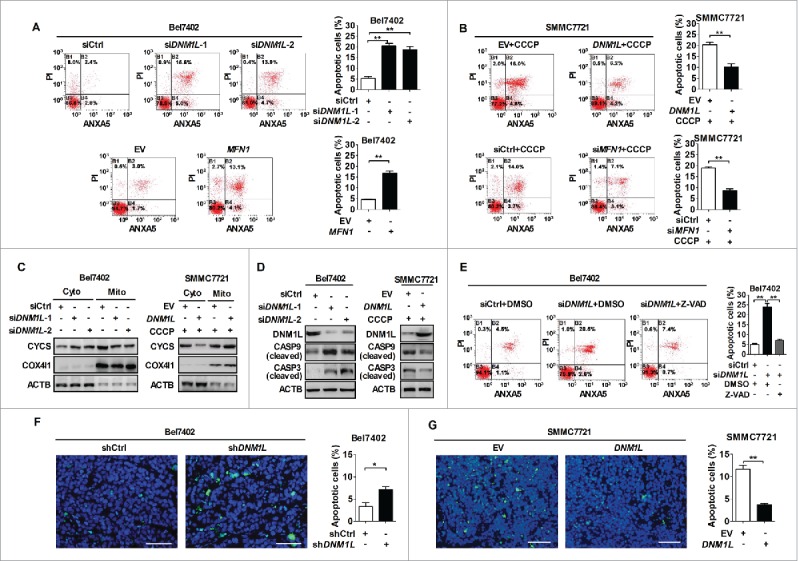
Mitochondrial morphology is dynamically remodeled by fusion and fission in cells, and dysregulation of this process is closely implicated in tumorigenesis. However, the mechanism by which mitochondrial dynamics influence cancer cell survival is considerably less clear, especially in hepatocellular carcinoma (HCC). In this study, we systematically investigated the alteration of mitochondrial dynamics and its functional role in the regulation of autophagy and HCC cell survival. Furthermore, the underlying molecular mechanisms and therapeutic application were explored in depth. Mitochondrial fission was frequently upregulated in HCC tissues mainly due to an elevated expression ratio of DNM1L to MFN1, which significantly contributed to poor prognosis of HCC patients. Increased mitochondrial fission by forced expression of DNM1L or knockdown of MFN1 promoted the survival of HCC cells both in vitro and in vivo mainly by facilitating autophagy and inhibiting mitochondria-dependent apoptosis. We further demonstrated that the survival-promoting role of increased mitochondrial fission was mediated via elevated ROS production and subsequent activation of AKT, which facilitated MDM2-mediated TP53 degradation, and NFKBIA- and IKK-mediated transcriptional activity of NFKB in HCC cells. Also, a crosstalk between TP53 and NFKB pathways was involved in the regulation of mitochondrial fission-mediated cell survival. Moreover, treatment with mitochondrial division inhibitor-1 significantly suppressed tumor growth in an in vivo xenograft nude mice model. Our findings demonstrate that increased mitochondrial fission plays a critical role in regulation of HCC cell survival, which provides a strong evidence for this process as drug target in HCC treatment.
线粒体形态在细胞中通过融合和分裂进行动态重塑,该过程的失调与肿瘤发生密切相关。然而,线粒体动态变化影响癌细胞存活的机制尚不清楚,尤其是在肝细胞癌(HCC)中。在本研究中,我们系统地研究了线粒体动态变化的改变及其在自噬调节和HCC细胞存活中的功能作用。此外,还深入探讨了潜在的分子机制和治疗应用。线粒体分裂在HCC组织中经常上调,主要是由于DNM1L与MFN1的表达比例升高,这显著导致了HCC患者的不良预后。通过强制表达DNM1L或敲低MFN1增加线粒体分裂,主要通过促进自噬和抑制线粒体依赖性凋亡,在体外和体内均促进了HCC细胞的存活。我们进一步证明,增加线粒体分裂的促存活作用是通过升高ROS产生以及随后激活AKT介导的,这促进了MDM2介导的TP53降解以及NFKBIA和IKK介导的HCC细胞中NFKB的转录活性。此外,TP53和NFKB途径之间的相互作用参与了线粒体分裂介导的细胞存活调节。此外,线粒体分裂抑制剂-1治疗在体内异种移植裸鼠模型中显著抑制了肿瘤生长。我们的研究结果表明,增加的线粒体分裂在HCC细胞存活调节中起关键作用,这为该过程作为HCC治疗的药物靶点提供了有力证据。