Kaczmarczyk Lech, Mende Ylva, Zevnik Branko, Jackson Walker S
German Center for Neurodegenerative Diseases (DZNE), Bonn, Germany.
Cologne Excellence Cluster on Cellular Stress Responses in Aging-associated Diseases (CECAD), Medical Faculty, University of Cologne, Cologne, Germany.
PLoS One. 2016 Apr 29;11(4):e0154604. doi: 10.1371/journal.pone.0154604. eCollection 2016.
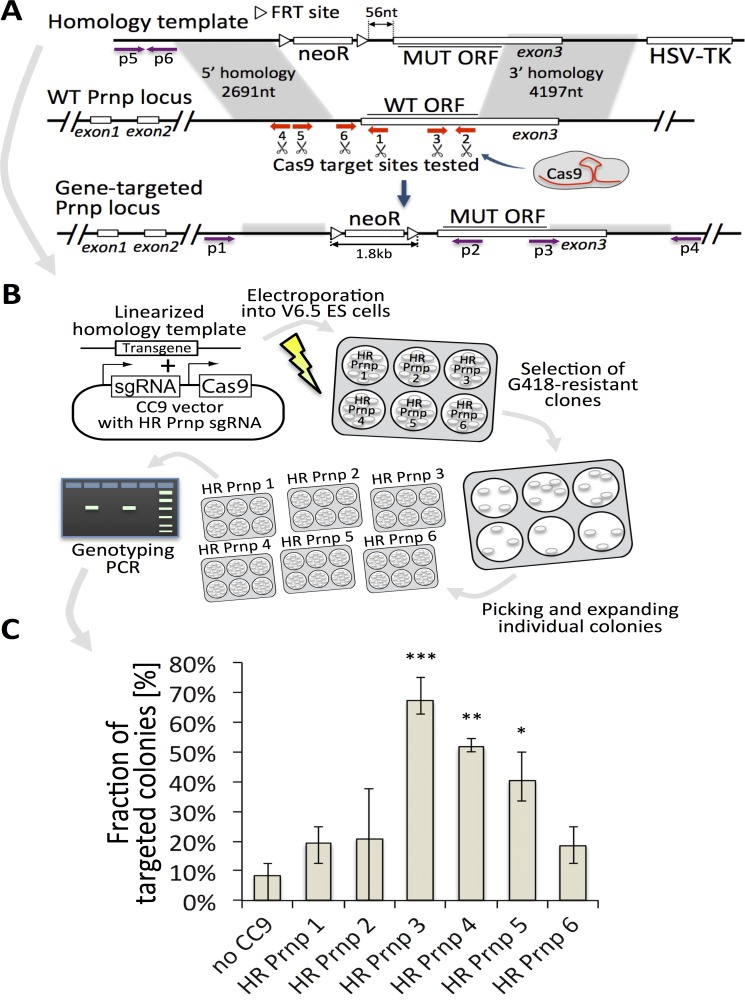
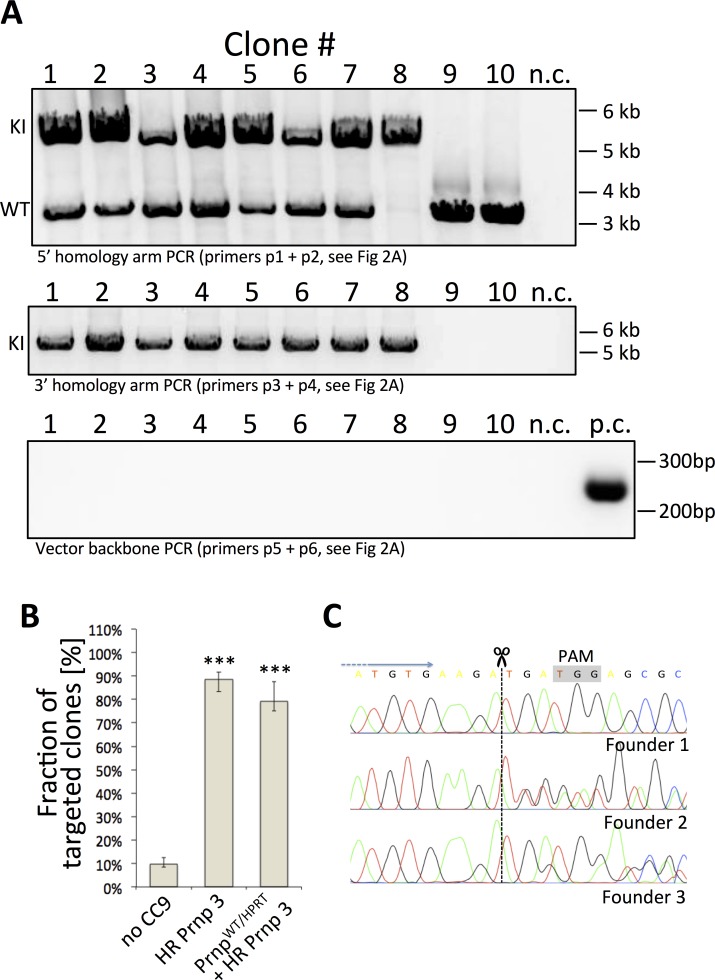
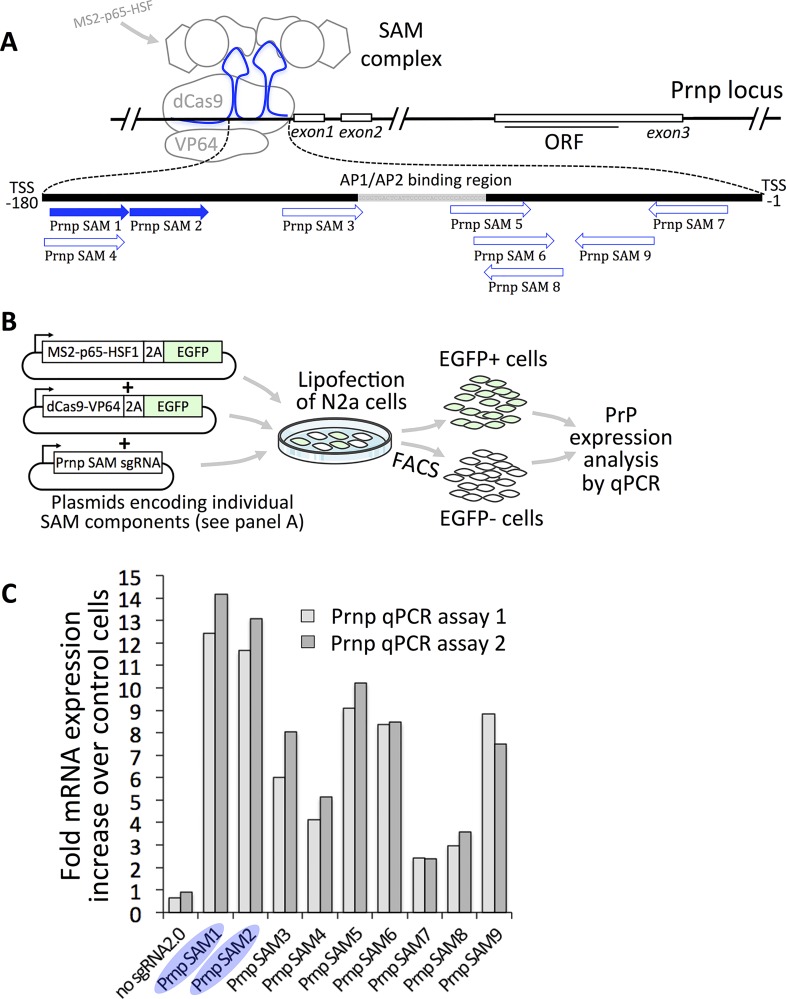
The mammalian prion protein (PrP, encoded by Prnp) is most infamous for its central role in prion diseases, invariably fatal neurodegenerative diseases affecting humans, food animals, and animals in the wild. However, PrP is also hypothesized to be an important receptor for toxic protein conformers in Alzheimer's disease, and is associated with other clinically relevant processes such as cancer and stroke. Thus, key insights into important clinical areas, as well as into understanding PrP functions in normal physiology, can be obtained from studying transgenic mouse models and cell culture systems. However, the Prnp locus is difficult to manipulate by homologous recombination, making modifications of the endogenous locus rarely attempted. Fortunately in recent years genome engineering technologies, like TALENs or CRISPR/Cas9 (CC9), have brought exceptional new possibilities for manipulating Prnp. Herein, we present our observations made during systematic experiments with the CC9 system targeting the endogenous mouse Prnp locus, to either modify sequences or to boost PrP expression using CC9-based synergistic activation mediators (SAMs). It is our hope that this information will aid and encourage researchers to implement gene-targeting techniques into their research program.
哺乳动物朊病毒蛋白(PrP,由Prnp编码)因在朊病毒疾病中起核心作用而最为臭名昭著,朊病毒疾病是影响人类、食用动物和野生动物的致命神经退行性疾病。然而,PrP也被认为是阿尔茨海默病中有毒蛋白质构象异构体的重要受体,并且与癌症和中风等其他临床相关过程有关。因此,通过研究转基因小鼠模型和细胞培养系统,可以获得对重要临床领域以及对理解PrP在正常生理中的功能的关键见解。然而,Prnp基因座很难通过同源重组进行操作,因此很少有人尝试对内源基因座进行修饰。幸运的是,近年来,诸如TALENs或CRISPR/Cas9(CC9)等基因组工程技术为操纵Prnp带来了前所未有的新可能性。在此,我们展示了在针对内源性小鼠Prnp基因座的CC9系统的系统实验过程中所做的观察,该实验旨在使用基于CC9的协同激活介质(SAMs)来修改序列或提高PrP表达。我们希望这些信息将有助于并鼓励研究人员将基因靶向技术应用于他们的研究项目中。