Najafi Mahshid, McMenamin Brenton W, Simon Jonathan Z, Pessoa Luiz
Department of Electrical and Computer Engineering, University of Maryland, College Park, MD 20742, USA; Department of Psychology, University of Maryland, College Park, MD 20742, USA.
Department of Psychology, University of Maryland, College Park, MD 20742, USA.
Neuroimage. 2016 Jul 15;135:92-106. doi: 10.1016/j.neuroimage.2016.04.054. Epub 2016 Apr 26.
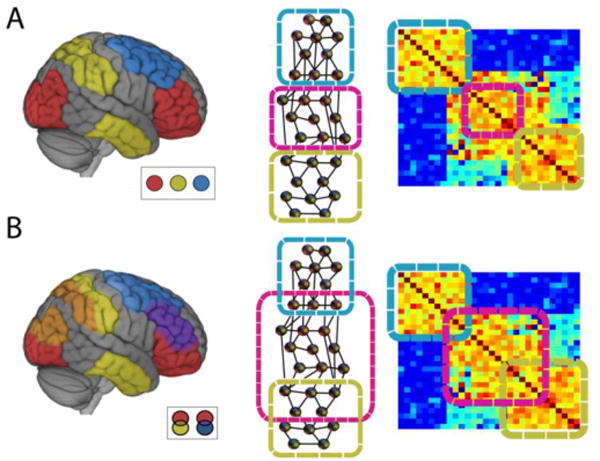
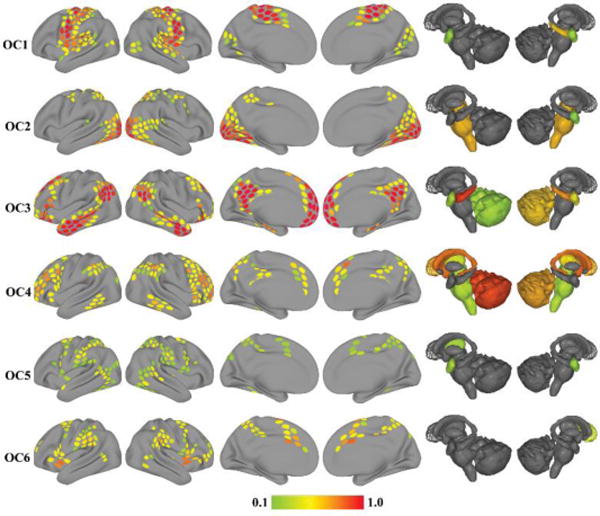
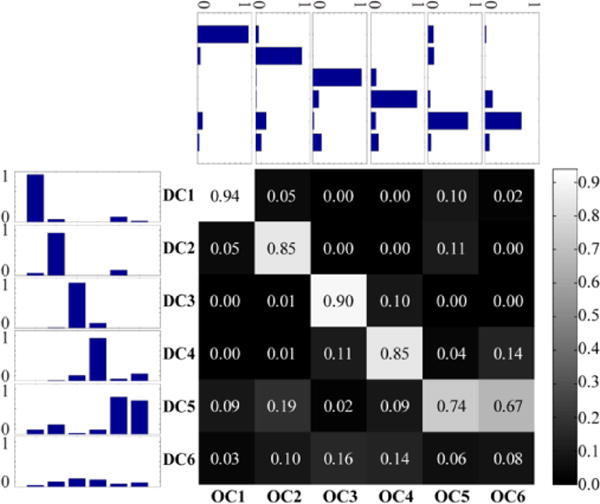
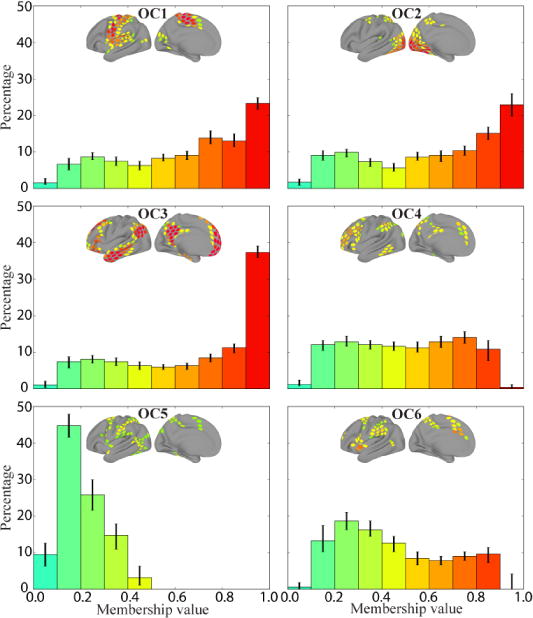
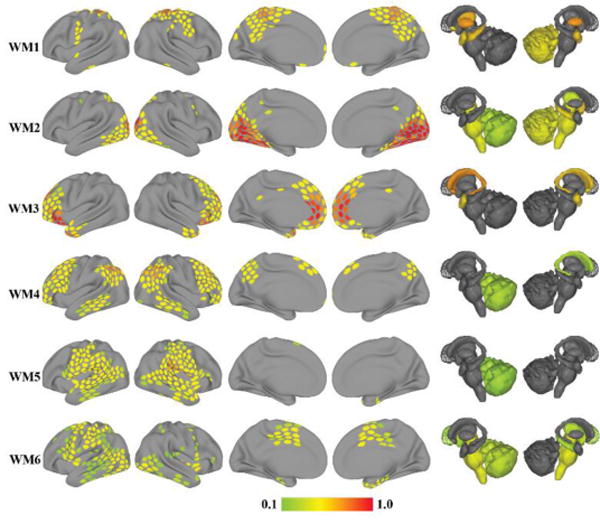
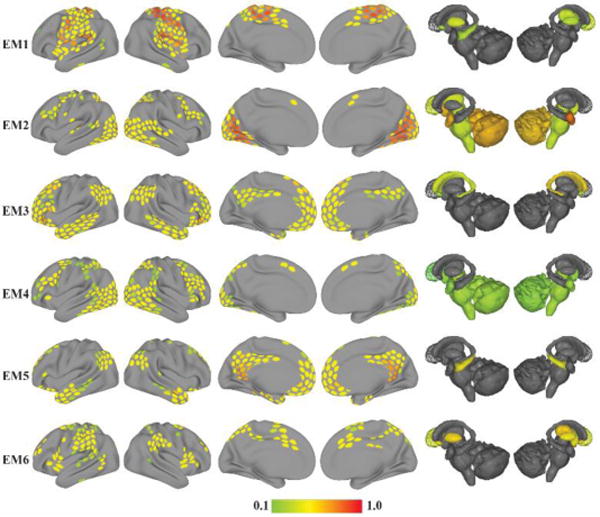
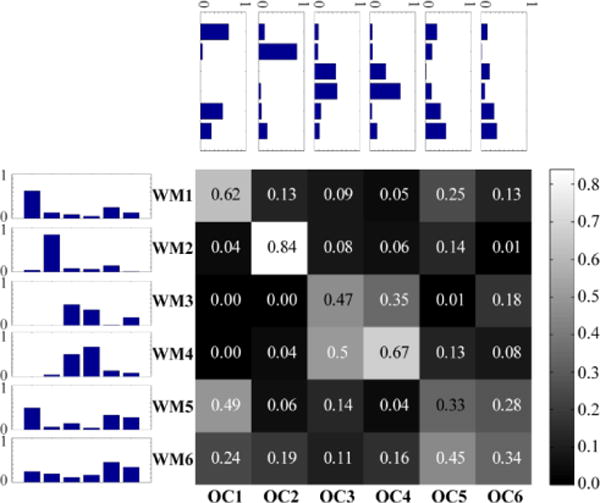
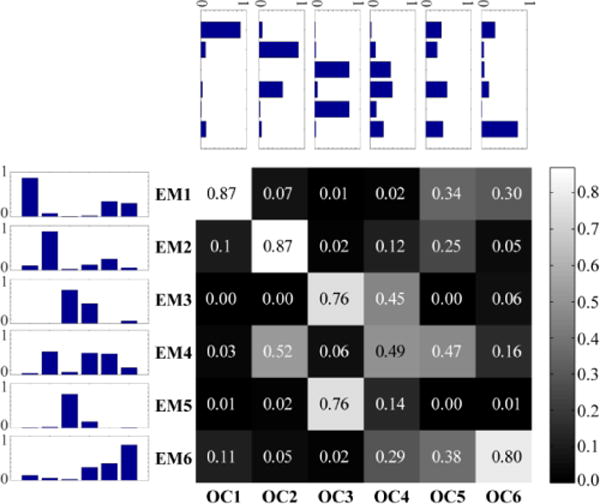
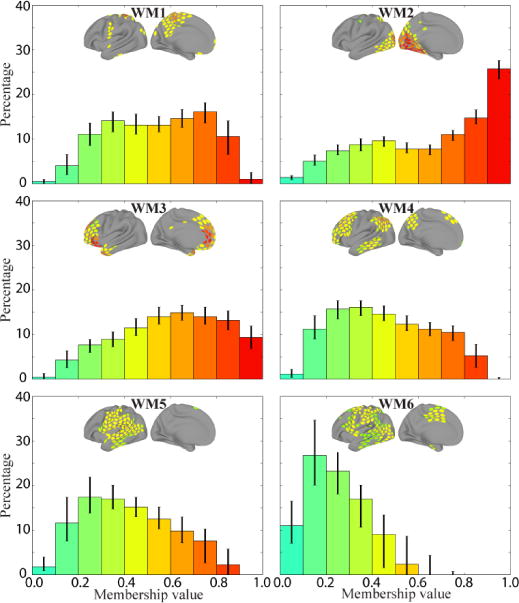
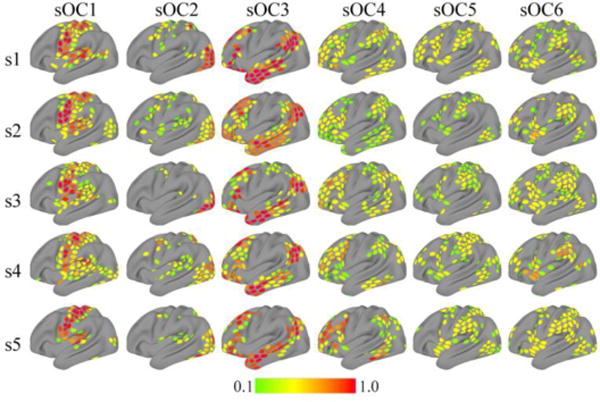
Large-scale analysis of functional MRI data has revealed that brain regions can be grouped into stable "networks" or communities. In many instances, the communities are characterized as relatively disjoint. Although recent work indicates that brain regions may participate in multiple communities (for example, hub regions), the extent of community overlap is poorly understood. To address these issues, here we investigated large-scale brain networks based on "rest" and task human functional MRI data by employing a mixed-membership Bayesian model that allows each brain region to belong to all communities simultaneously with varying membership strengths. The approach allowed us to 1) compare the structure of disjoint and overlapping communities; 2) determine the relationship between functional diversity (how diverse is a region's functional activation repertoire) and membership diversity (how diverse is a region's affiliation to communities); 3) characterize overlapping community structure; 4) characterize the degree of non-modularity in brain networks; 5) study the distribution of "bridges", including bottleneck and hub bridges. Our findings revealed the existence of dense community overlap that was not limited to "special" hubs. Furthermore, the findings revealed important differences between community organization during rest and during specific task states. Overall, we suggest that dense overlapping communities are well suited to capture the flexible and task dependent mapping between brain regions and their functions.
对功能磁共振成像数据的大规模分析表明,脑区可被归类为稳定的“网络”或群落。在许多情况下,这些群落的特征是相对不相交的。尽管最近的研究表明脑区可能参与多个群落(例如,枢纽区域),但群落重叠的程度仍知之甚少。为了解决这些问题,我们在此通过采用混合成员贝叶斯模型,基于“静息”和任务态人类功能磁共振成像数据研究大规模脑网络,该模型允许每个脑区以不同的成员强度同时属于所有群落。该方法使我们能够:1)比较不相交和重叠群落的结构;2)确定功能多样性(一个区域的功能激活模式有多多样)和成员多样性(一个区域与群落的隶属关系有多多样)之间的关系;3)描述重叠群落结构;4)描述脑网络中的非模块化程度;5)研究“桥梁”的分布,包括瓶颈桥和枢纽桥。我们的研究结果揭示了密集的群落重叠的存在,这种重叠并不局限于“特殊”枢纽。此外,研究结果还揭示了静息状态和特定任务状态下群落组织之间的重要差异。总体而言,我们认为密集的重叠群落非常适合捕捉脑区与其功能之间灵活且依赖任务的映射关系。