Malchow Sven, Leventhal Daniel S, Lee Victoria, Nishi Saki, Socci Nicholas D, Savage Peter A
Department of Pathology, University of Chicago, Chicago, IL 60637, USA.
Bioinformatics Core, Memorial Sloan-Kettering Cancer Center, New York, NY 10021, USA.
Immunity. 2016 May 17;44(5):1102-13. doi: 10.1016/j.immuni.2016.02.009. Epub 2016 Apr 26.
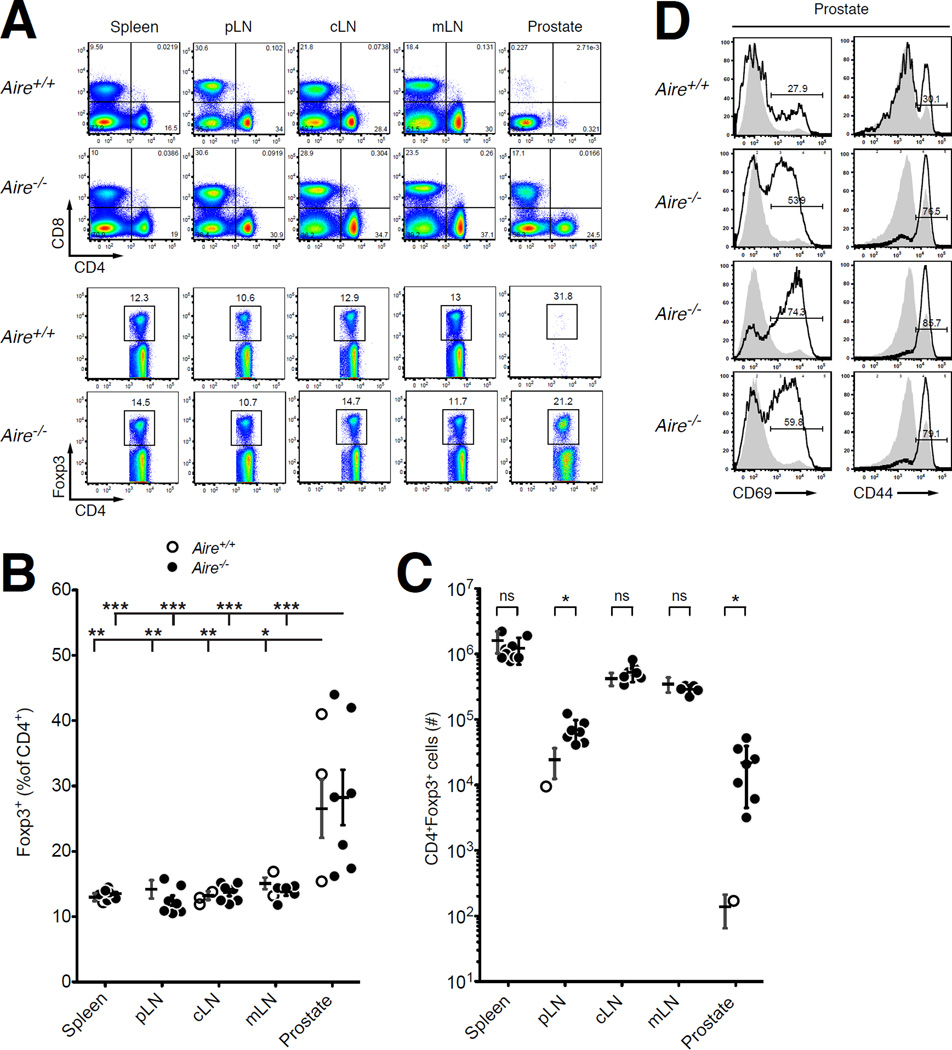
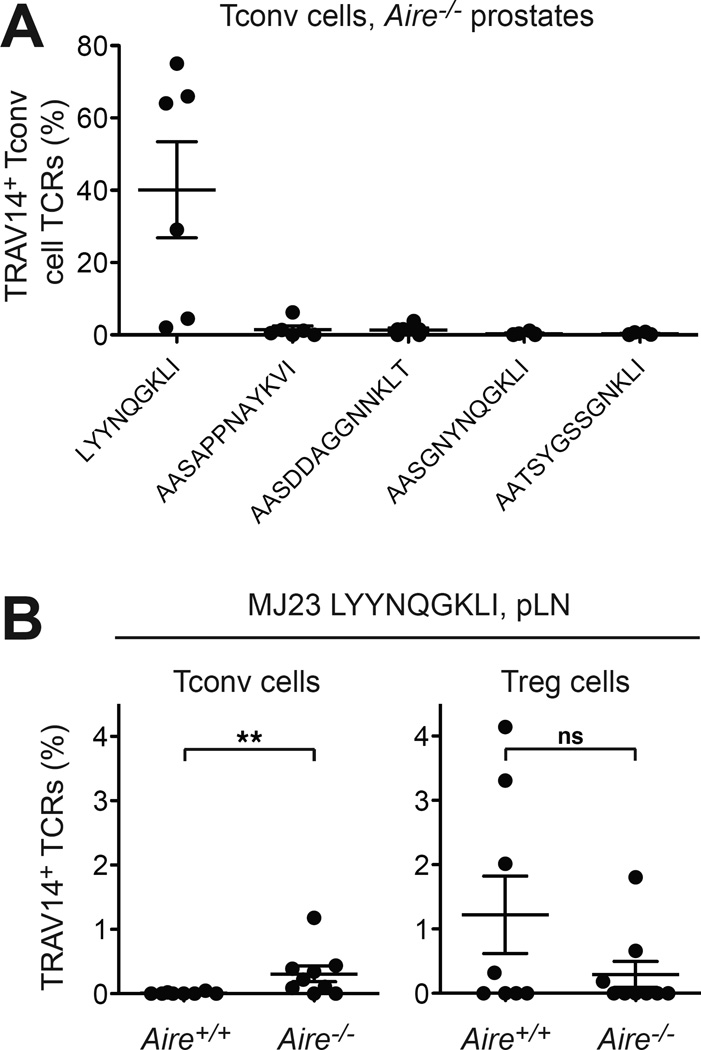
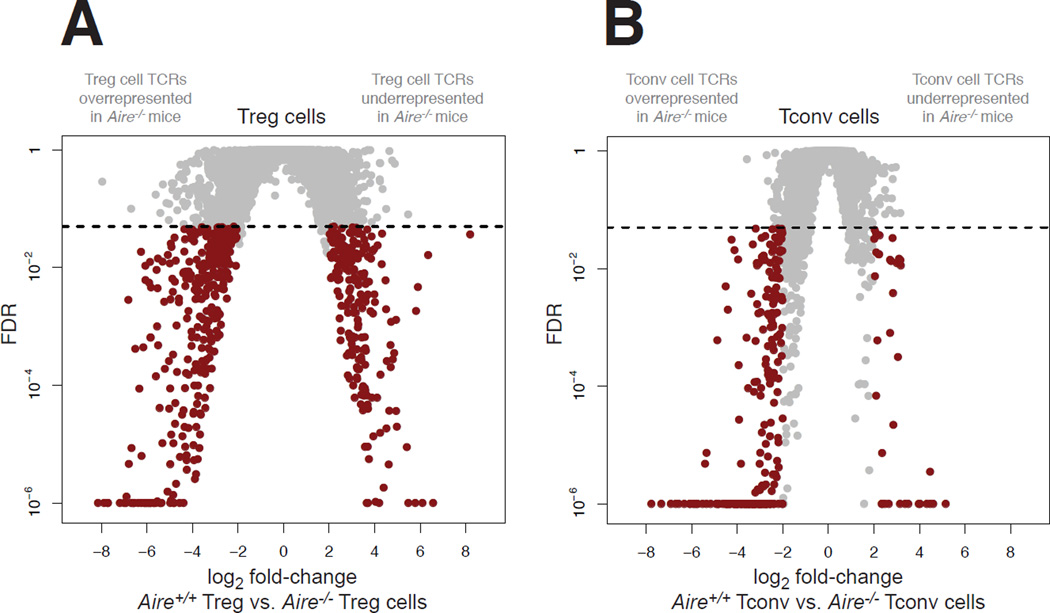
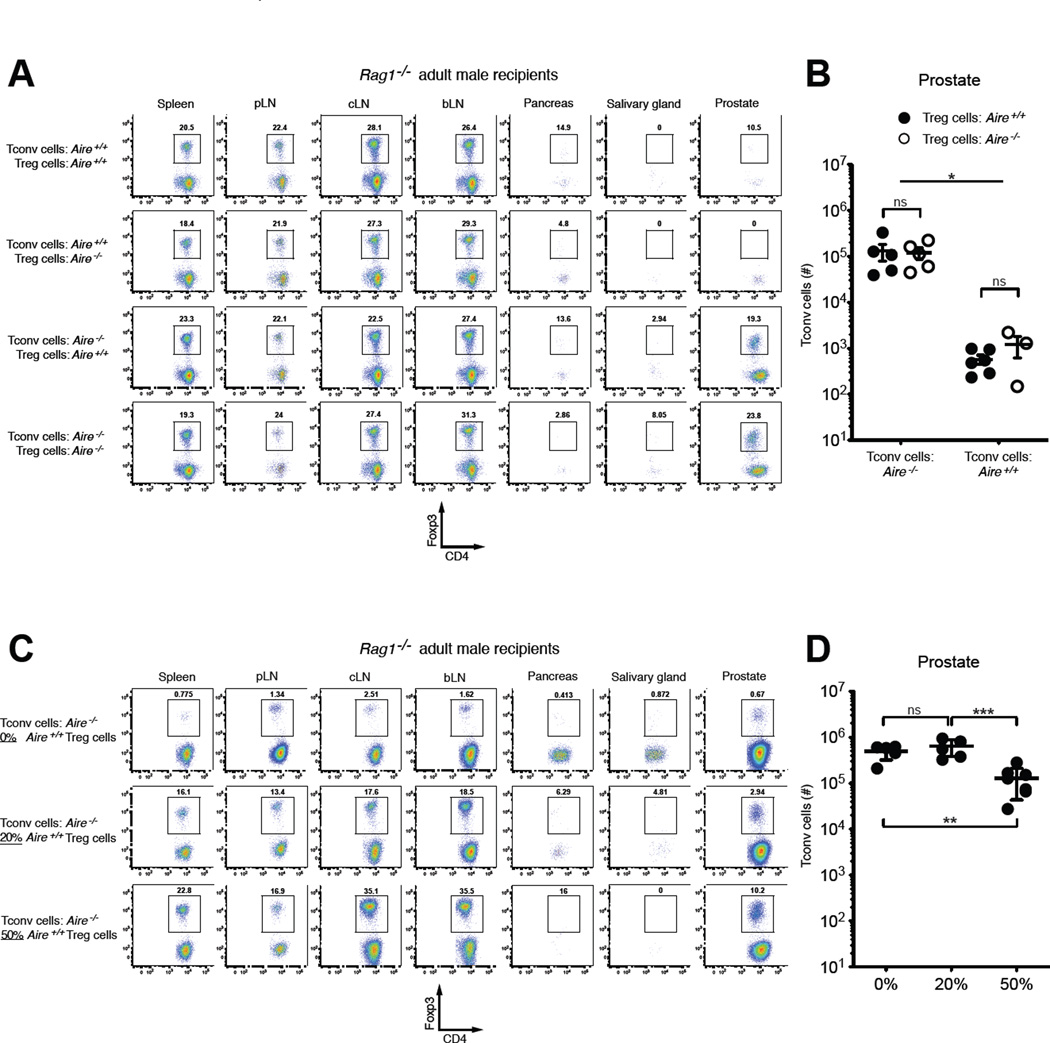
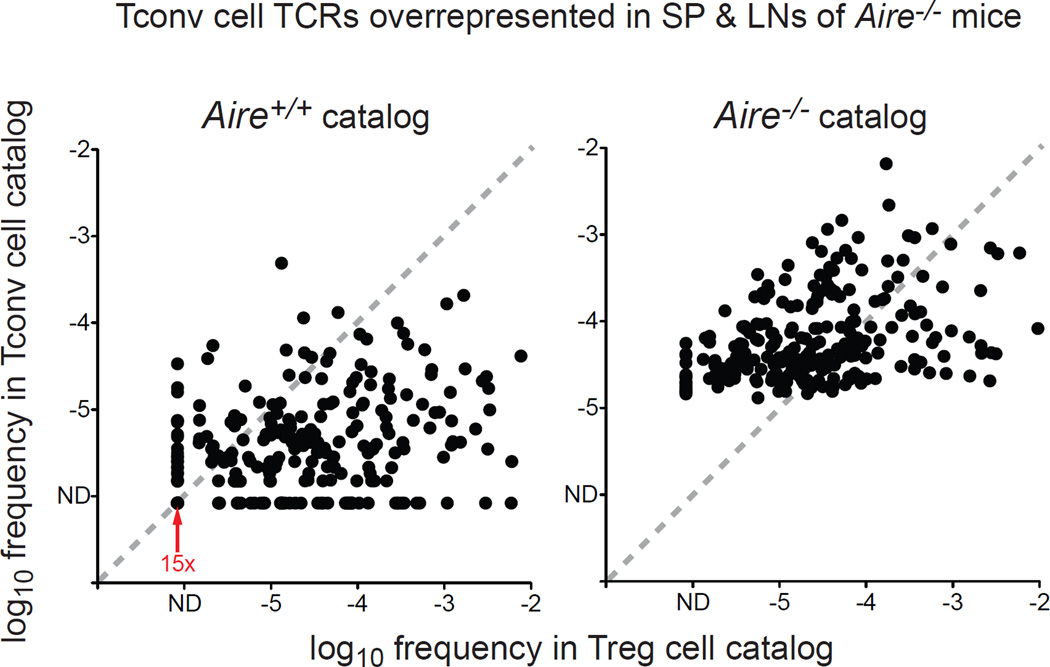
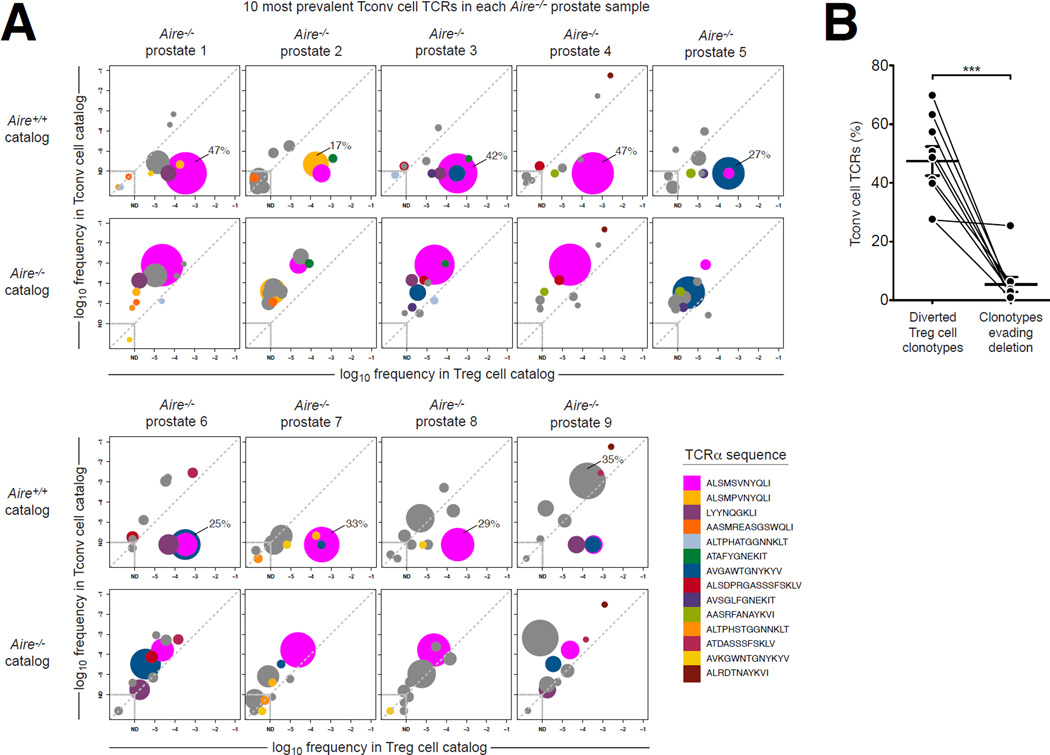
The promiscuous expression of tissue-restricted antigens in the thymus, driven in part by autoimmune regulator (Aire), is critical for the protection of peripheral tissues from autoimmune attack. Aire-dependent processes are thought to promote both clonal deletion and the development of Foxp3(+) regulatory T (Treg) cells, suggesting that autoimmunity associated with Aire deficiency results from two failed tolerance mechanisms. Here, examination of autoimmune lesions in Aire(-/-) mice revealed an unexpected third possibility. We found that the predominant conventional T cell clonotypes infiltrating target lesions express antigen receptors that were preferentially expressed by Foxp3(+) Treg cells in Aire(+/+) mice. Thus, Aire enforces immune tolerance by ensuring that distinct autoreactive T cell specificities differentiate into the Treg cell lineage; dysregulation of this process results in the diversion of Treg cell-biased clonotypes into pathogenic conventional T cells.
胸腺中组织限制性抗原的杂乱表达(部分由自身免疫调节因子(Aire)驱动)对于保护外周组织免受自身免疫攻击至关重要。依赖Aire的过程被认为可促进克隆清除和Foxp3(+)调节性T(Treg)细胞的发育,这表明与Aire缺陷相关的自身免疫是由两种耐受机制失败导致的。在此,对Aire(-/-)小鼠自身免疫性病变的检查揭示了一种意想不到的第三种可能性。我们发现,浸润靶病变的主要传统T细胞克隆型表达的抗原受体在Aire(+/+)小鼠中优先由Foxp3(+) Treg细胞表达。因此,Aire通过确保不同的自身反应性T细胞特异性分化为Treg细胞谱系来强化免疫耐受;该过程的失调导致偏向Treg细胞的克隆型转变为致病性传统T细胞。