Ulrich Victoria, Rotllan Noemi, Araldi Elisa, Luciano Amelia, Skroblin Philipp, Abonnenc Mélanie, Perrotta Paola, Yin Xiaoke, Bauer Ashley, Leslie Kristen L, Zhang Pei, Aryal Binod, Montgomery Rusty L, Thum Thomas, Martin Kathleen, Suarez Yajaira, Mayr Manuel, Fernandez-Hernando Carlos, Sessa William C
Vascular Biology and Therapeutics Program, Yale University School of Medicine, New Haven, CT, USA Department of Pharmacology, School of Medicine Yale University, New Haven, CT, USA.
Vascular Biology and Therapeutics Program, Yale University School of Medicine, New Haven, CT, USA Integrative Cell Signaling and Neurobiology of Metabolism Program, Section of Comparative Medicine and Department of Pathology, School of Medicine Yale University, New Haven, CT, USA.
EMBO Mol Med. 2016 Jun 1;8(6):643-53. doi: 10.15252/emmm.201506031. Print 2016 Jun.
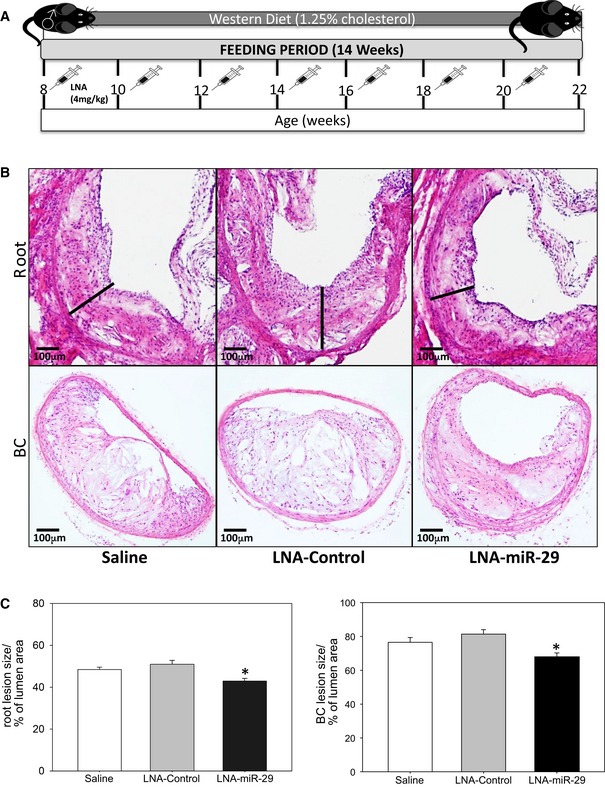
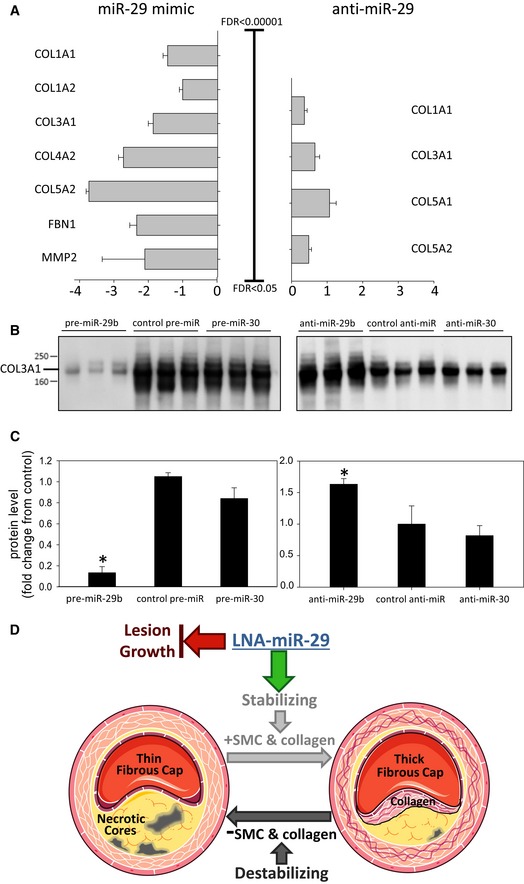
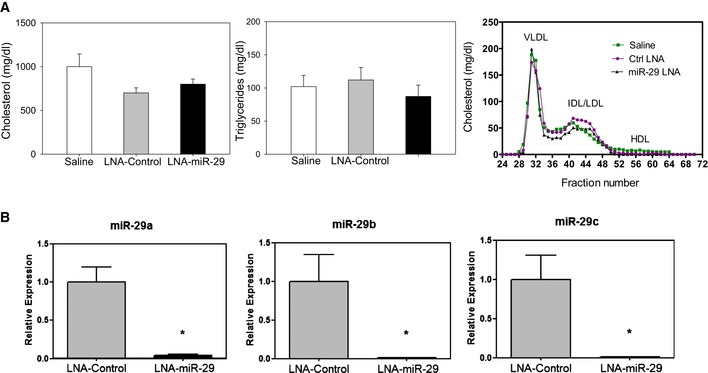
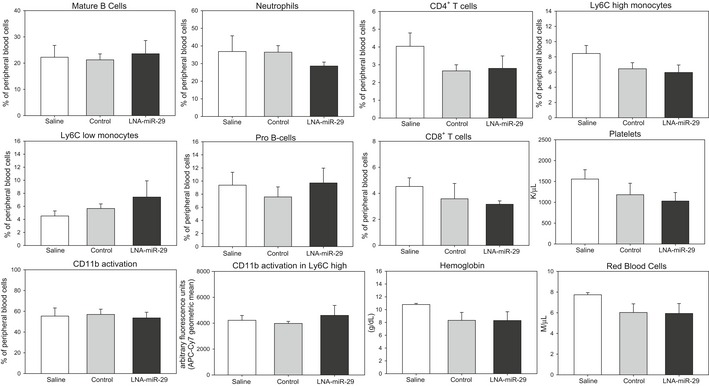
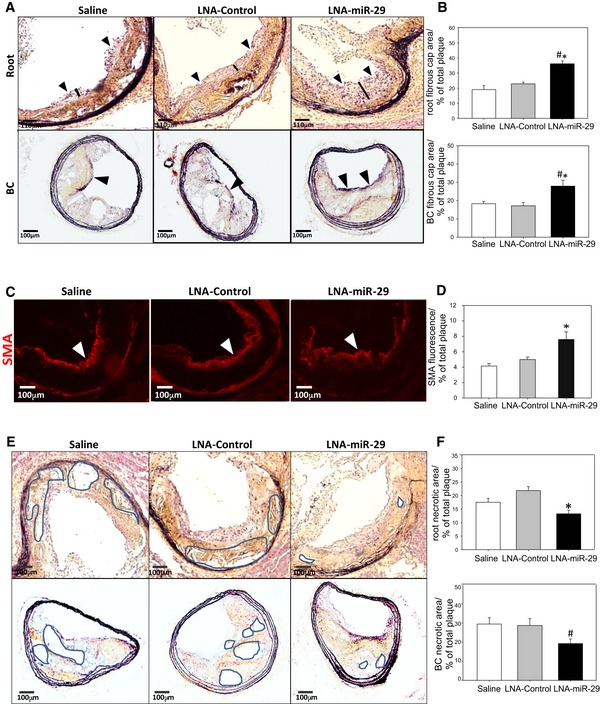
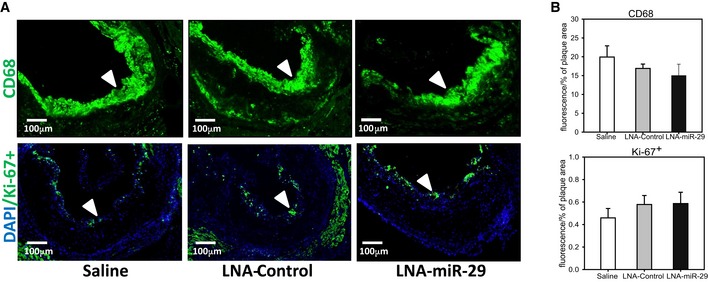
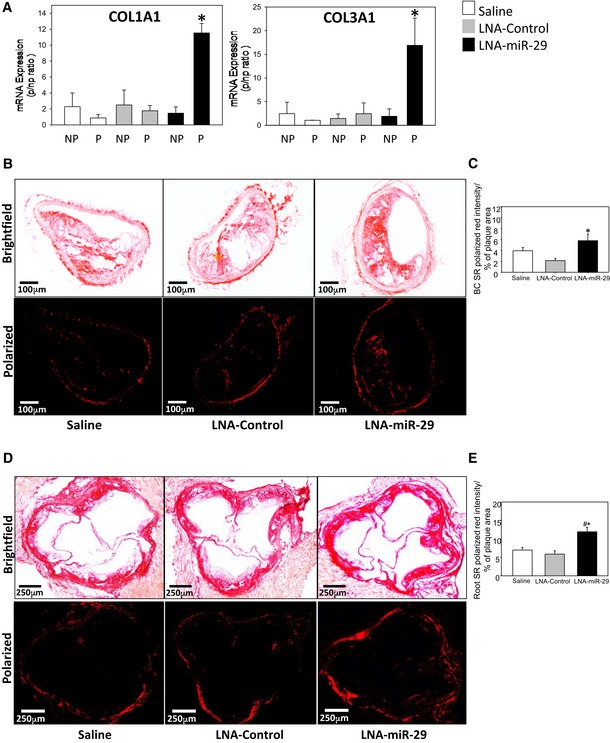
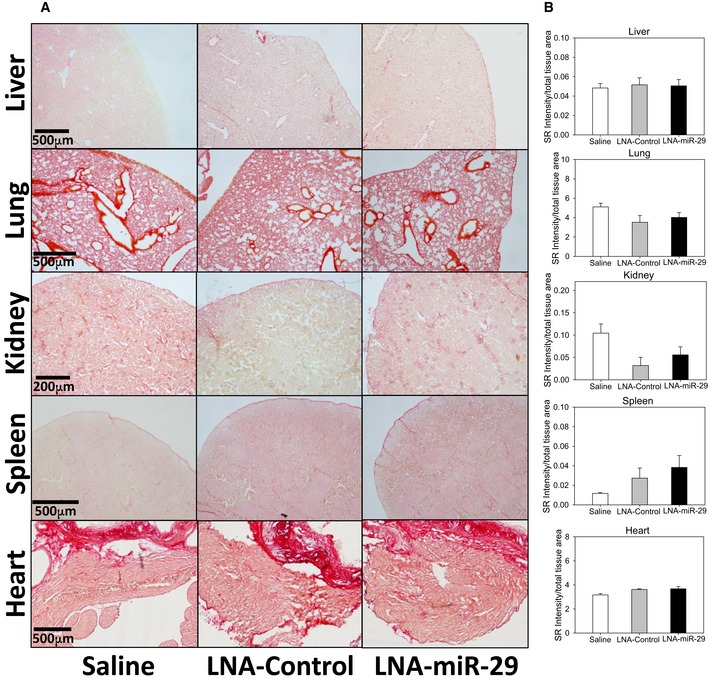
Abnormal remodeling of atherosclerotic plaques can lead to rupture, acute myocardial infarction, and death. Enhancement of plaque extracellular matrix (ECM) may improve plaque morphology and stabilize lesions. Here, we demonstrate that chronic administration of LNA-miR-29 into an atherosclerotic mouse model improves indices of plaque morphology. This occurs due to upregulation of miR-29 target genes of the ECM (col1A and col3A) resulting in reduced lesion size, enhanced fibrous cap thickness, and reduced necrotic zones. Sustained LNA-miR-29 treatment did not affect circulating lipids, blood chemistry, or ECM of solid organs including liver, lung, kidney, spleen, or heart. Collectively, these data support the idea that antagonizing miR-29 may promote beneficial plaque remodeling as an independent approach to stabilize vulnerable atherosclerotic lesions.
动脉粥样硬化斑块的异常重塑可导致斑块破裂、急性心肌梗死和死亡。增强斑块细胞外基质(ECM)可能改善斑块形态并稳定病变。在此,我们证明在动脉粥样硬化小鼠模型中长期给予锁核酸- miR - 29可改善斑块形态指标。这是由于ECM 的 miR - 29靶基因(col1A和col3A)上调,导致病变大小减小、纤维帽厚度增加和坏死区域减少。持续的锁核酸- miR - 29治疗不影响循环脂质、血液生化指标或包括肝脏、肺、肾脏、脾脏或心脏在内的实体器官的ECM。总体而言,这些数据支持这样一种观点,即拮抗miR - 29可能促进有益的斑块重塑,作为稳定易损动脉粥样硬化病变的一种独立方法。