Yang Xiaojuan, Pang Jiuxia, Shen Na, Yan Fei, Wu Lai-Chu, Al-Kali Aref, Litzow Mark R, Peng Yong, Lee Robert J, Liu Shujun
The Hormel Institute, University of Minnesota, Austin, MN 55912, USA.
Department of Biological Chemistry and Pharmacology, The Ohio State University, Columbus, OH 43210, USA.
Oncotarget. 2016 Jun 14;7(24):36382-36394. doi: 10.18632/oncotarget.8871.
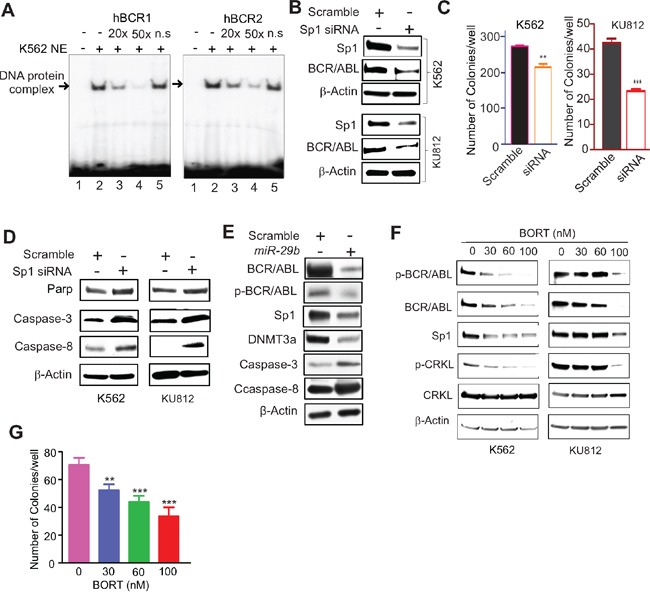
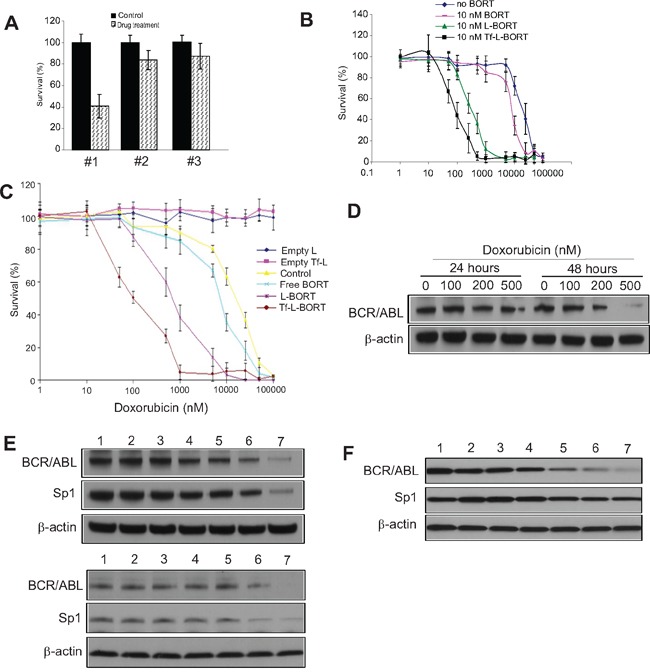
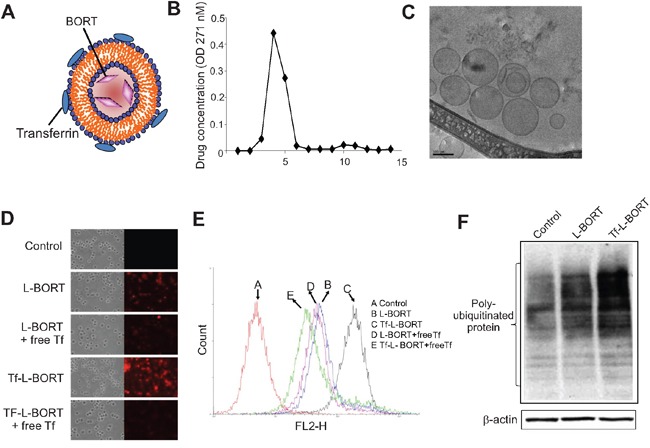
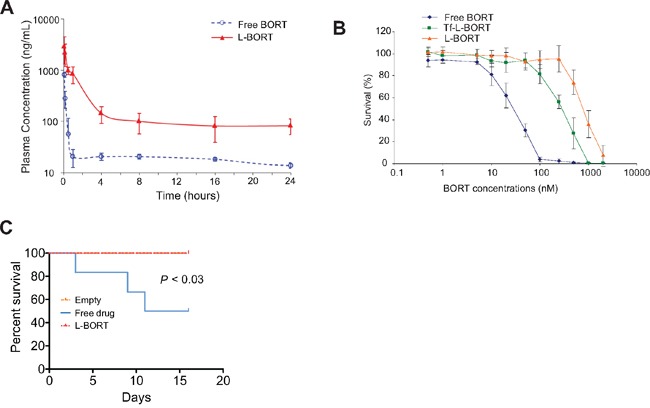
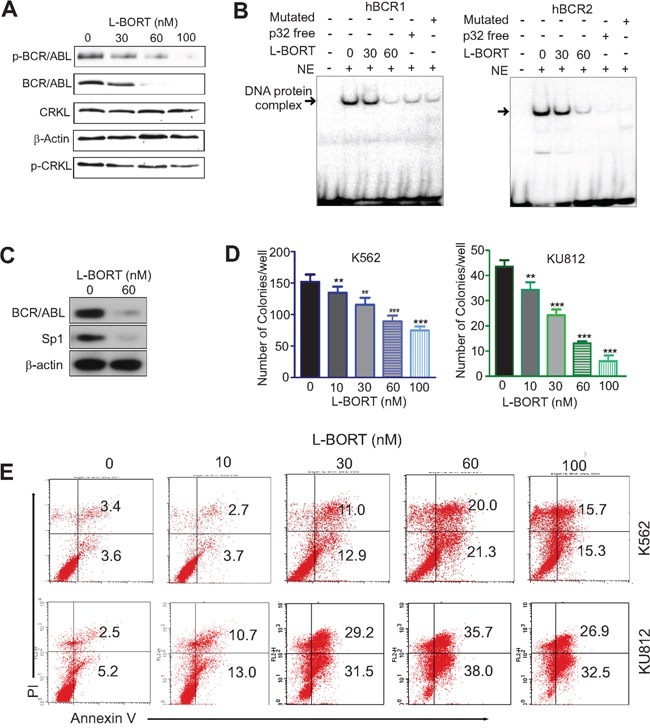
The abundance of the BCR/ABL protein critically contributes to CML pathogenesis and drug resistance. However, understanding of molecular mechanisms underlying BCR/ABL gene regulation remains incomplete. While BCR/ABL kinase inhibitors have shown unprecedented efficacy in the clinic, most patients relapse. In this study, we demonstrated that the Sp1 oncogene functions as a positive regulator for BCR/ABL expression. Inactivation of Sp1 by genetic and pharmacological approaches abrogated BCR/ABL expression, leading to suppression of BCR/ABL kinase signaling and CML cell proliferation. Because of potential adverse side effects of bortezomib (BORT) in imatinib-refractory CML patients, we designed a transferrin (Tf)-targeted liposomal formulation (Tf-L-BORT) for BORT delivery. Cellular uptake assays showed that BORT was efficiently delivered into K562 cells, with the highest efficacy obtained in Tf-targeted group. After administered into mice, L-BORT exhibited slower clearance with less toxicity compared to free BORT. Furthermore, L-BORT exposure significantly blocked BCR/ABL kinase activities and sensitized CML cell lines, tumor cells and doxorubicin (DOX) resistant cells to DOX. This occurred through the more pronounced inhibition of BCR/ABL activity by L-BORT and DOX. Collectively, these findings highlight the therapeutic relevance of disrupting BCR/ABL protein expression and strongly support the utilization of L-BORT alone or in combination with DOX to treat CML patients with overexpressing BCR/ABL.
BCR/ABL蛋白的丰度对慢性粒细胞白血病(CML)的发病机制和耐药性起着关键作用。然而,对BCR/ABL基因调控的分子机制的理解仍不完整。虽然BCR/ABL激酶抑制剂在临床上已显示出前所未有的疗效,但大多数患者会复发。在本研究中,我们证明Sp1癌基因作为BCR/ABL表达的正调控因子发挥作用。通过基因和药理学方法使Sp1失活可消除BCR/ABL的表达,导致BCR/ABL激酶信号传导和CML细胞增殖受到抑制。由于硼替佐米(BORT)对伊马替尼难治性CML患者可能存在不良副作用,我们设计了一种转铁蛋白(Tf)靶向脂质体制剂(Tf-L-BORT)用于递送BORT。细胞摄取试验表明,BORT能有效地递送至K562细胞,在Tf靶向组中获得最高疗效。将其注射到小鼠体内后,与游离BORT相比,L-BORT清除较慢且毒性较小。此外,L-BORT处理显著阻断BCR/ABL激酶活性,并使CML细胞系、肿瘤细胞和阿霉素(DOX)耐药细胞对DOX敏感。这是通过L-BORT和DOX对BCR/ABL活性更显著的抑制实现的。总的来说,这些发现突出了破坏BCR/ABL蛋白表达的治疗意义,并有力支持单独使用L-BORT或与DOX联合使用来治疗BCR/ABL过表达的CML患者。