Rödström Karin E J, Regenthal Paulina, Bahl Christopher, Ford Alex, Baker David, Lindkvist-Petersson Karin
Department of Experimental Medical Science, Lund University, BMC C13, 22 184, Lund, Sweden.
Department of Biochemistry, University of Washington, and Howard Hughes Medical Institute, Seattle, Washington 98195, USA.
Sci Rep. 2016 May 16;6:25796. doi: 10.1038/srep25796.
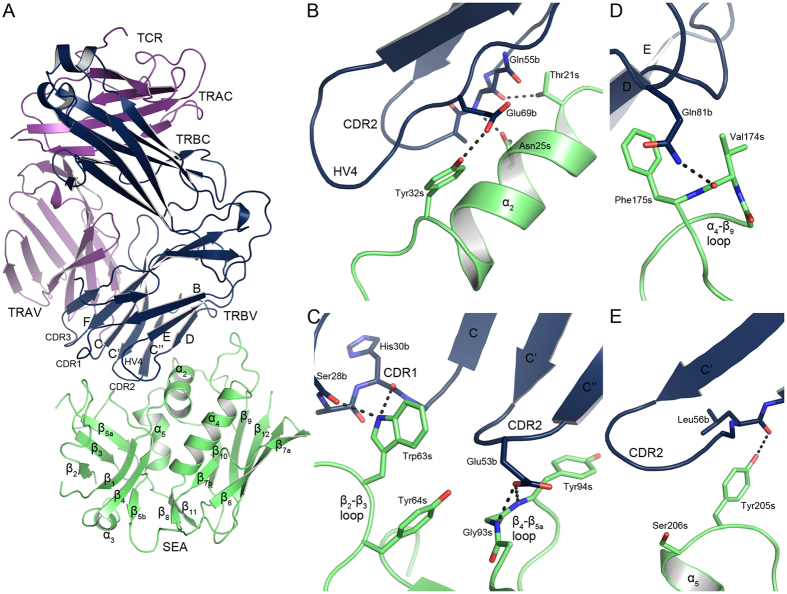
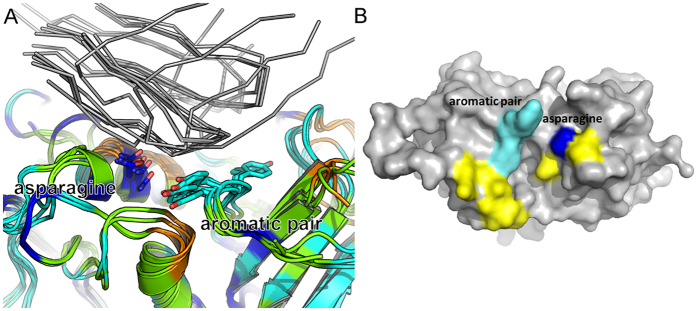
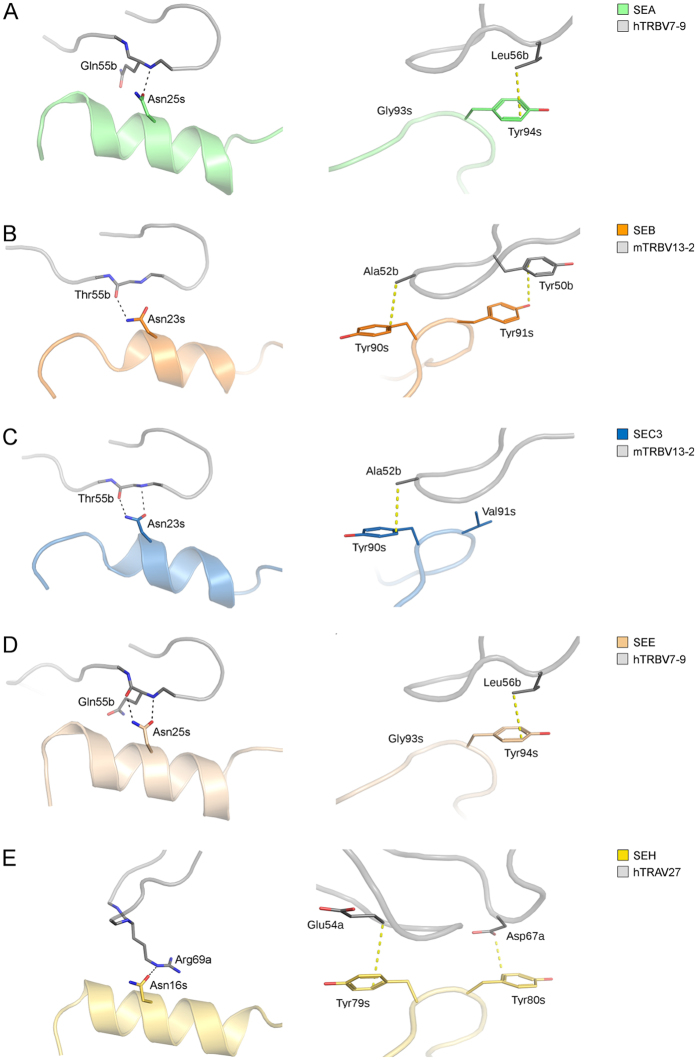
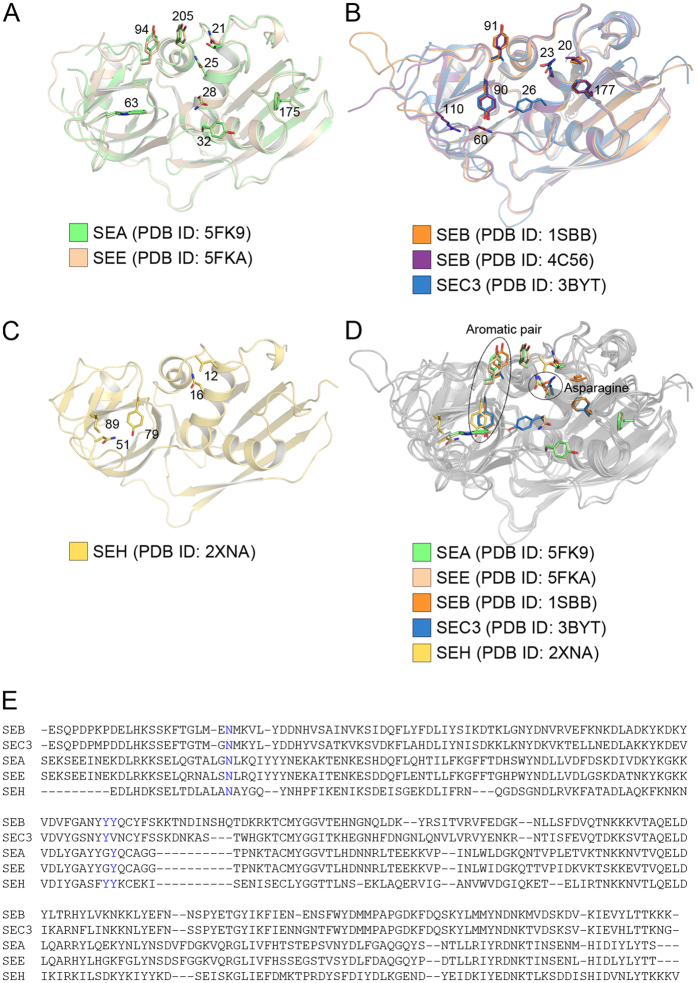
Superantigens are toxins produced by Staphylococcus aureus, called staphylococcal enterotoxins (abbreviated SEA to SEU). They can cross-link the T cell receptor (TCR) and major histocompatibility complex class II, triggering a massive T cell activation and hence disease. Due to high stability and toxicity, superantigens are potential agents of bioterrorism. Hence, antagonists may not only be useful in the treatment of disease but also serve as countermeasures to biological warfare. Of particular interest are inhibitors against SEA and SEB. SEA is the main cause of food poisoning, while SEB is a common toxin manufactured as a biological weapon. Here, we present the crystal structures of SEA in complex with TCR and SEE in complex with the same TCR, complemented with computational alanine-scanning mutagenesis of SEA, SEB, SEC3, SEE, and SEH. We have identified two common areas that contribute to the general TCR binding for these superantigens. This paves the way for design of single antagonists directed towards multiple toxins.
超抗原是由金黄色葡萄球菌产生的毒素,称为葡萄球菌肠毒素(缩写为SEA至SEU)。它们可以使T细胞受体(TCR)与主要组织相容性复合体II类交联,引发大量T细胞活化从而导致疾病。由于超抗原具有高稳定性和毒性,它们是生物恐怖主义的潜在媒介。因此,拮抗剂不仅可用于疾病治疗,还可作为生物战的应对措施。特别令人感兴趣的是针对SEA和SEB的抑制剂。SEA是食物中毒的主要原因,而SEB是作为生物武器制造的常见毒素。在此,我们展示了SEA与TCR复合物以及SEE与相同TCR复合物的晶体结构,并辅以SEA、SEB、SEC3、SEE和SEH的计算丙氨酸扫描诱变。我们已经确定了两个共同区域,这些区域有助于这些超抗原与TCR的一般结合。这为设计针对多种毒素的单一拮抗剂铺平了道路。