Zhou Renwu, Zhou Rusen, Zhuang Jinxing, Zong Zichao, Zhang Xianhui, Liu Dongping, Bazaka Kateryna, Ostrikov Kostya
Liaoning Key Laboratory of Optoelectronic Films & Materials, School of Physics and Materials Engineering, Dalian Nationalities University, Dalian, 116600, China.
School of Chemistry, Physics and Mechanical Engineering, Queensland University of Technology, Brisbane, Queensland, 4000, Australia.
PLoS One. 2016 May 16;11(5):e0155584. doi: 10.1371/journal.pone.0155584. eCollection 2016.
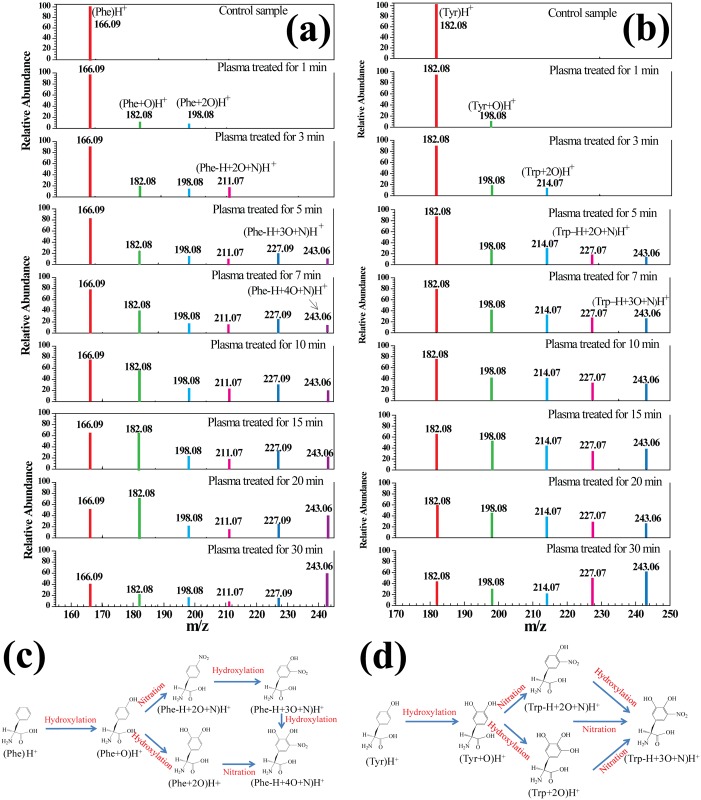
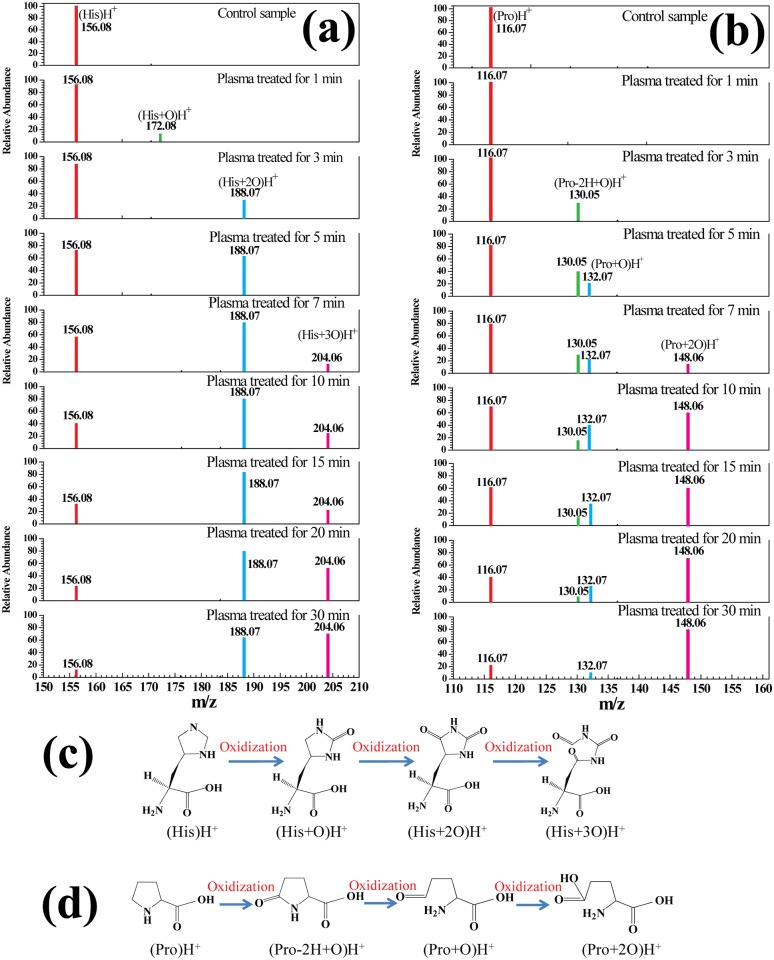
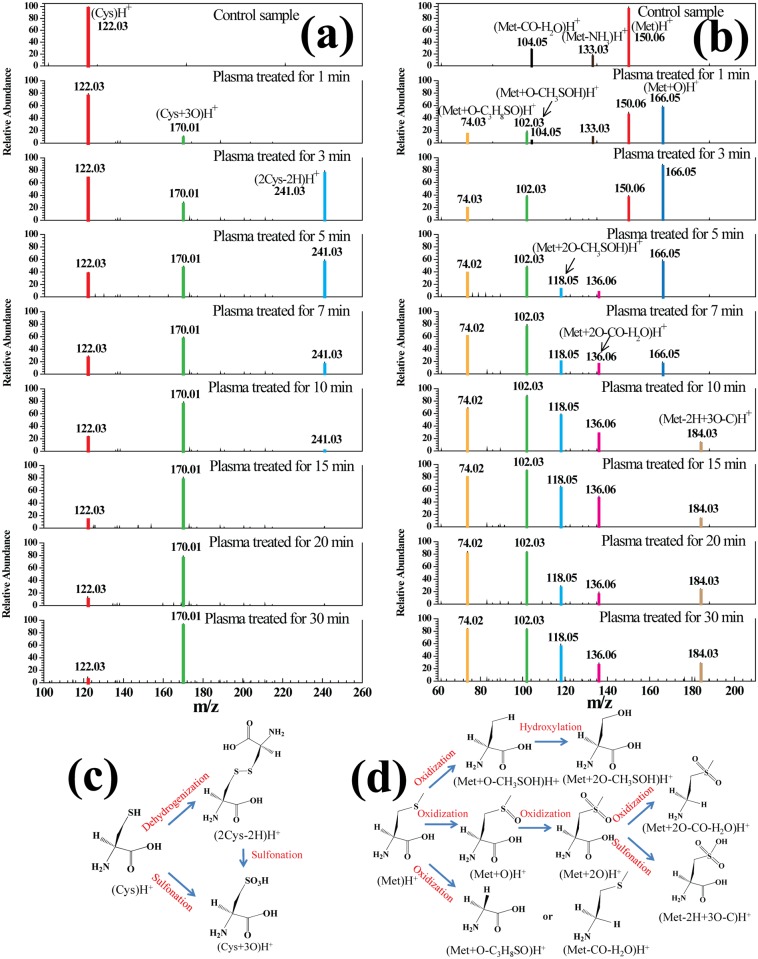
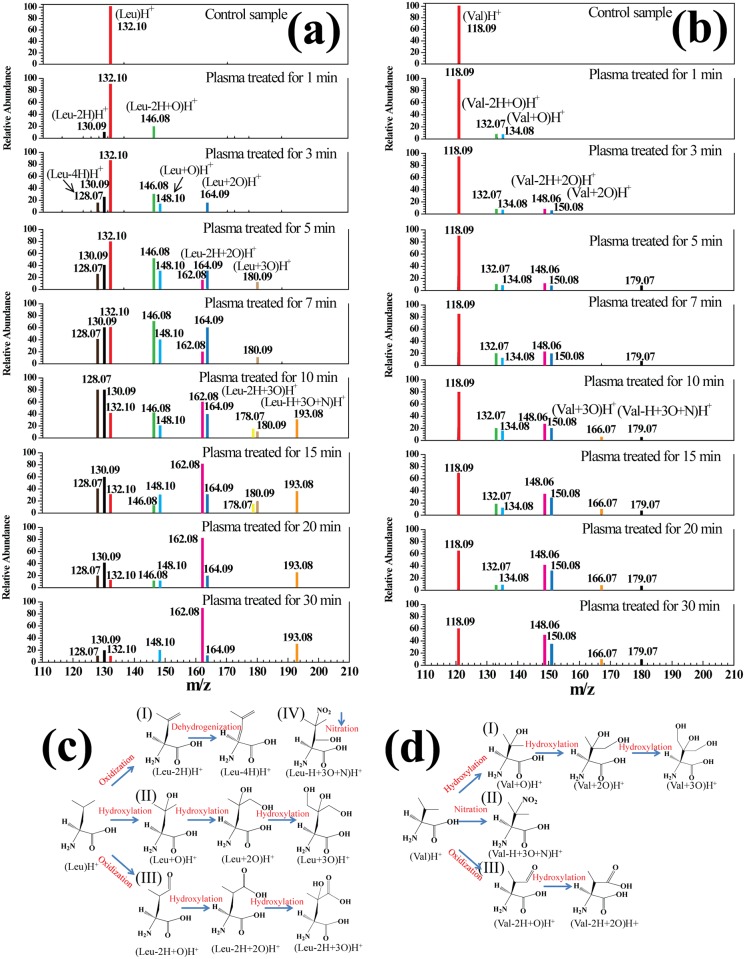
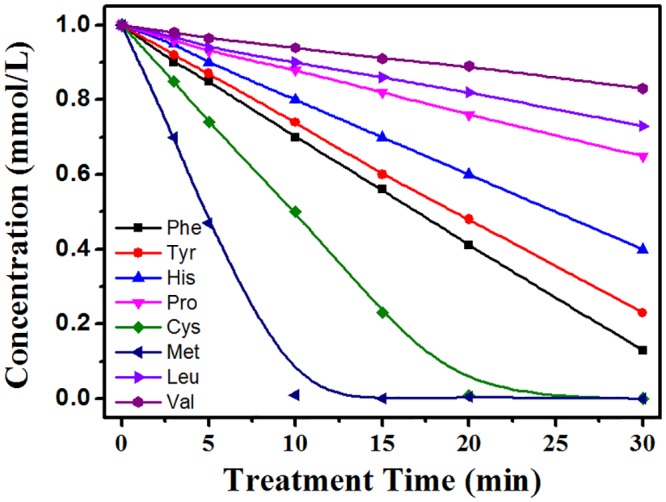
Plasma medicine is a relatively new field that investigates potential applications of cold atmospheric-pressure plasmas in bioengineering, such as for bacterial inactivation and degradation of organic molecules in water. In order to enunciate mechanisms of bacterial inactivation at molecular or atomic levels, we investigated the interaction of atmospheric-pressure air microplasmas with amino acids in aqueous solution by using high-resolution mass spectrometry (HRMS). Results show that the oxidation effect of plasma-induced species on the side chains of the amino acids can be categorized into four types, namely hydroxylation, nitration, dehydrogenation and dimerization. In addition, relative activities of amino acids resulting from plasma treatment come in descending order as follows: sulfur-containing carbon-chain amino acids > aromatic amino acids > five-membered ring amino acids > basic carbon-chain amino acids. Since amino acids are building blocks of proteins vital to the growth and reproduction of bacteria, these results provide an insight into the mechanism of bacterial inactivation by plasma.
等离子体医学是一个相对较新的领域,它研究冷大气压等离子体在生物工程中的潜在应用,例如用于细菌灭活和水中有机分子的降解。为了阐明细菌在分子或原子水平上的灭活机制,我们使用高分辨率质谱(HRMS)研究了大气压空气微等离子体与水溶液中氨基酸的相互作用。结果表明,等离子体诱导的物质对氨基酸侧链的氧化作用可分为四种类型,即羟基化、硝化、脱氢和二聚化。此外,等离子体处理后氨基酸的相对活性按以下降序排列:含硫碳链氨基酸>芳香族氨基酸>五元环氨基酸>碱性碳链氨基酸。由于氨基酸是对细菌生长和繁殖至关重要的蛋白质的组成部分,这些结果为等离子体灭活细菌的机制提供了深入了解。