Jiang Guanghuai, Yin Dedong, Zhao Jiying, Chen Honglin, Guo Lequn, Zhu Lihuang, Zhai Wenxue
Institute of Genetics and Developmental Biology, Chinese Academy of Sciences, Beijing 100101, China.
Sci Rep. 2016 May 17;6:26104. doi: 10.1038/srep26104.
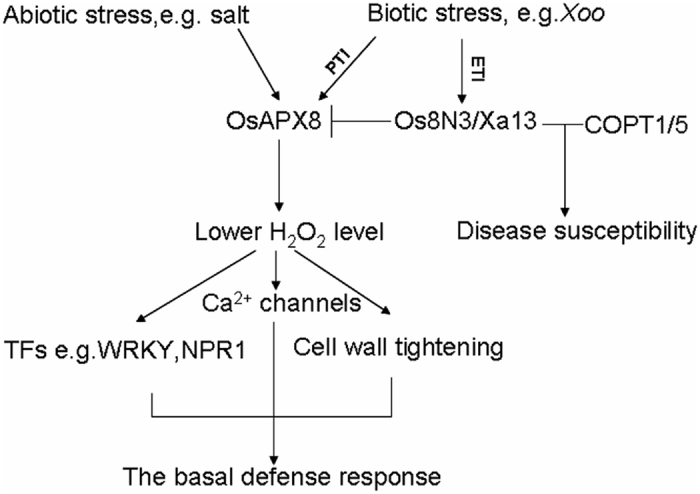
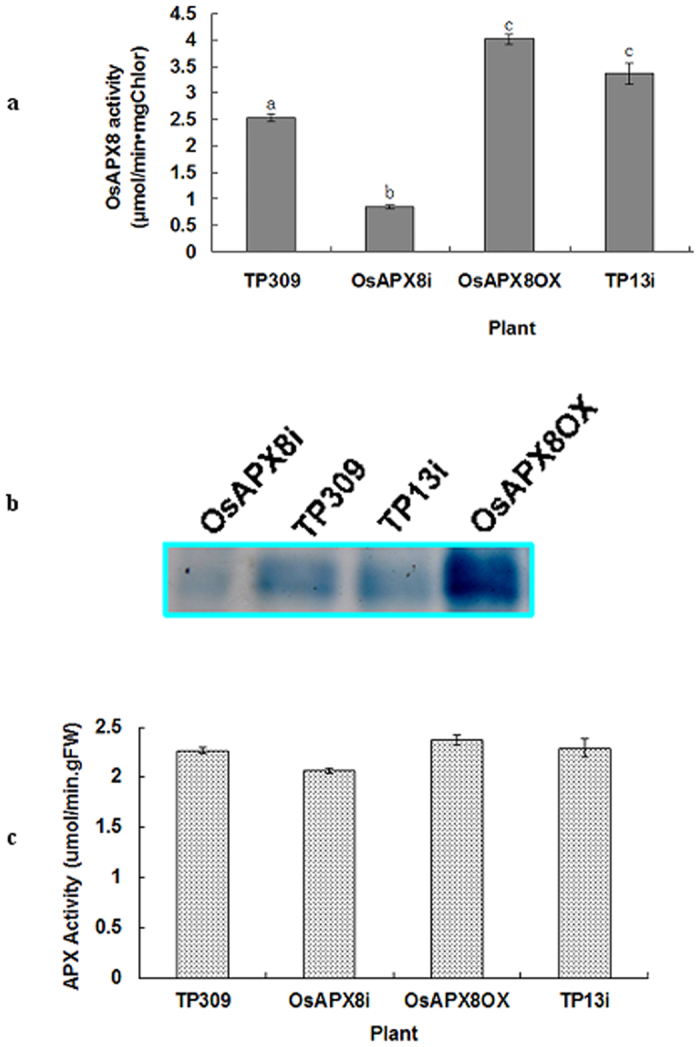
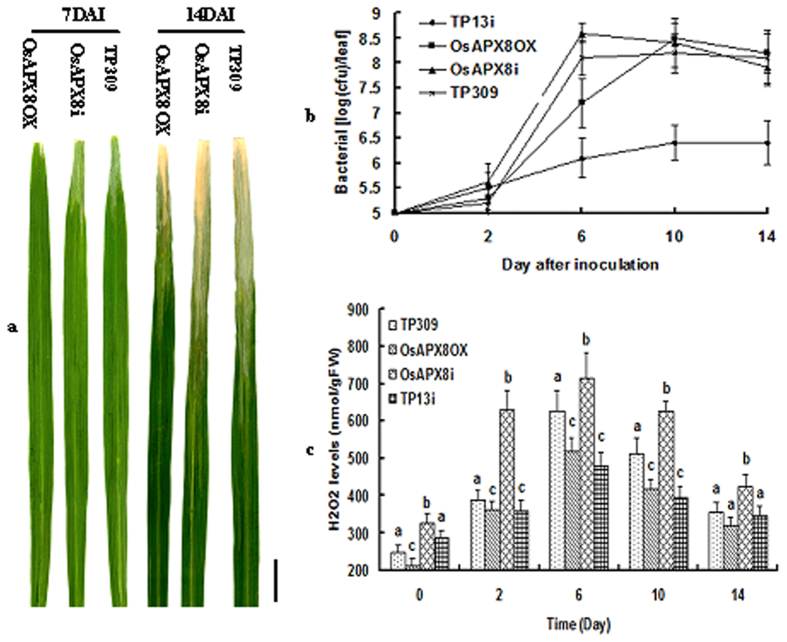
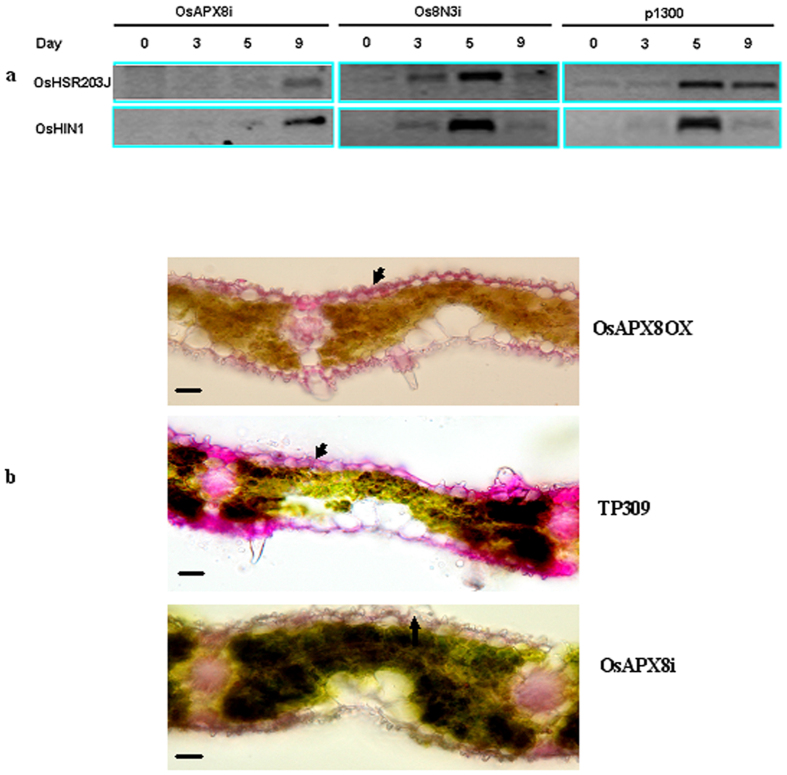
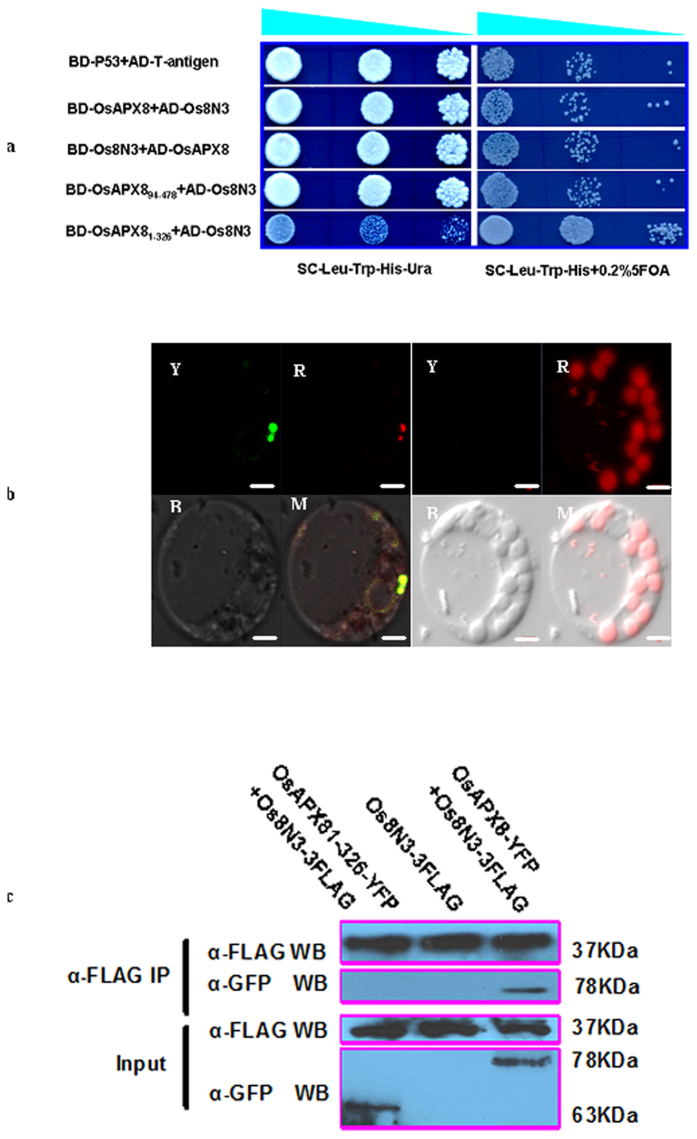
Thylakoid membrane-bound ascorbate peroxidase (tAPX) is a major H2O2-scavenging enzyme. To clarify its functions in tolerance to rice bacterial blight, we produced rice lines overexpressing and suppressing tAPX (OsAPX8). The overexpressing lines exhibited increased tolerance to bacterial pathogen. The RNA interference (RNAi) lines were considerably more sensitive than the control plant. Further analysis of the H2O2 content in these transgenic plants indicated that the H2O2 accumulation of OsAPX8-overexpressing plants was considerably less than that of wild-type and RNAi plants upon challenge with bacterial pathogen. Interestingly, H2O2 was the most important factor for the serious leaf dehydration and withering of rice without major resistance genes and was not the cause of hypersensitivity. It addition, wall tightening or loosening can occur according to the level of H2O2. In addition, OsAPX8 interacted with the susceptibility protein Os8N3/Xa13, and their binding repressed the reaction of OsAPX8 in tolerance to bacterial blight.
类囊体膜结合抗坏血酸过氧化物酶(tAPX)是一种主要的H2O2清除酶。为了阐明其在水稻白叶枯病耐受性中的作用,我们构建了过表达和抑制tAPX(OsAPX8)的水稻株系。过表达株系对细菌病原体的耐受性增强。RNA干扰(RNAi)株系比对照植株敏感得多。对这些转基因植物中H2O2含量的进一步分析表明,在用细菌病原体攻击后,过表达OsAPX8的植物中H2O2的积累明显少于野生型和RNAi植物。有趣的是,H2O2是没有主要抗性基因的水稻叶片严重脱水和枯萎的最重要因素,但不是超敏反应的原因。此外,细胞壁的收紧或松弛会根据H2O2的水平而发生。此外,OsAPX8与感病蛋白Os8N3/Xa13相互作用,它们的结合抑制了OsAPX8对白叶枯病的耐受性反应。