Tientcheu Leopold D, Haks Mariëlle C, Agbla Schadrac C, Sutherland Jayne S, Adetifa Ifedayo M, Donkor Simon, Quinten Edwin, Daramy Mohammed, Antonio Martin, Kampmann Beate, Ottenhoff Tom H M, Dockrell Hazel M, Ota Martin O
Vaccines and Immunity Theme, Medical Research Council Unit, The Gambia, Banjul, The Gambia.
Department of Immunology and Infection, Faculty of Infectious and Tropical Diseases, London School of Hygiene and Tropical Medicine, London, United Kingdom.
PLoS Negl Trop Dis. 2016 May 18;10(5):e0004701. doi: 10.1371/journal.pntd.0004701. eCollection 2016 May.
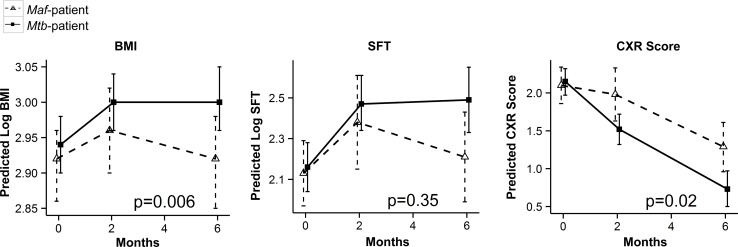
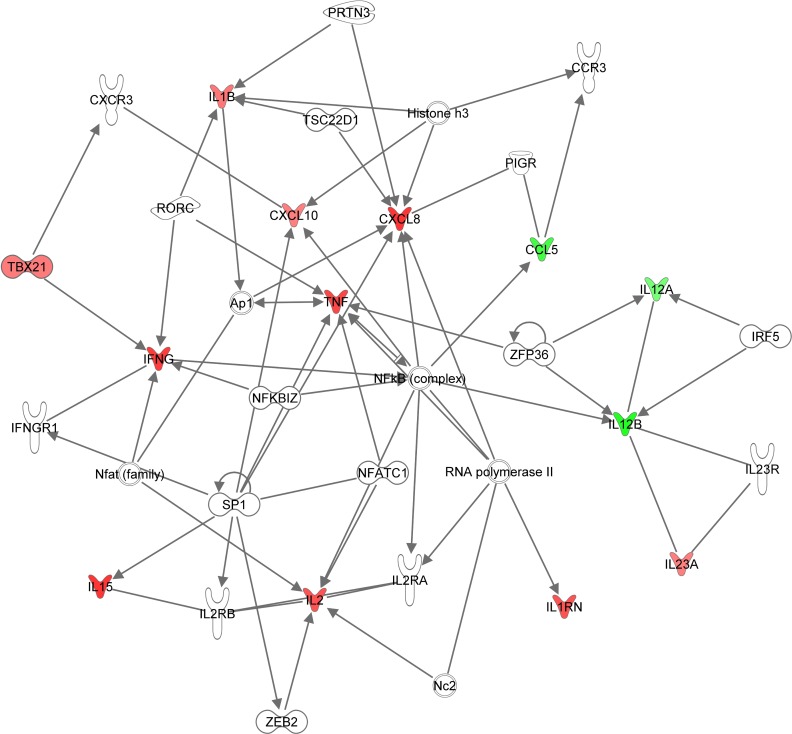
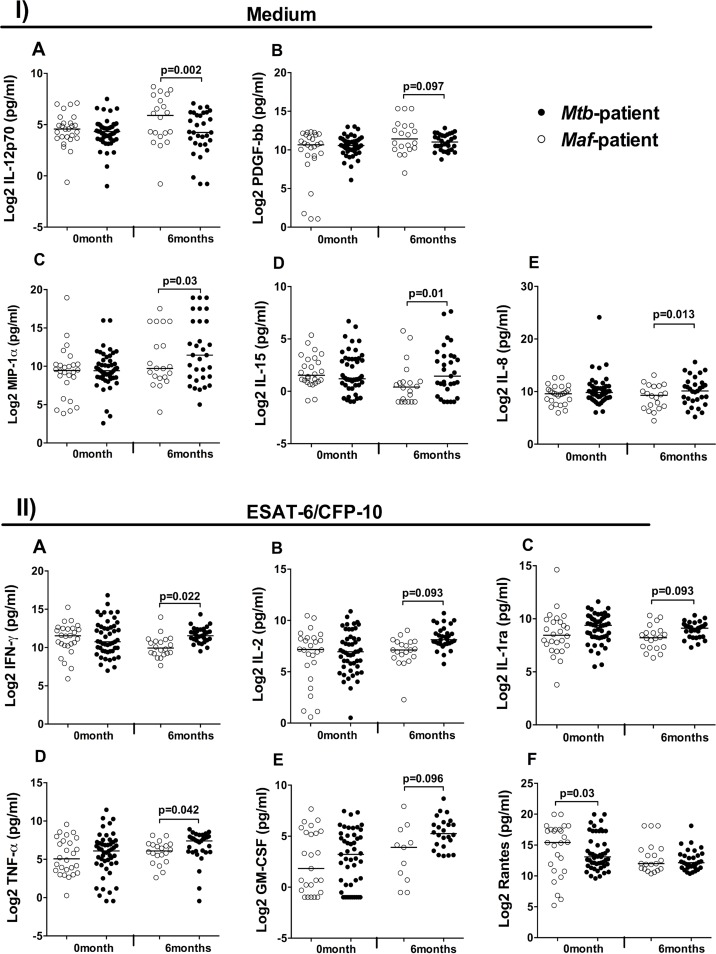
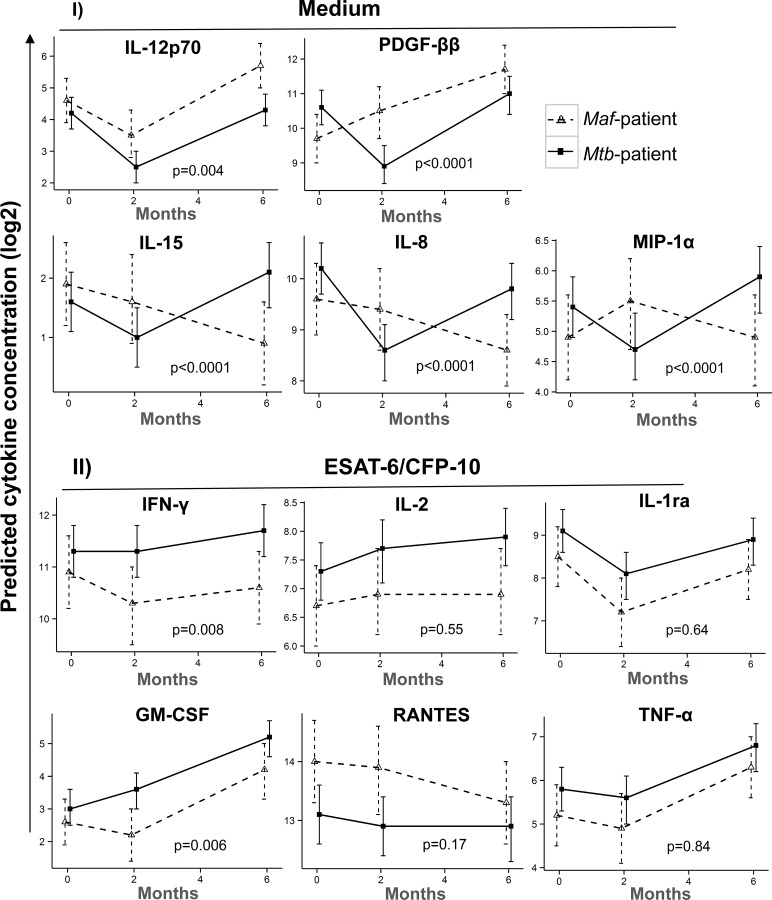
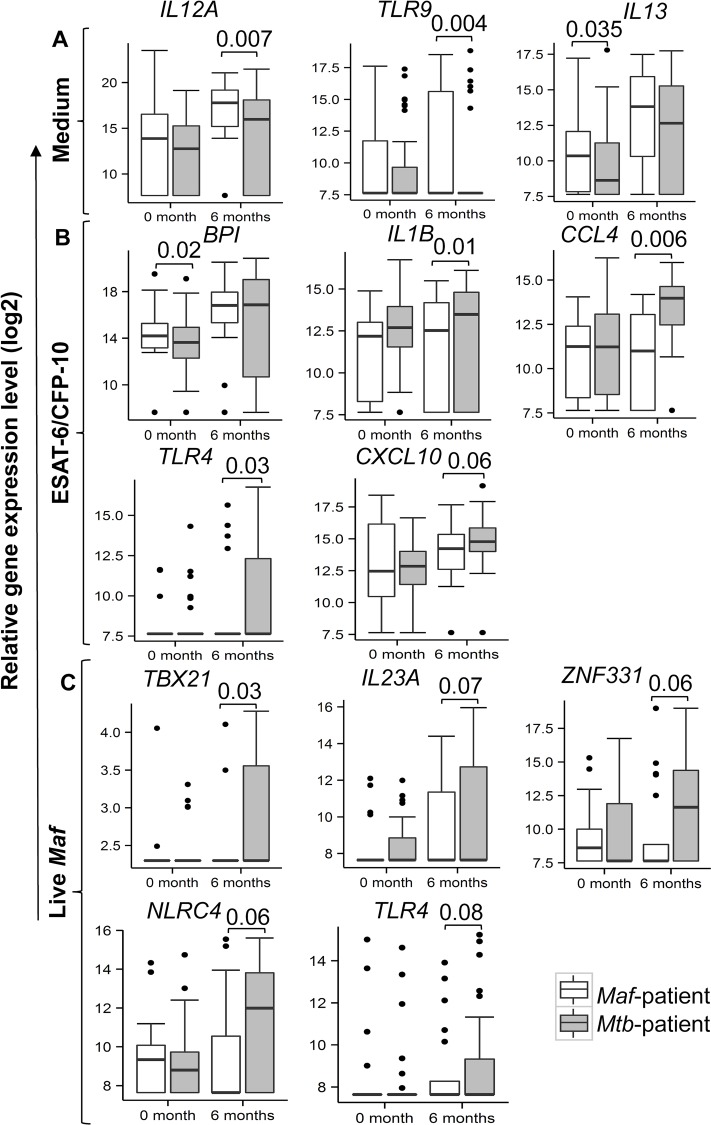
Epidemiological differences exist between Mycobacterium africanum (Maf)- and Mycobacterium tuberculosis (Mtb)-infected patients, but to date, contributing host factors have not been characterised. We analysed clinical outcomes, as well as soluble markers and gene expression profiles in unstimulated, and ESAT6/CFP-10-, whole-Maf- and Mtb-stimulated blood samples of 26 Maf- and 49 Mtb-HIV-negative tuberculosis patients before, and after 2 and 6 months of anti-tuberculosis therapy. Before treatment, both groups had similar clinical parameters, but differed in few cytokines concentration and gene expression profiles. Following treatment the body mass index, skinfold thickness and chest X-ray scores showed greater improvement in the Mtb- compared to Maf-infected patients, after adjusting for age, sex and ethnicity (p = 0.02; 0.04 and 0.007, respectively). In addition, in unstimulated blood, IL-12p70, IL12A and TLR9 were significantly higher in Maf-infected patients, while IL-15, IL-8 and MIP-1α were higher in Mtb-infected patients. Overnight stimulation with ESAT-6/CFP-10 induced significantly higher levels of IFN-γ and TNF-α production, as well as gene expression of CCL4, IL1B and TLR4 in Mtb- compared to Maf-infected patients. Our study confirms differences in clinical features and immune genes expression and concentration of proteins associated with inflammatory processes between Mtb- and Maf-infected patients following anti-tuberculosis treatment These findings have public health implications for treatment regimens, and biomarkers for tuberculosis diagnosis and susceptibility.
非洲分枝杆菌(Maf)感染患者和结核分枝杆菌(Mtb)感染患者之间存在流行病学差异,但迄今为止,相关的宿主因素尚未得到明确。我们分析了26例Maf感染和49例Mtb感染的HIV阴性结核病患者在抗结核治疗前、治疗2个月和6个月后,未刺激以及经ESAT6/CFP-10、全Maf和Mtb刺激的血液样本中的临床结局、可溶性标志物和基因表达谱。治疗前,两组的临床参数相似,但在少数细胞因子浓度和基因表达谱方面存在差异。在调整年龄、性别和种族后,治疗后体重指数、皮褶厚度和胸部X线评分显示,Mtb感染患者比Maf感染患者改善更大(p分别为0.02、0.04和0.007)。此外,在未刺激的血液中,Maf感染患者的IL-12p70、IL12A和TLR9显著更高,而Mtb感染患者的IL-15、IL-8和MIP-1α更高。与Maf感染患者相比,ESAT-6/CFP-10过夜刺激诱导Mtb感染患者产生显著更高水平的IFN-γ和TNF-α,以及CCL4、IL1B和TLR4的基因表达。我们的研究证实了抗结核治疗后Mtb感染患者和Maf感染患者在临床特征、免疫基因表达以及与炎症过程相关的蛋白质浓度方面存在差异。这些发现对治疗方案以及结核病诊断和易感性的生物标志物具有公共卫生意义。