Nghiem Nhung, Blakely Tony, Cobiac Linda J, Cleghorn Christine L, Wilson Nick
University of Otago, PO Box 7343, Wellington, Wellington South, New Zealand.
British Heart Foundation Centre on Population Approaches to NCD Prevention, Oxford University, Oxford, UK.
BMC Public Health. 2016 May 23;16:423. doi: 10.1186/s12889-016-3102-1.
A "diet high in sodium" is the second most important dietary risk factor for health loss identified in the Global Burden of Disease Study 2013. We therefore aimed to model health gains and costs (savings) of salt reduction interventions related to salt substitution and maximum levels in bread, including by ethnicity and age. We also ranked these four interventions compared to eight other modelled interventions.
A Markov macro-simulation model was used to estimate QALYs gained and net health system costs for four dietary sodium reduction interventions, discounted at 3 % per annum. The setting was New Zealand (NZ) (2.3 million adults, aged 35+ years) which has detailed individual-level administrative cost data.
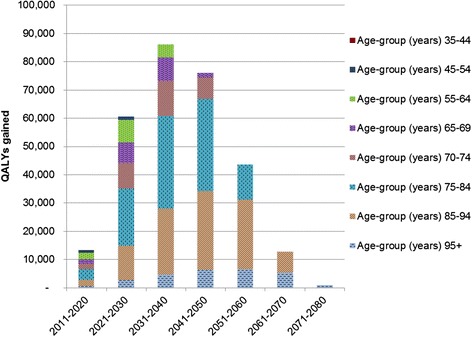
The health gain was greatest for an intervention where most (59 %) of the sodium in processed foods was replaced by potassium and magnesium salts. This intervention gained 294,000 QALYs over the remaining lifetime of the cohort (95 % UI: 238,000 to 359,000; 0.13 QALY per 35+ year old). Such salt substitution also produced the highest net cost-savings of NZ$ 1.5 billion (US$ 1.0 billion) (95 % UI: NZ$ 1.1 to 2.0 billion). All interventions generated relatively larger per capita QALYs for men vs women and for the indigenous Māori population vs non-Māori (e.g., 0.16 vs 0.12 QALYs per adult for the 59 % salt substitution intervention). Of relevance to workforce productivity, in the first 10 years post-intervention, 22 % of the QALY gain was among those aged <65 years (and 37 % for those aged <70).
The benefits are consistent with the international literature, with large health gains and cost savings possible from some, but not all, sodium reduction interventions. Health gain appears likely to occur among working-age adults and all interventions contributed to reducing health inequalities.
“高钠饮食”是《2013年全球疾病负担研究》中确定的导致健康损失的第二大重要饮食风险因素。因此,我们旨在模拟与盐替代以及面包中盐的最大含量相关的减盐干预措施带来的健康收益和成本(节省情况),并按种族和年龄进行分析。我们还将这四种干预措施与其他八种模拟干预措施进行了排名比较。
采用马尔可夫宏观模拟模型来估计四种饮食钠减少干预措施所获得的质量调整生命年(QALYs)以及卫生系统净成本,按每年3%进行贴现。研究背景为新西兰(NZ)(230万35岁及以上成年人),该国拥有详细的个体层面行政成本数据。
对于一种将加工食品中大部分(59%)钠替换为钾盐和镁盐的干预措施,健康收益最大。在该队列的剩余寿命期间,这种干预措施获得了29.4万个质量调整生命年(95%不确定区间:23.8万至35.9万;每35岁及以上成年人0.13个质量调整生命年)。这种盐替代还产生了最高的净成本节省,达15亿新西兰元(10亿美元)(95%不确定区间:11亿至20亿新西兰元)。与女性相比,所有干预措施在男性中产生的人均质量调整生命年相对更多;与非毛利人相比,在毛利原住民中产生的人均质量调整生命年也相对更多(例如,对于59%盐替代干预措施,每成年人的质量调整生命年为0.16个,而女性为0.12个)。与劳动力生产力相关的是,在干预后的头10年中,22%的质量调整生命年增益出现在65岁以下人群中(70岁以下人群为37%)。
这些益处与国际文献一致,一些但并非所有的减盐干预措施都有可能带来巨大的健康收益和成本节省。工作年龄成年人似乎有可能获得健康收益,并且所有干预措施都有助于减少健康不平等现象。