Brzeziński M, Bury K, Dąbrowski L, Holak P, Sejda A, Pawlak M, Jagielak D, Adamiak Z, Rogowski J
Department of Cardiac and Vascular Surgery, Medical University of Gdansk, Gdansk, Poland.
Faculty of Mechanical Engineering, Gdansk University of Technology, Gdansk, Poland.
PLoS One. 2016 May 24;11(5):e0154559. doi: 10.1371/journal.pone.0154559. eCollection 2016.
Many patients undergoing cardiac surgery have risk factors for both atrial fibrillation (AF) and stroke. The left atrial appendage (LAA) is the primary site for thrombi formation. The most severe complication of emboli derived from LAA is stroke, which is associated with a 12-month mortality rate of 38% and a 12-month recurrence rate of 17%. The most common form of treatment for atrial fibrillation and stroke prevention is the pharmacological therapy with anticoagulants. Nonetheless this form of therapy is associated with high risk of major bleeding. Therefore LAA occlusion devices should be tested for their ability to reduce future cerebral ischemic events in patients with high-risk of haemorrhage.
The aim of this study was to evaluate the safety and feasibility of a novel left atrial appendage exclusion device with a minimally invasive introducer in a swine model.
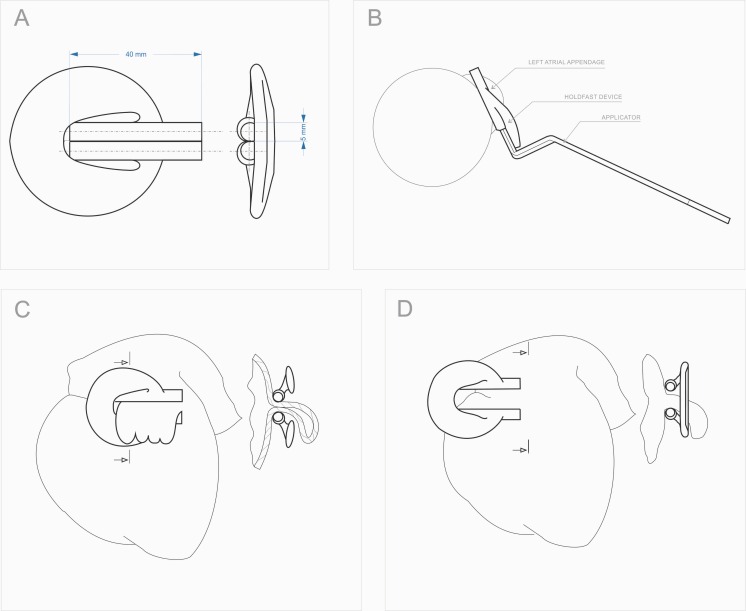
A completely novel LAA device, which is composed of two tubes connected together using a specially created bail, was designed using finite element modelling (FEM) to obtain an optimal support force of 36 N at the closure line. The monolithic form of the occluder was obtained by using additive manufacturing of granular PA2200 powder with the technology of selective laser sintering (SLS). Fifteen swine were included in the feasibility tests, with 10 animals undergoing fourteen days of follow-up and 5 animals undergoing long-term observation of 3 months. For one animal, the follow-up was further prolonged to 6 months. The device was placed via minithoracotomy. After the observation period, all of the animals were euthanized, and their hearts were tested for LAA closure and local inflammatory and tissue response.
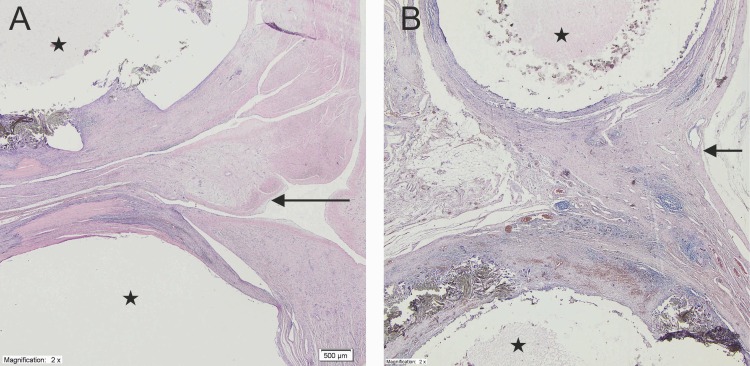
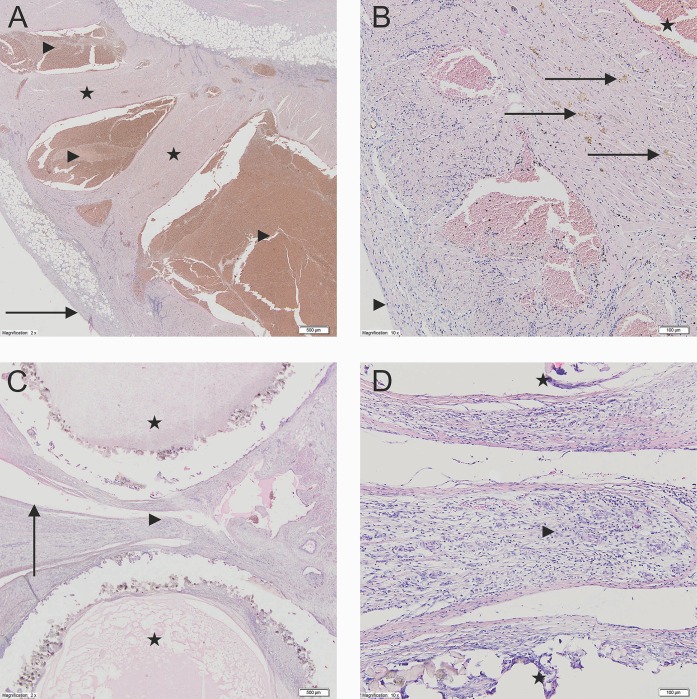
After the defined observation period, all fifteen hearts were explanted. In all cases the full closure of the LAA was achieved. The macroscopic and microscopic evaluation of the explanted hearts showed that all devices were securely integrated in the surrounding tissues. No pericarditis or macroscopic signs of inflammation at the site of the device were found. All pigs were in good condition with normal weight gain and no other clinical symptoms.
This novel 3D printed left atrial appendage closure technique with a novel holdfast device was proven to be safe and feasible in all pigs. A benign healing process without inflammation and damage to the surrounding structures or evidence of new thrombi formation was observed. Moreover, the uncomplicated survival and full LAA exclusion in all animals demonstrate the efficacy of this novel and relatively cheap device. Further clinical evaluation and implementation studies should be performed to introduce this new technology into clinical practice.
许多接受心脏手术的患者同时具有心房颤动(AF)和中风的风险因素。左心耳(LAA)是血栓形成的主要部位。源自LAA的栓子最严重的并发症是中风,其12个月死亡率为38%,12个月复发率为17%。预防心房颤动和中风最常见的治疗方式是使用抗凝剂进行药物治疗。然而,这种治疗方式与大出血的高风险相关。因此,对于出血风险高的患者,应测试LAA封堵装置减少未来脑缺血事件的能力。
本研究的目的是评估一种带有微创导入器的新型左心耳封堵装置在猪模型中的安全性和可行性。
使用有限元建模(FEM)设计了一种全新的LAA装置,该装置由两根通过特制扣环连接在一起的管子组成,以在闭合线处获得36 N的最佳支撑力。封堵器的整体形式通过使用选择性激光烧结(SLS)技术对粒状PA2200粉末进行增材制造获得。15头猪被纳入可行性测试,其中10只动物进行了14天的随访,5只动物进行了3个月的长期观察。对于1只动物,随访进一步延长至6个月。该装置通过微创开胸置入。观察期结束后,所有动物均实施安乐死,并对其心脏进行LAA闭合以及局部炎症和组织反应测试。
在规定的观察期后,所有15颗心脏均被取出。在所有情况下,LAA均实现了完全闭合。对取出心脏的宏观和微观评估表明,所有装置均牢固地整合在周围组织中。未发现心包炎或装置部位的宏观炎症迹象。所有猪状况良好,体重正常增加,无其他临床症状。
这种采用新型固定装置的新型3D打印左心耳闭合技术在所有猪身上均被证明是安全可行的。观察到一个良性愈合过程,无炎症,对周围结构无损伤,也没有新血栓形成的迹象。此外,所有动物均存活且LAA完全封堵,证明了这种新型且相对便宜的装置的有效性。应进行进一步的临床评估和实施研究,以将这项新技术引入临床实践。