Sriratanaviriyakul Narin, Kivler Celeste, Vidovszky Tamas J, Yoneda Ken Y, Kenyon Nicholas J, Murin Susan, Louie Samuel
Division of Pulmonary, Critical Care, and Sleep Medicine, Department of Internal Medicine, University of California, Davis, Sacramento, CA, USA.
VA Northern California Health Care System, Mather, CA, USA.
J Med Case Rep. 2016 May 24;10(1):124. doi: 10.1186/s13256-016-0887-6.
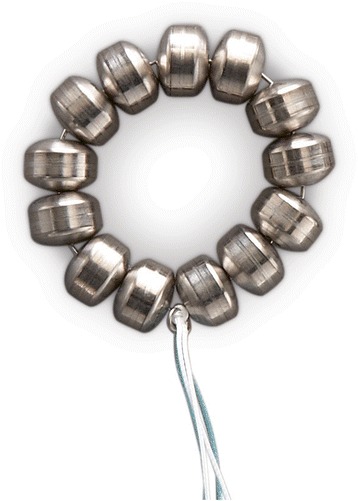
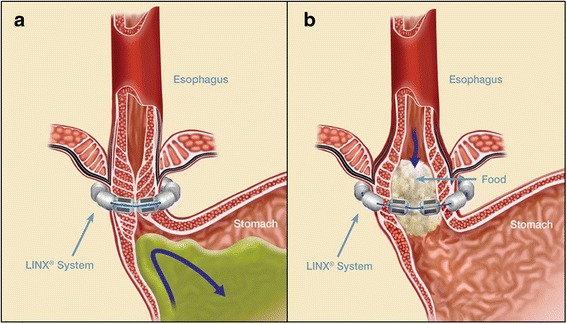
Gastroesophageal reflux disease is one of the most common comorbidities in patients with asthma. Gastroesophageal reflux disease can be linked to difficult-to-control asthma. Current management includes gastric acid suppression therapy and surgical antireflux procedures. The LINX® procedure is a novel surgical treatment for patients with gastroesophageal reflux disease refractory to medical therapy. To the best of our knowledge, we report the first case of successful treatment of refractory asthma secondary to gastroesophageal reflux disease using the LINX® procedure.
Our patient was a 22-year-old white woman who met the American Thoracic Society criteria for refractory asthma that had remained poorly controlled for 5 years despite progressive escalation to step 6 treatment as recommended by National Institutes of Health-National Asthma Education and Prevention Program guidelines, including high-dose oral corticosteroids, high-dose inhaled corticosteroid plus long-acting β2-agonist, leukotriene receptor antagonist, and monthly omalizumab. Separate trials with azithromycin therapy and roflumilast did not improve her asthma control, nor did bronchial thermoplasty help. Additional consultations with two other university health systems left the patient with few treatment options for asthma, which included cyclophosphamide. Instead, the patient underwent a LINX® procedure after failure of maximal medical therapy for gastroesophageal reflux disease with the additional aim of improving asthma control. After she underwent LINX® treatment, her asthma improved dramatically and was no longer refractory. She had normal exhaled nitric oxide levels and loss of peripheral eosinophilia after LINX® treatment. Prednisone was discontinued without loss of asthma control. The only immediate adverse effects due to the LINX® procedure were bloating, nausea, and vomiting.
LINX® is a viable alternative to the Nissen fundoplication procedure for the treatment of patients with gastroesophageal reflux disease and poorly controlled concomitant refractory asthma.
胃食管反流病是哮喘患者最常见的合并症之一。胃食管反流病可能与难治性哮喘有关。目前的治疗方法包括胃酸抑制疗法和手术抗反流手术。LINX®手术是一种针对药物治疗无效的胃食管反流病患者的新型手术治疗方法。据我们所知,我们报告了首例使用LINX®手术成功治疗继发于胃食管反流病的难治性哮喘的病例。
我们的患者是一名22岁的白人女性,符合美国胸科学会难治性哮喘的标准,尽管按照美国国立卫生研究院-国家哮喘教育和预防计划指南逐步升级到第6步治疗,包括高剂量口服皮质类固醇、高剂量吸入皮质类固醇加长效β2激动剂、白三烯受体拮抗剂和每月一次的奥马珠单抗,但仍有5年控制不佳。阿奇霉素治疗和罗氟司特的单独试验均未改善她的哮喘控制,支气管热成形术也无帮助。与另外两个大学卫生系统的进一步会诊使患者几乎没有哮喘治疗选择,其中包括环磷酰胺。相反,在胃食管反流病最大药物治疗失败后,患者接受了LINX®手术,额外目的是改善哮喘控制。她接受LINX®治疗后,哮喘显著改善,不再难治。LINX®治疗后,她呼出一氧化氮水平正常,外周嗜酸性粒细胞减少。停用泼尼松后哮喘控制未受影响。LINX®手术仅有的即刻不良反应是腹胀、恶心和呕吐。
对于治疗胃食管反流病和伴有难治性哮喘且控制不佳的患者,LINX®是nissen胃底折叠术的可行替代方法。