Ely Brett R, Brunt Vienna E, Minson Christopher T
Department of Human Physiology; University of Oregon ; Eugene, OR USA.
Temperature (Austin). 2015 Feb 3;2(1):51-2. doi: 10.4161/23328940.2014.992657. eCollection 2015 Jan-Mar.
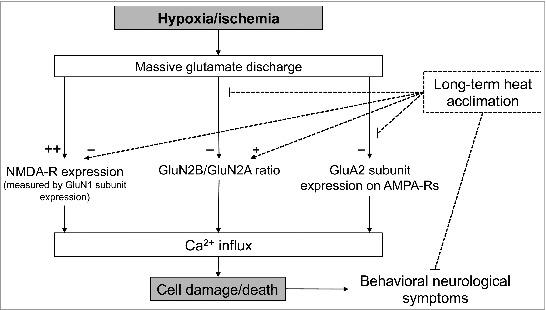
Long-term heat acclimation appears to improve tolerance to hypoxic insults in various tissues, including brain, providing a promising avenue to improve functional outcomes following cerebrovascular events. Glutamate discharge is implicated in dysfunction following hypoxic stress and thus, targeting glutamate receptors with heat acclimation could improve cognitive outcomes following hypoxic injury.
长期热适应似乎能提高包括大脑在内的各种组织对缺氧损伤的耐受性,为改善脑血管事件后的功能结局提供了一条有前景的途径。谷氨酸释放与缺氧应激后的功能障碍有关,因此,通过热适应靶向谷氨酸受体可能会改善缺氧损伤后的认知结局。