Department of Biochemistry and Molecular Biology, Sylvester Comprehensive Cancer Center, University of Miami Miller School of Medicine, Miami, FL 33136, USA.
Key Laboratory of Genomic and Precision Medicine, Collaborative Innovation Center of Genetics and Development, Beijing Institute of Genomics, Chinese Academy of Sciences, Beijing 100101, China; Key Laboratory of Chemical Safety and Health, National Institute for Occupational Health and Poison Control, Chinese Center for Disease Control and Prevention, Beijing 100050, China.
Stem Cell Reports. 2016 Jun 14;6(6):914-925. doi: 10.1016/j.stemcr.2016.04.013. Epub 2016 May 26.
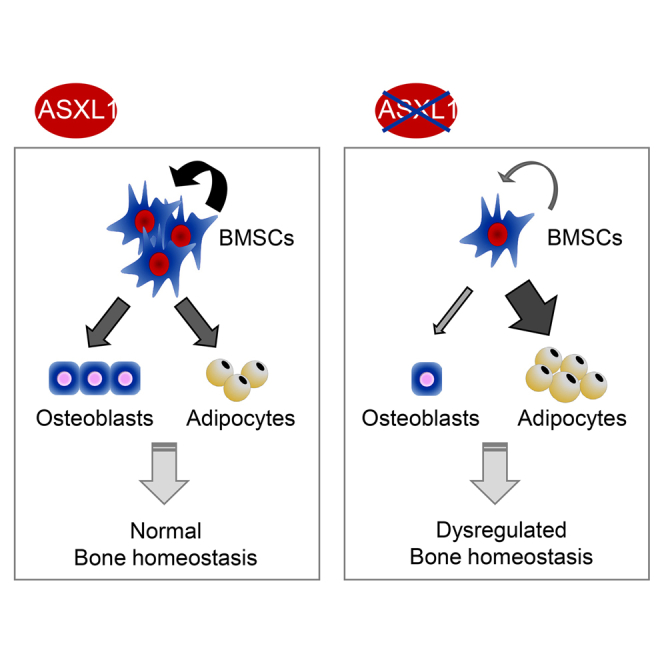
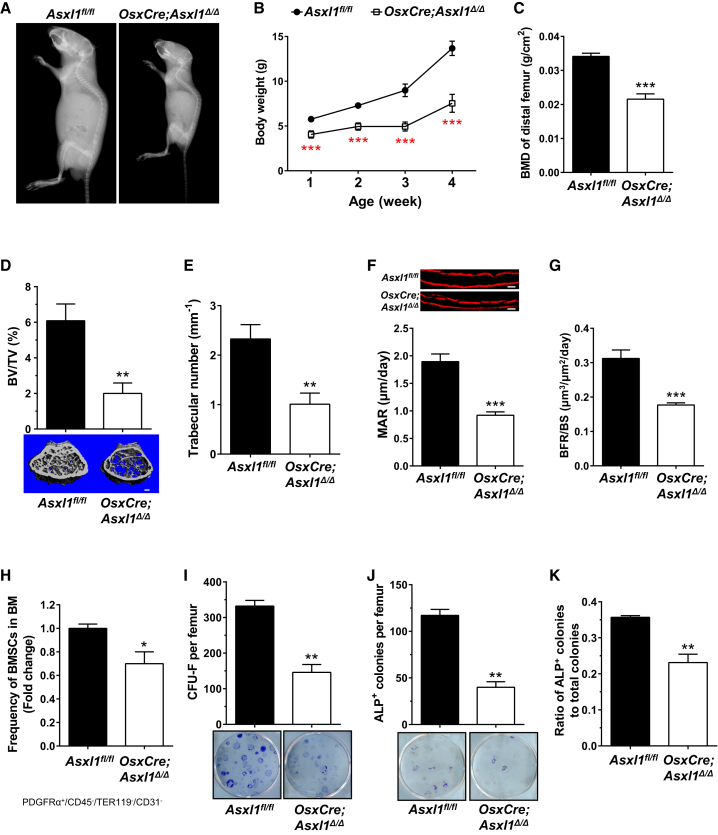
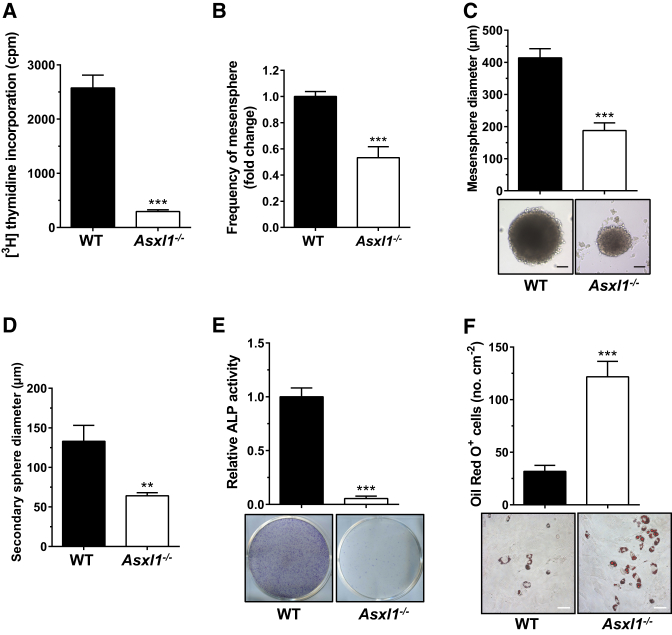
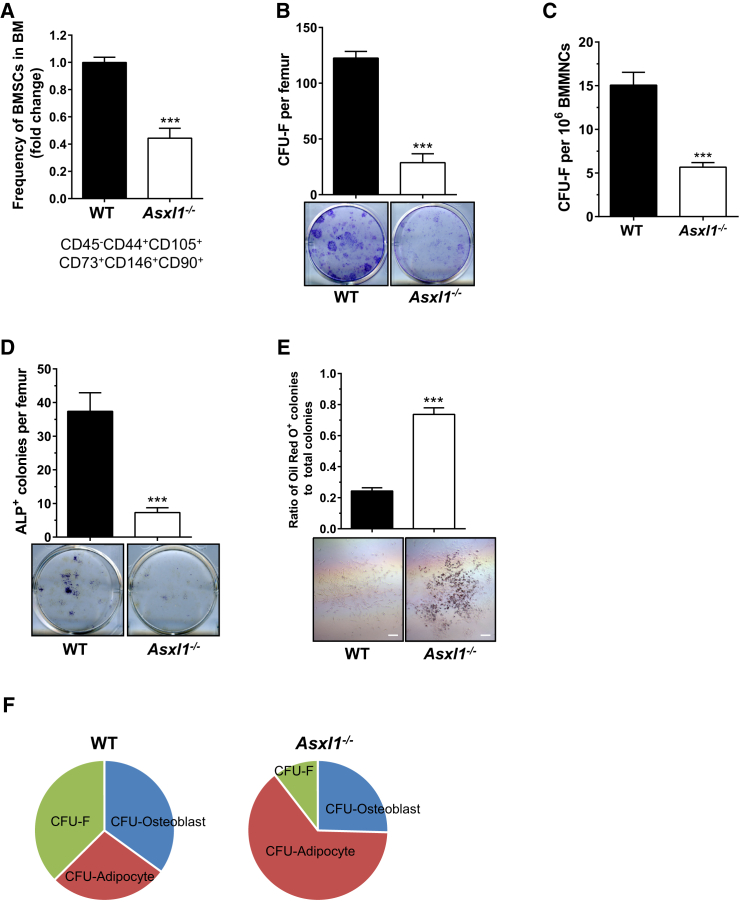
De novo ASXL1 mutations are found in patients with Bohring-Opitz syndrome, a disease with severe developmental defects and early childhood mortality. The underlying pathologic mechanisms remain largely unknown. Using Asxl1-targeted murine models, we found that Asxl1 global loss as well as conditional deletion in osteoblasts and their progenitors led to significant bone loss and a markedly decreased number of bone marrow stromal cells (BMSCs) compared with wild-type littermates. Asxl1(-/-) BMSCs displayed impaired self-renewal and skewed differentiation, away from osteoblasts and favoring adipocytes. RNA-sequencing analysis revealed altered expression of genes involved in cell proliferation, skeletal development, and morphogenesis. Furthermore, gene set enrichment analysis showed decreased expression of stem cell self-renewal gene signature, suggesting a role of Asxl1 in regulating the stemness of BMSCs. Importantly, re-introduction of Asxl1 normalized NANOG and OCT4 expression and restored the self-renewal capacity of Asxl1(-/-) BMSCs. Our study unveils a pivotal role of ASXL1 in the maintenance of BMSC functions and skeletal development.
ASXL1 基因突变可在 Bohring-Opitz 综合征患者中检出,该病具有严重的发育缺陷和婴幼儿早期死亡率。但其潜在的病理机制在很大程度上仍不清楚。通过使用 Asxl1 靶向的小鼠模型,我们发现与野生型同窝仔鼠相比,Asxl1 全局缺失以及成骨细胞及其前体细胞中的条件性缺失导致明显的骨丢失和骨髓基质细胞(BMSCs)数量显著减少。Asxl1(-/-) BMSCs 表现出自我更新受损和分化偏倚,远离成骨细胞,更倾向于脂肪细胞。RNA 测序分析显示,涉及细胞增殖、骨骼发育和形态发生的基因表达发生改变。此外,基因集富集分析显示,干细胞自我更新基因特征的表达降低,表明 ASXL1 在调节 BMSCs 的干性方面发挥作用。重要的是,ASXL1 的重新引入可使 NANOG 和 OCT4 的表达正常化,并恢复 Asxl1(-/-) BMSCs 的自我更新能力。本研究揭示了 ASXL1 在维持 BMSC 功能和骨骼发育中的关键作用。