Ellinger Sabine, Stehle Peter
Faculty of Food, Nutrition and Hospitality Sciences Hochschule Niederrhein, University of Applied Sciences, Rheydter Str. 277, Mönchengladbach 41065, Germany.
Department of Nutrition and Food Sciences, Nutritional Physiology, University of Bonn, Endenicher Allee 11-13, Bonn 53115, Germany.
Nutrients. 2016 May 26;8(6):321. doi: 10.3390/nu8060321.
Cocoa flavanols have strong anti-inflammatory properties in vitro. If these also occur in vivo, cocoa consumption may contribute to the prevention or treatment of diseases mediated by chronic inflammation. This critical review judged the evidence for such effects occurring after cocoa consumption.
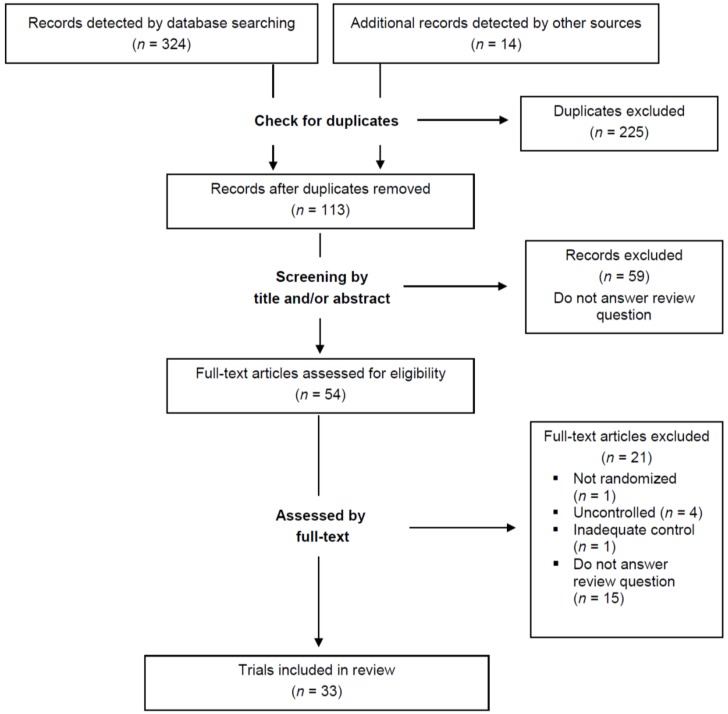
A literature search in Medline was performed for randomized controlled trials (RCTs) that investigated the effects of cocoa consumption on inflammatory biomarkers.
Thirty-three RCTs were included, along with 9 bolus and 24 regular consumption studies. Acute cocoa consumption decreased adhesion molecules and 4-series leukotrienes in serum, nuclear factor κB activation in leukocytes, and the expression of CD62P and CD11b on monocytes and neutrophils. In healthy subjects and in patients with cardiovascular diseases, most regular consumption trials did not find any changes except for a decreased number of endothelial microparticles, but several cellular and humoral inflammation markers decreased in patients suffering from type 2 diabetes and impaired fasting glucose.
Little evidence exists that consumption of cocoa-rich food may reduce inflammation, probably by lowering the activation of monocytes and neutrophils. The efficacy seems to depend on the extent of the basal inflammatory burden. Further well-designed RCTs with inflammation as the primary outcome are needed, focusing on specific markers of leukocyte activation and considering endothelial microparticles as marker of vascular inflammation.
可可黄烷醇在体外具有强大的抗炎特性。如果这些特性在体内也存在,食用可可可能有助于预防或治疗由慢性炎症介导的疾病。这篇批判性综述对食用可可后出现此类效果的证据进行了评判。
在Medline中检索了调查食用可可对炎症生物标志物影响的随机对照试验(RCT)。
纳入了33项RCT,以及9项大剂量和24项常规食用研究。急性食用可可可降低血清中的黏附分子和4-系列白三烯、白细胞中的核因子κB活化,以及单核细胞和中性粒细胞上CD62P和CD11b的表达。在健康受试者和心血管疾病患者中,大多数常规食用试验未发现任何变化,只有内皮微粒数量减少,但在2型糖尿病患者和空腹血糖受损患者中,几种细胞和体液炎症标志物有所下降。
几乎没有证据表明食用富含可可的食物可能通过降低单核细胞和中性粒细胞的活化来减轻炎症。其疗效似乎取决于基础炎症负担的程度。需要进一步开展以炎症为主要结局的精心设计的RCT,重点关注白细胞活化的特定标志物,并将内皮微粒视为血管炎症的标志物。