Sigl Verena, Owusu-Boaitey Kwadwo, Joshi Purna A, Kavirayani Anoop, Wirnsberger Gerald, Novatchkova Maria, Kozieradzki Ivona, Schramek Daniel, Edokobi Nnamdi, Hersl Jerome, Sampson Aishia, Odai-Afotey Ashley, Lazaro Conxi, Gonzalez-Suarez Eva, Pujana Miguel A, Cimba For, Heyn Holger, Vidal Enrique, Cruickshank Jennifer, Berman Hal, Sarao Renu, Ticevic Melita, Uribesalgo Iris, Tortola Luigi, Rao Shuan, Tan Yen, Pfeiler Georg, Lee Eva Yhp, Bago-Horvath Zsuzsanna, Kenner Lukas, Popper Helmuth, Singer Christian, Khokha Rama, Jones Laundette P, Penninger Josef M
IMBA, Institute of Molecular Biotechnology of the Austrian Academy of Sciences, Vienna 1030, Austria.
Department of Biological Sciences, University of Maryland-Baltimore County, Baltimore, MD 21250, USA.
Cell Res. 2016 Jul;26(7):761-74. doi: 10.1038/cr.2016.69. Epub 2016 May 31.
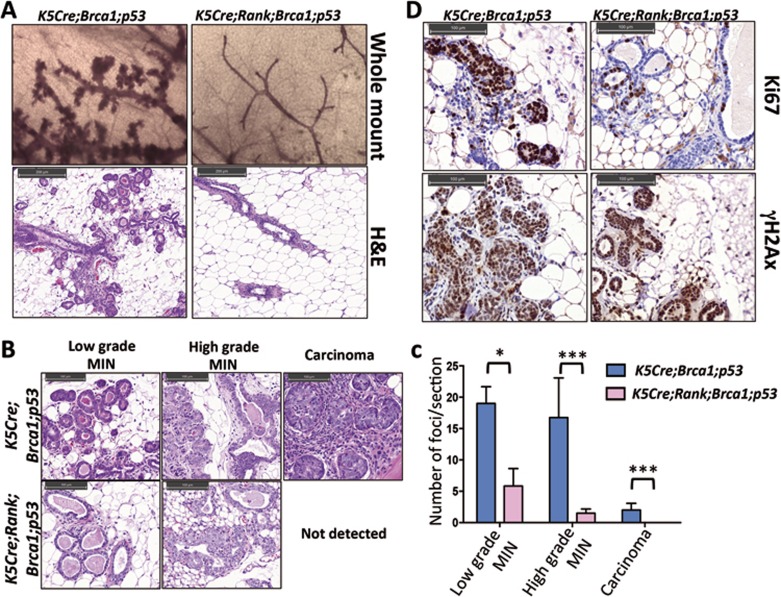
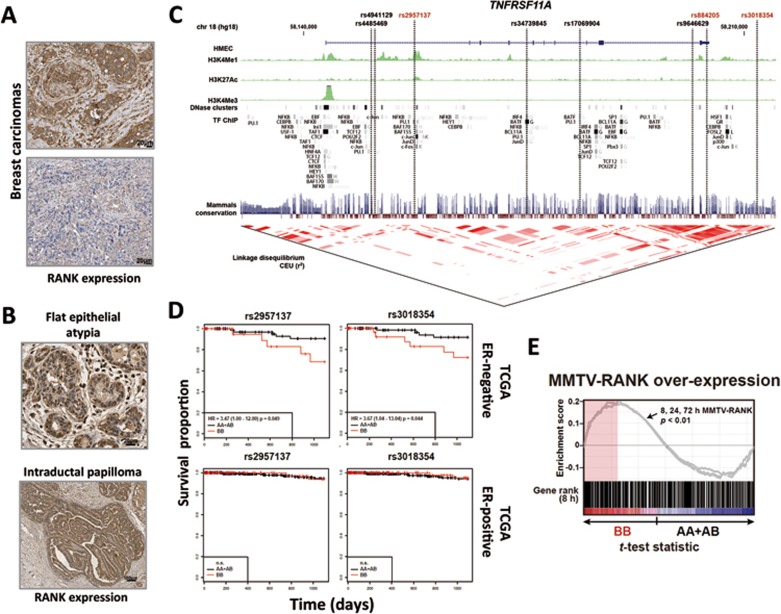
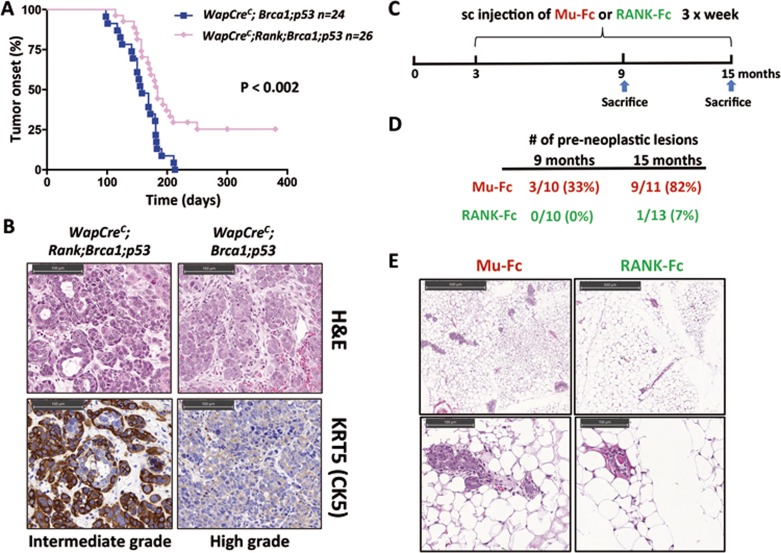
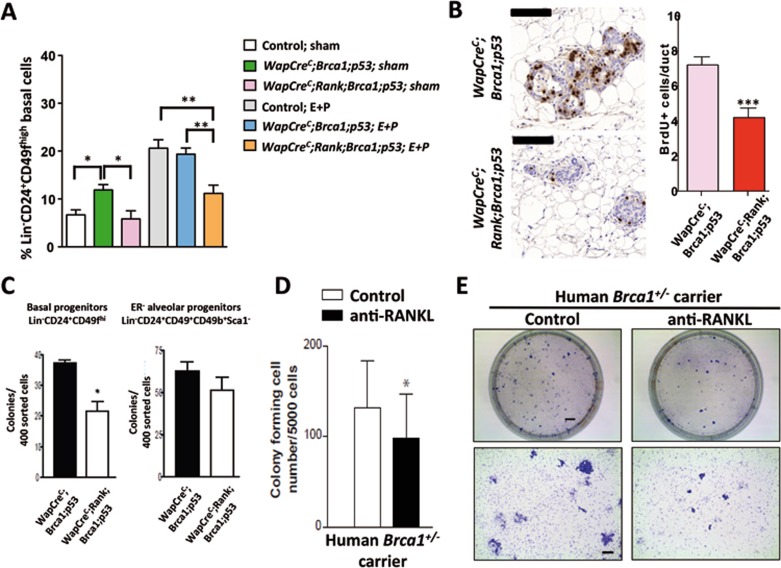
Breast cancer is the most common female cancer, affecting approximately one in eight women during their life-time. Besides environmental triggers and hormones, inherited mutations in the breast cancer 1 (BRCA1) or BRCA2 genes markedly increase the risk for the development of breast cancer. Here, using two different mouse models, we show that genetic inactivation of the key osteoclast differentiation factor RANK in the mammary epithelium markedly delayed onset, reduced incidence, and attenuated progression of Brca1;p53 mutation-driven mammary cancer. Long-term pharmacological inhibition of the RANK ligand RANKL in mice abolished the occurrence of Brca1 mutation-driven pre-neoplastic lesions. Mechanistically, genetic inactivation of Rank or RANKL/RANK blockade impaired proliferation and expansion of both murine Brca1;p53 mutant mammary stem cells and mammary progenitors from human BRCA1 mutation carriers. In addition, genome variations within the RANK locus were significantly associated with risk of developing breast cancer in women with BRCA1 mutations. Thus, RANKL/RANK control progenitor cell expansion and tumorigenesis in inherited breast cancer. These results present a viable strategy for the possible prevention of breast cancer in BRCA1 mutant patients.
乳腺癌是最常见的女性癌症,在女性一生中,约八分之一的人会受到影响。除了环境诱因和激素外,乳腺癌1(BRCA1)或BRCA2基因的遗传性突变会显著增加患乳腺癌的风险。在此,我们使用两种不同的小鼠模型表明,乳腺上皮中关键破骨细胞分化因子RANK的基因失活显著延迟了Brca1;p53突变驱动的乳腺癌的发病、降低了发病率并减缓了其进展。对小鼠中RANK配体RANKL进行长期药理抑制消除了Brca1突变驱动的肿瘤前病变的发生。从机制上讲,Rank基因失活或RANKL/RANK阻断会损害小鼠Brca1;p53突变乳腺干细胞和人类BRCA1突变携带者的乳腺祖细胞的增殖和扩增。此外,RANK基因座内的基因组变异与BRCA1突变女性患乳腺癌的风险显著相关。因此,RANKL/RANK控制遗传性乳腺癌中祖细胞的扩增和肿瘤发生。这些结果为BRCA1突变患者预防乳腺癌提供了一种可行的策略。