Dynowski Janina F, Nebelsick James H, Klein Adrian, Roth-Nebelsick Anita
Staatliches Museum für Naturkunde Stuttgart, Stuttgart, Germany.
Fachbereich Geowissenschaften, Eberhard Karls Universität Tübingen, Tübingen, Germany.
PLoS One. 2016 May 31;11(5):e0156408. doi: 10.1371/journal.pone.0156408. eCollection 2016.
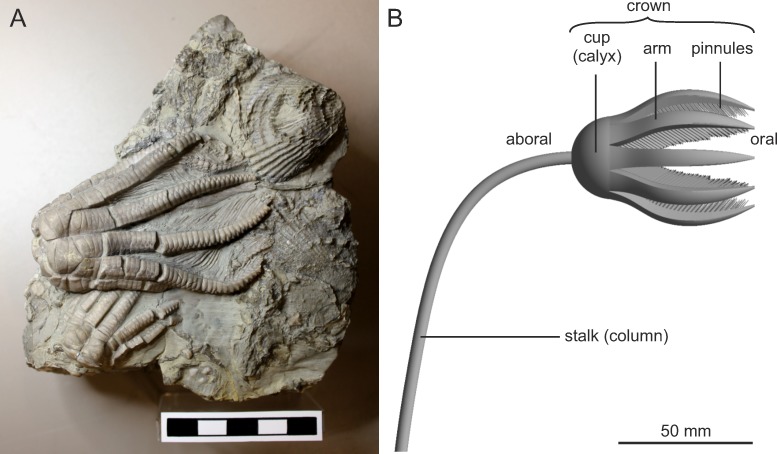
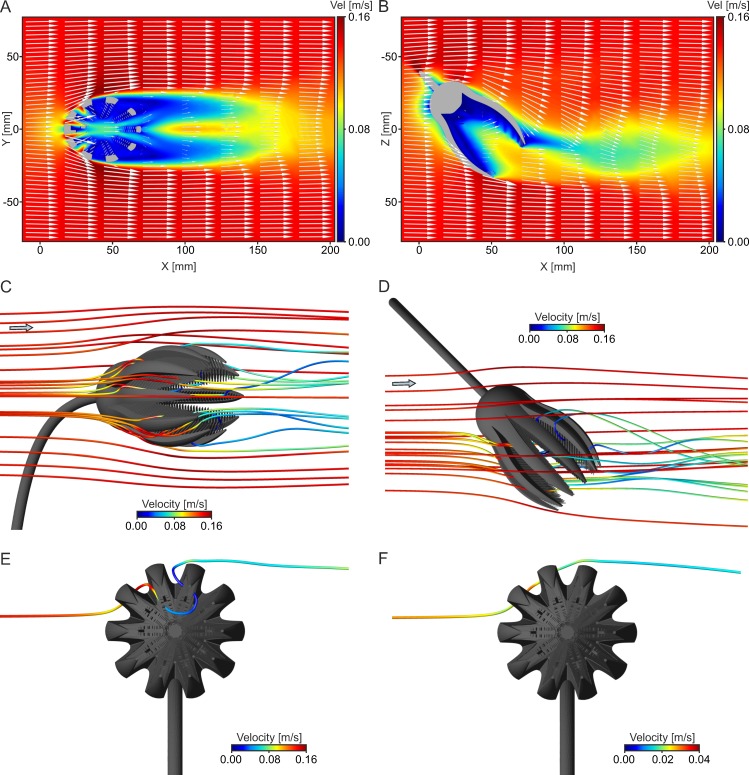
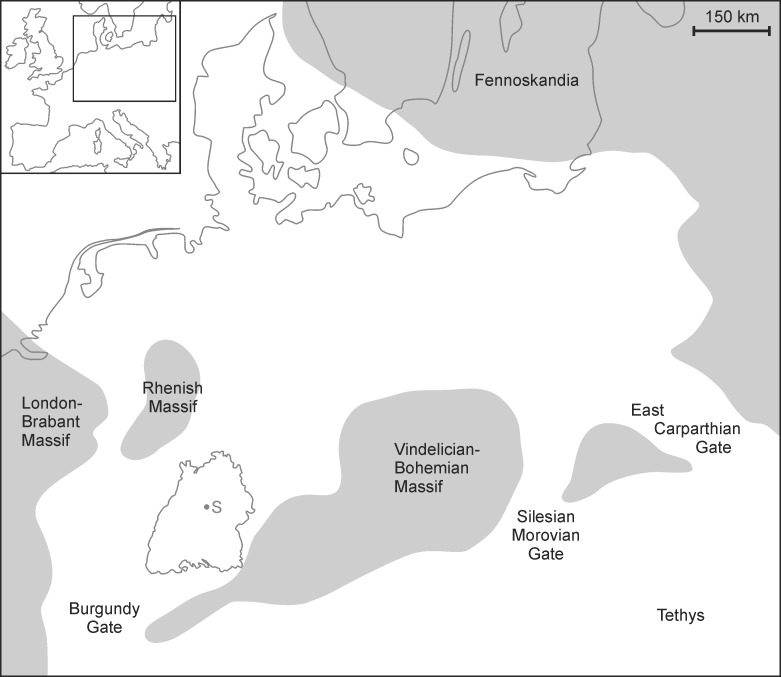
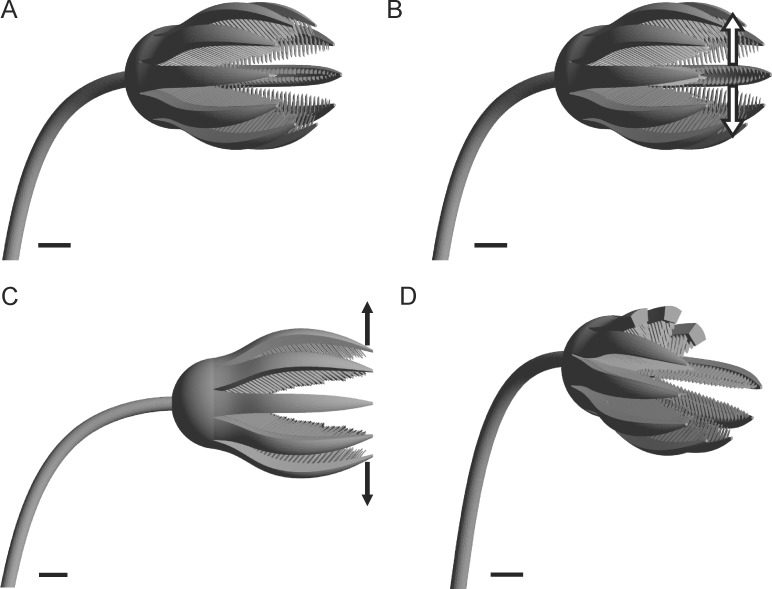
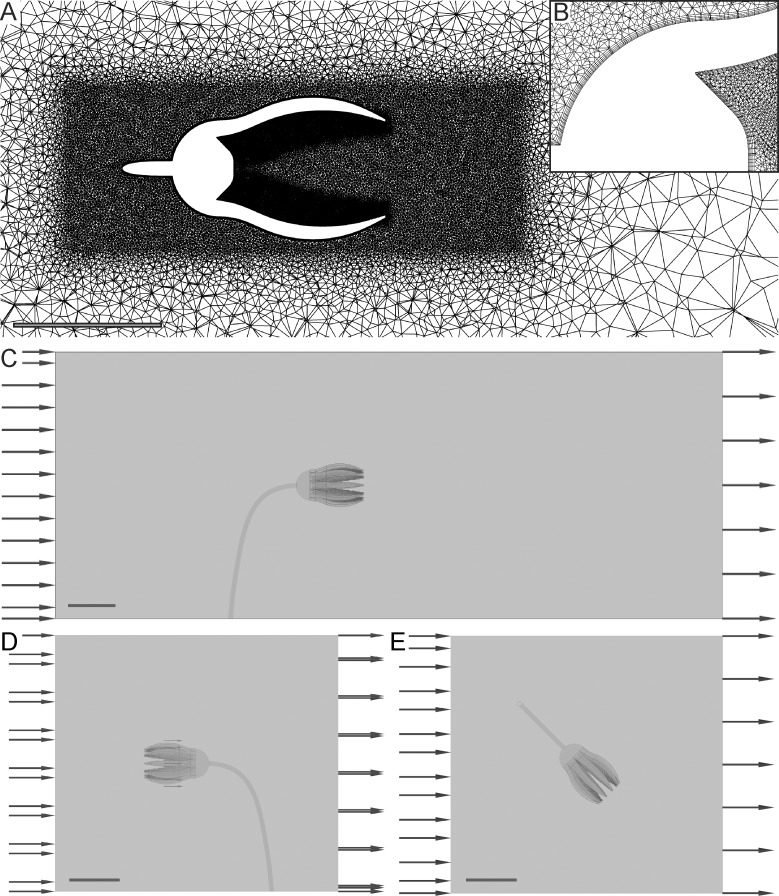
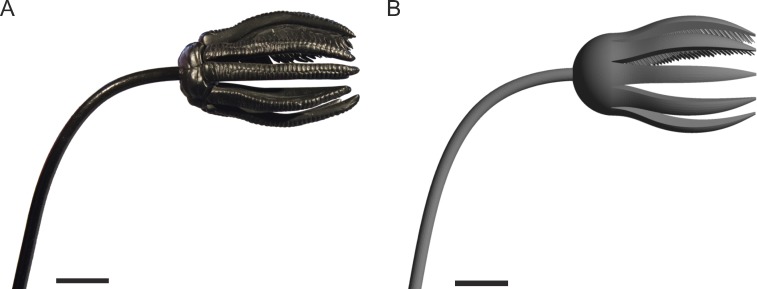
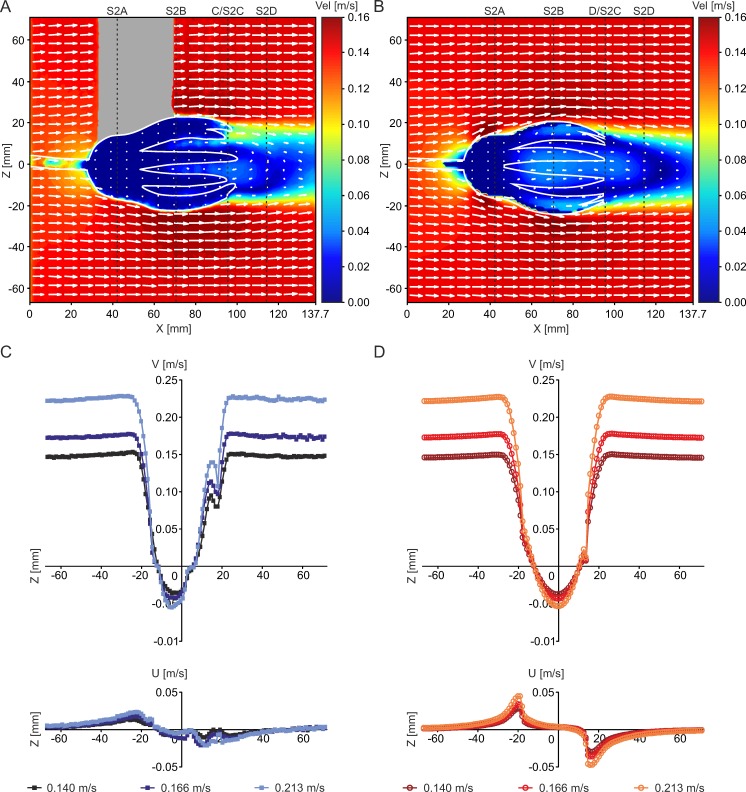
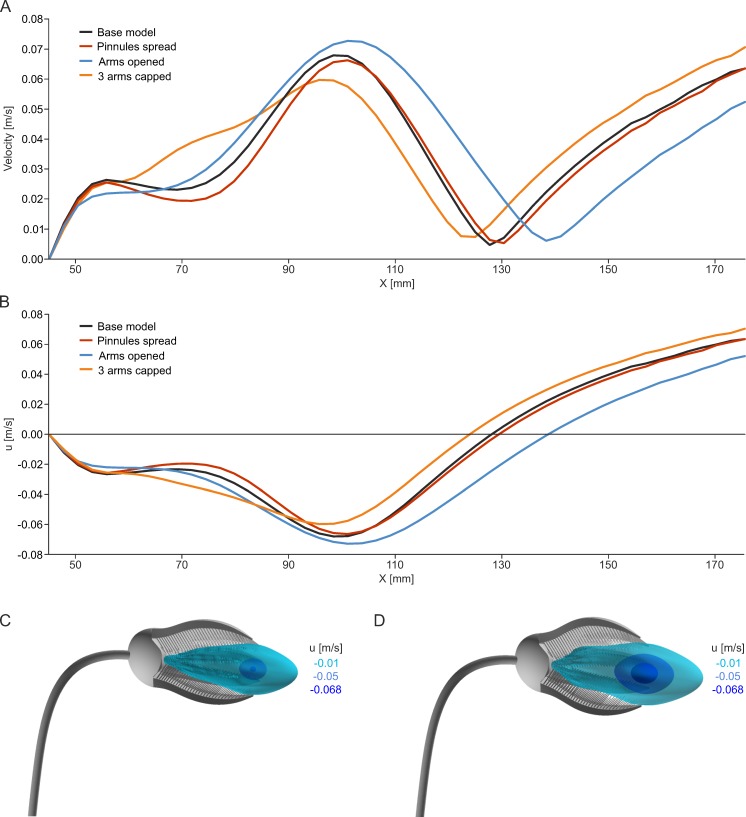
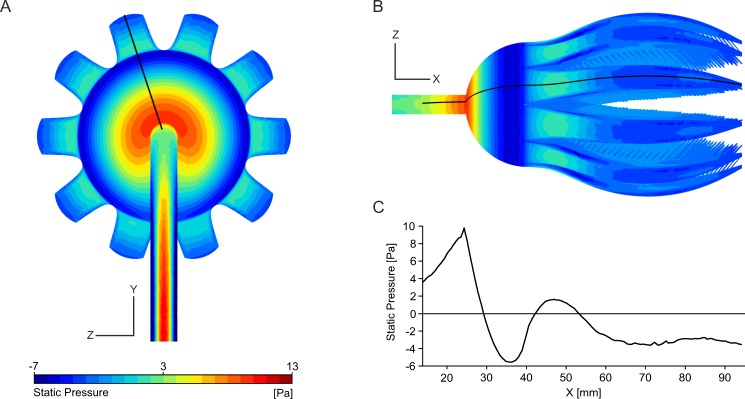
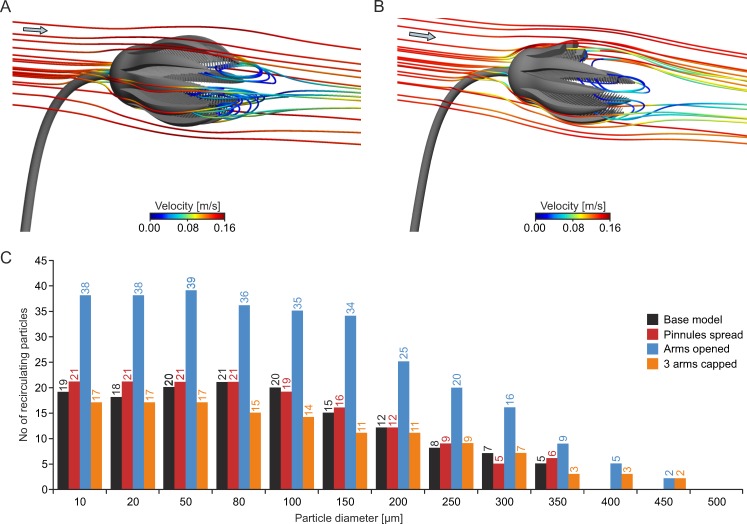
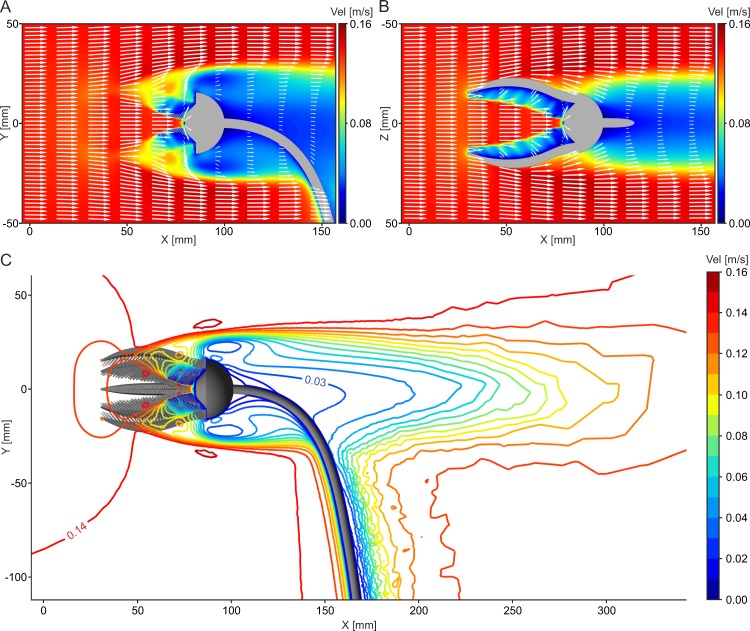
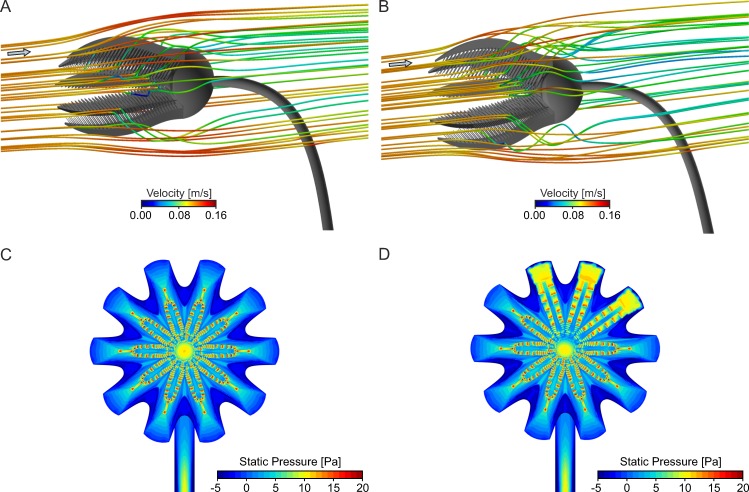
Crinoids, members of the phylum Echinodermata, are passive suspension feeders and catch plankton without producing an active feeding current. Today, the stalked forms are known only from deep water habitats, where flow conditions are rather constant and feeding velocities relatively low. For feeding, they form a characteristic parabolic filtration fan with their arms recurved backwards into the current. The fossil record, in contrast, provides a large number of stalked crinoids that lived in shallow water settings, with more rapidly changing flow velocities and directions compared to the deep sea habitat of extant crinoids. In addition, some of the fossil representatives were possibly not as flexible as today's crinoids and for those forms alternative feeding positions were assumed. One of these fossil crinoids is Encrinus liliiformis, which lived during the middle Triassic Muschelkalk in Central Europe. The presented project investigates different feeding postures using Computational Fluid Dynamics to analyze flow patterns forming around the crown of E. liliiformis, including experimental validation by Particle Image Velocimetry. The study comprises the analysis of different flow directions, velocities, as well as crown orientations. Results show that inflow from lateral and oral leads to direct transport of plankton particles into the crown and onto the oral surface. With current coming from the "rear" (aboral) side of the crinoid, the conical opening of the crown produces a backward oriented flow in its wake that transports particles into the crown. The results suggest that a conical feeding position may have been less dependent on stable flow conditions compared to the parabolic filtration fan. It is thus assumed that the conical feeding posture of E. liliiformis was suitable for feeding under dynamically changing flow conditions typical for the shallow marine setting of the Upper Muschelkalk.
海百合纲动物属于棘皮动物门,是被动悬浮取食者,它们捕获浮游生物时不会产生主动的摄食水流。如今,有柄海百合纲动物仅见于深海栖息地,那里的水流条件相当稳定,摄食速度相对较低。为了摄食,它们会用手臂向后弯曲形成一个独特的抛物线形过滤扇。相比之下,化石记录显示有大量有柄海百合纲动物生活在浅水环境中,与现存海百合纲动物的深海栖息地相比,那里的水流速度和方向变化更快。此外,一些化石代表可能不像今天的海百合纲动物那样灵活,对于这些形态,人们假定了其他的摄食姿势。其中一种化石海百合纲动物是百合海林檎,它生活在中欧中三叠世的马斯石灰岩中。本项目利用计算流体动力学研究不同的摄食姿势,以分析百合海林檎冠部周围形成的水流模式,包括通过粒子图像测速法进行实验验证。该研究包括对不同水流方向、速度以及冠部方向的分析。结果表明,从侧面和口部流入的水流会直接将浮游生物颗粒输送到冠部和口表面。当水流从海百合纲动物的“后方”(反口面)流入时,冠部的锥形开口在其尾流中产生向后的水流,将颗粒输送到冠部。结果表明,与抛物线形过滤扇相比,锥形摄食姿势可能对稳定水流条件的依赖较小。因此可以假定,百合海林檎的锥形摄食姿势适合在上马斯石灰岩浅海环境典型的动态变化水流条件下摄食。