Ramma Lebogang, Sebothoma Ben
Division of Communication Sciences & Disorders, University of Cape Town.
S Afr J Commun Disord. 2016 Apr 8;63(1):105. doi: 10.4102/sajcd.v63i1.105.
There is a lack of data on the prevalence of hearing impairment in South Africa. Current data is unreliable as it is based on national census information which tends to underestimate the prevalence of hearing impairment.
The aim of this study was to estimate the prevalence of hearing impairment in the Cape Town Metropolitan area and to determine factors associated with hearing impairment.
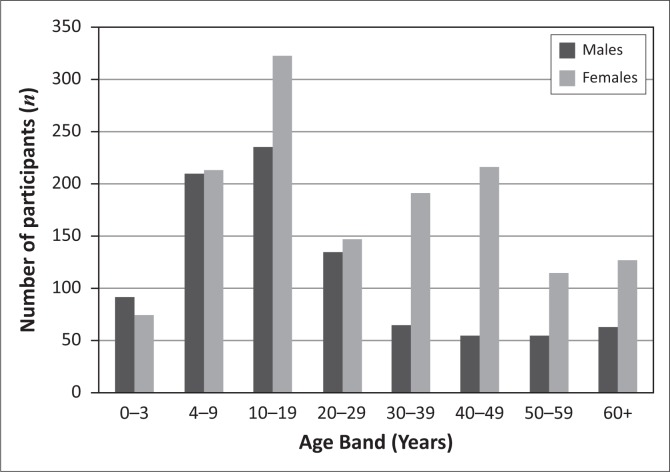
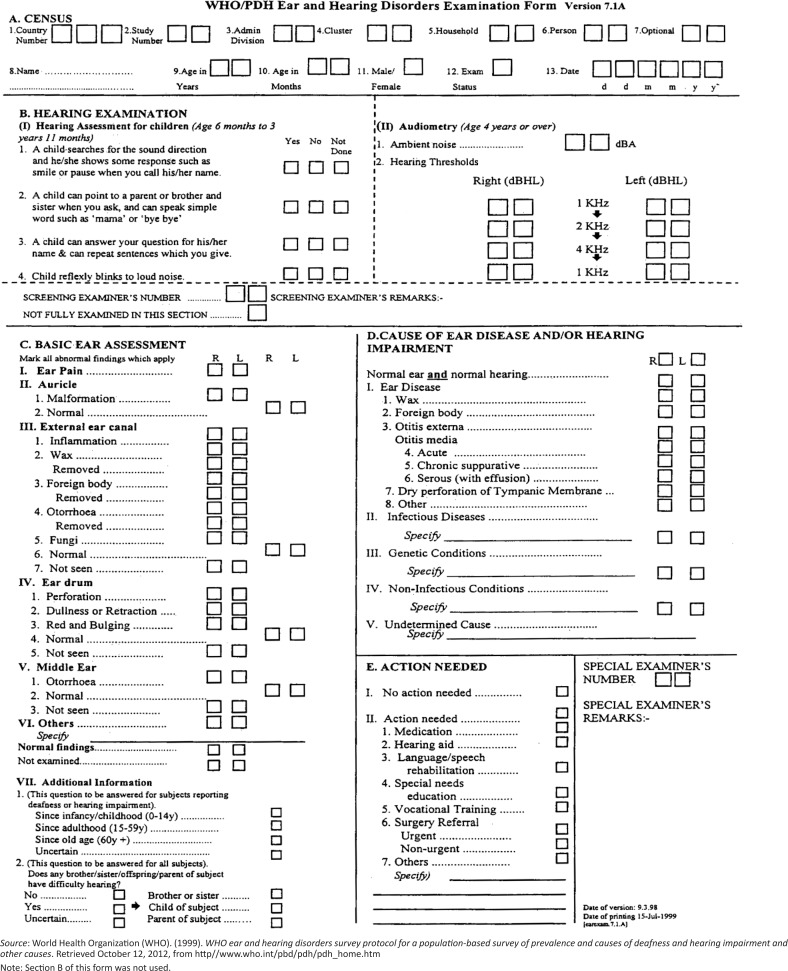
A cross-sectional household survey involving 2494 partcipants from 718 households was conducted between the months of February and October 2013. Random cluster sampling was used to select four health sub-districts from eight health sub-districts in the Cape Town Metropolitan area using a method of probability proportional to size (PPS). The survey was conducted according to the World Health Organization (WHO) Ear and Hearing Disorders Survey Protocol and the classifcation of hearing impairment matched the WHO's criteria for the grading of hearing impairment.
The overall prevalence of hearing impairment in the population of this study was 12.35% (95%CI: 11.06% - 13.64%) and prevalence of disabling hearing impairment was 4.57% (95% CI: 3.75% - 5.39%) amongst individuals ≥ 4 years old. The following factors were found to be associated with hearing impairment; male gender, age, hypertension, a history of head and neck trauma and a family history of hearing impairment.
Based on the data from communities surveyed during this study, hearing impairment is more prevalent than previously estimated based on national population census information. Interventions for the prevention of hearing impairment in these communities should focus on individuals with associated risk factors.
南非缺乏有关听力障碍患病率的数据。目前的数据不可靠,因为它基于全国人口普查信息,往往低估了听力障碍的患病率。
本研究的目的是估计开普敦大都市区听力障碍的患病率,并确定与听力障碍相关的因素。
2013年2月至10月期间进行了一项横断面家庭调查,涉及来自718户家庭的2494名参与者。采用按规模大小概率抽样(PPS)方法,从开普敦大都市区的八个健康分区中随机抽取四个健康分区。该调查按照世界卫生组织(WHO)耳与听力障碍调查方案进行,听力障碍的分类符合WHO听力障碍分级标准。
本研究人群中听力障碍的总体患病率为12.35%(95%CI:11.06%-13.64%),4岁及以上个体中致残性听力障碍的患病率为4.57%(95%CI:3.75%-5.39%)。发现以下因素与听力障碍有关;男性、年龄、高血压、头颈部外伤史和听力障碍家族史。
根据本研究期间所调查社区的数据,听力障碍比以前根据全国人口普查信息估计的更为普遍。这些社区预防听力障碍的干预措施应侧重于具有相关危险因素的个体。