Aydemir Fikret, Salganik Maxim, Resztak Justyna, Singh Jasbir, Bennett Antonette, Agbandje-McKenna Mavis, Muzyczka Nicholas
Department of Molecular Genetics and Microbiology, College of Medicine, University of Florida, Gainesville, Florida, USA.
Powell Gene Therapy Center, College of Medicine, University of Florida, Gainesville, Florida, USA.
J Virol. 2016 Jul 27;90(16):7196-7204. doi: 10.1128/JVI.00493-16. Print 2016 Aug 15.
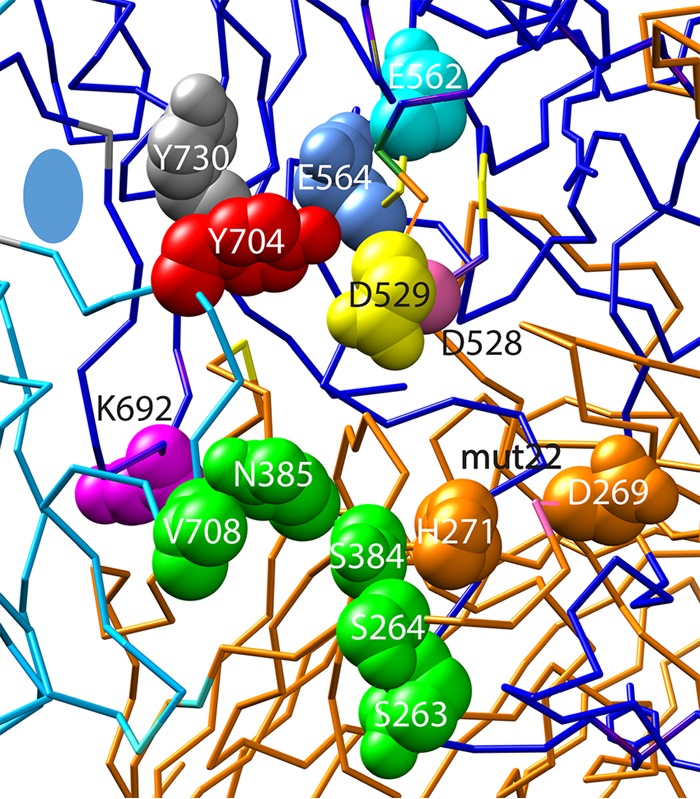
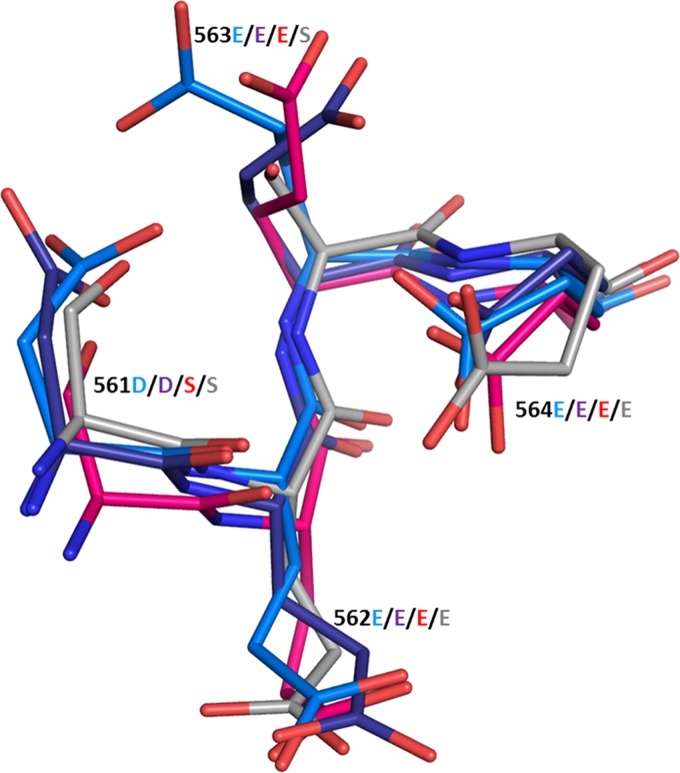
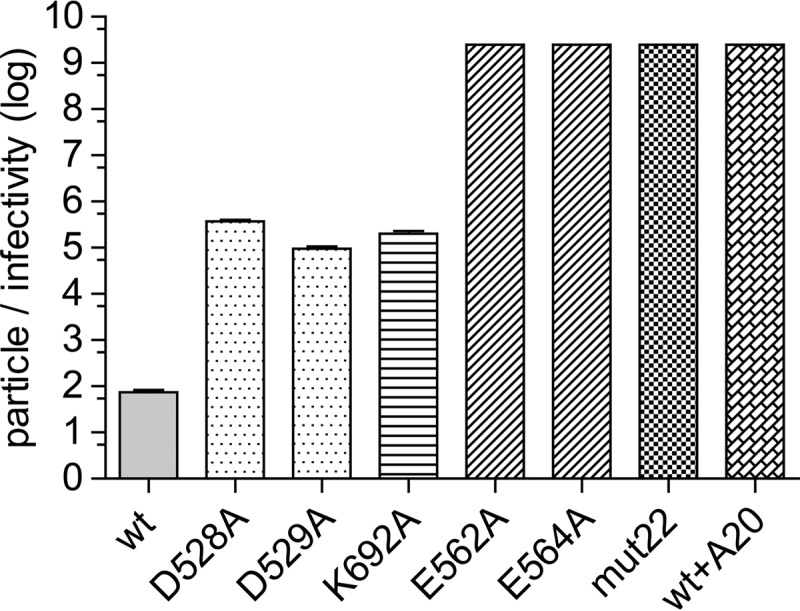
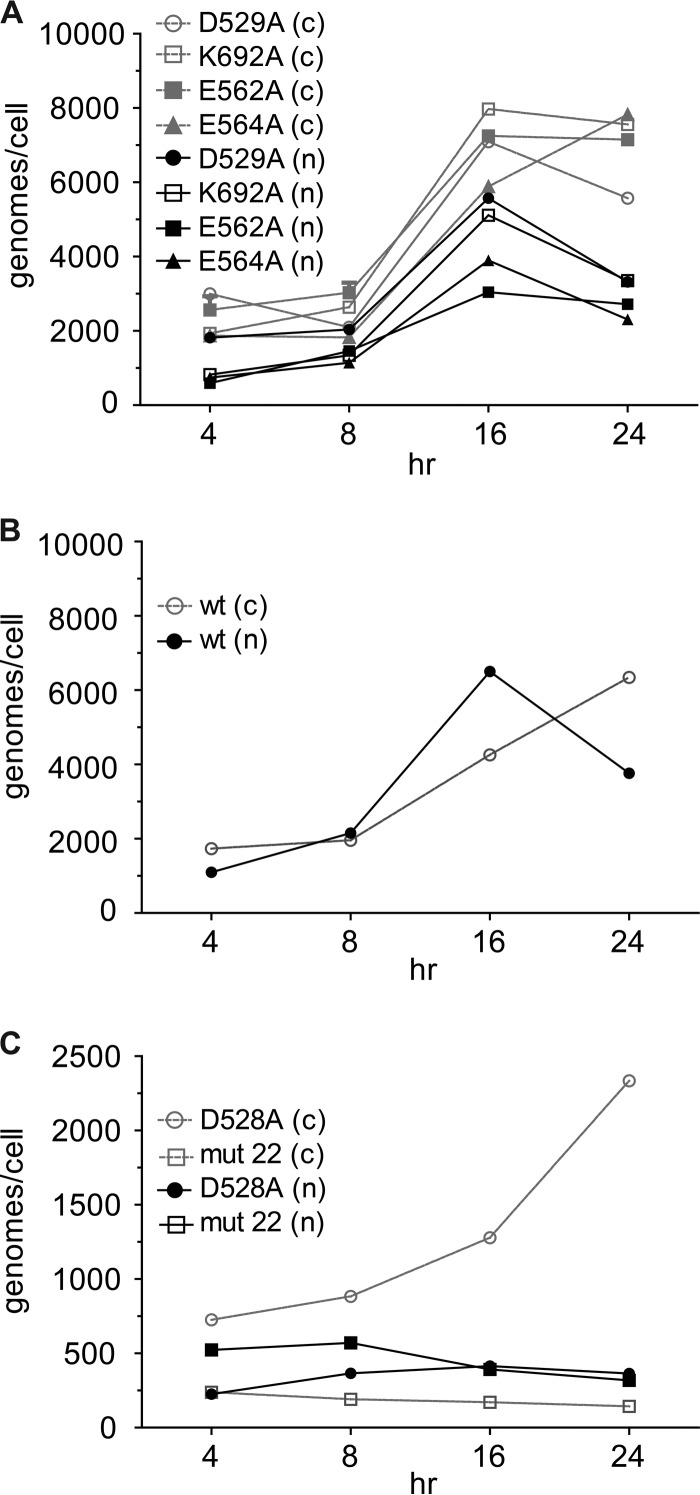
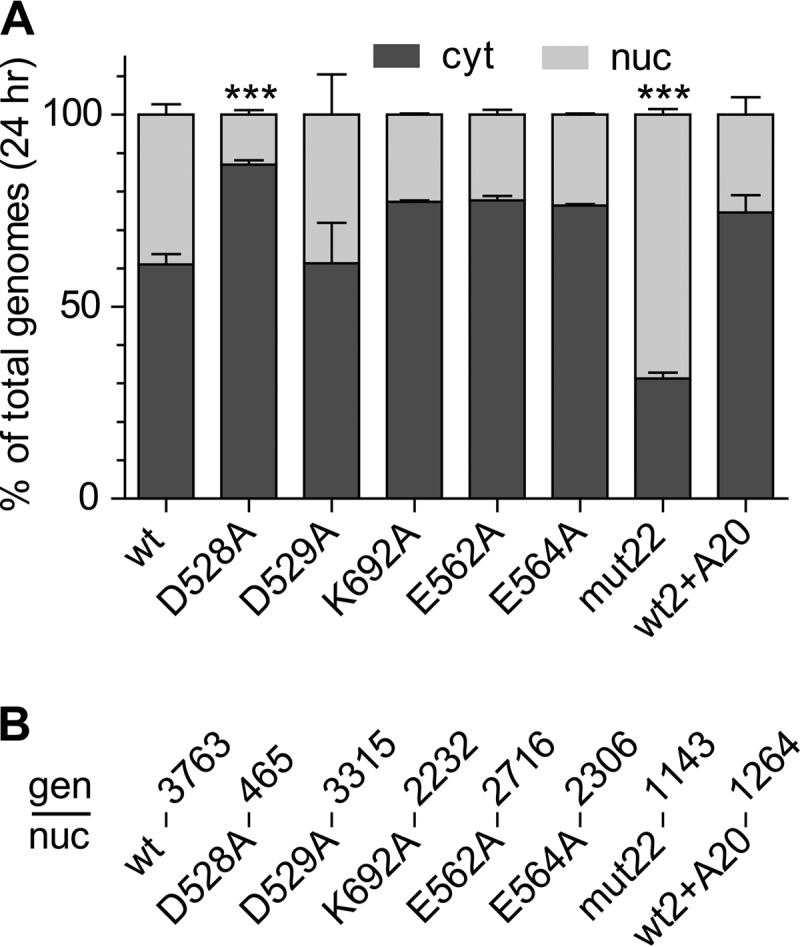
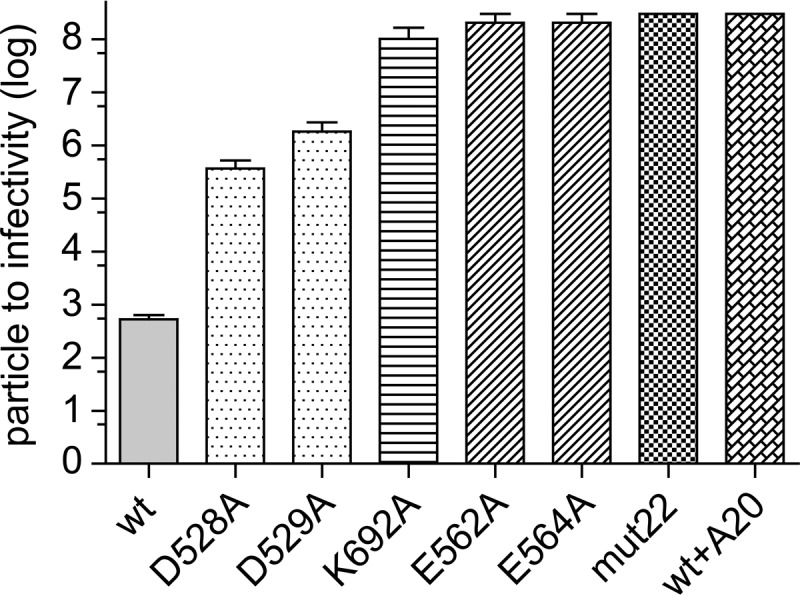
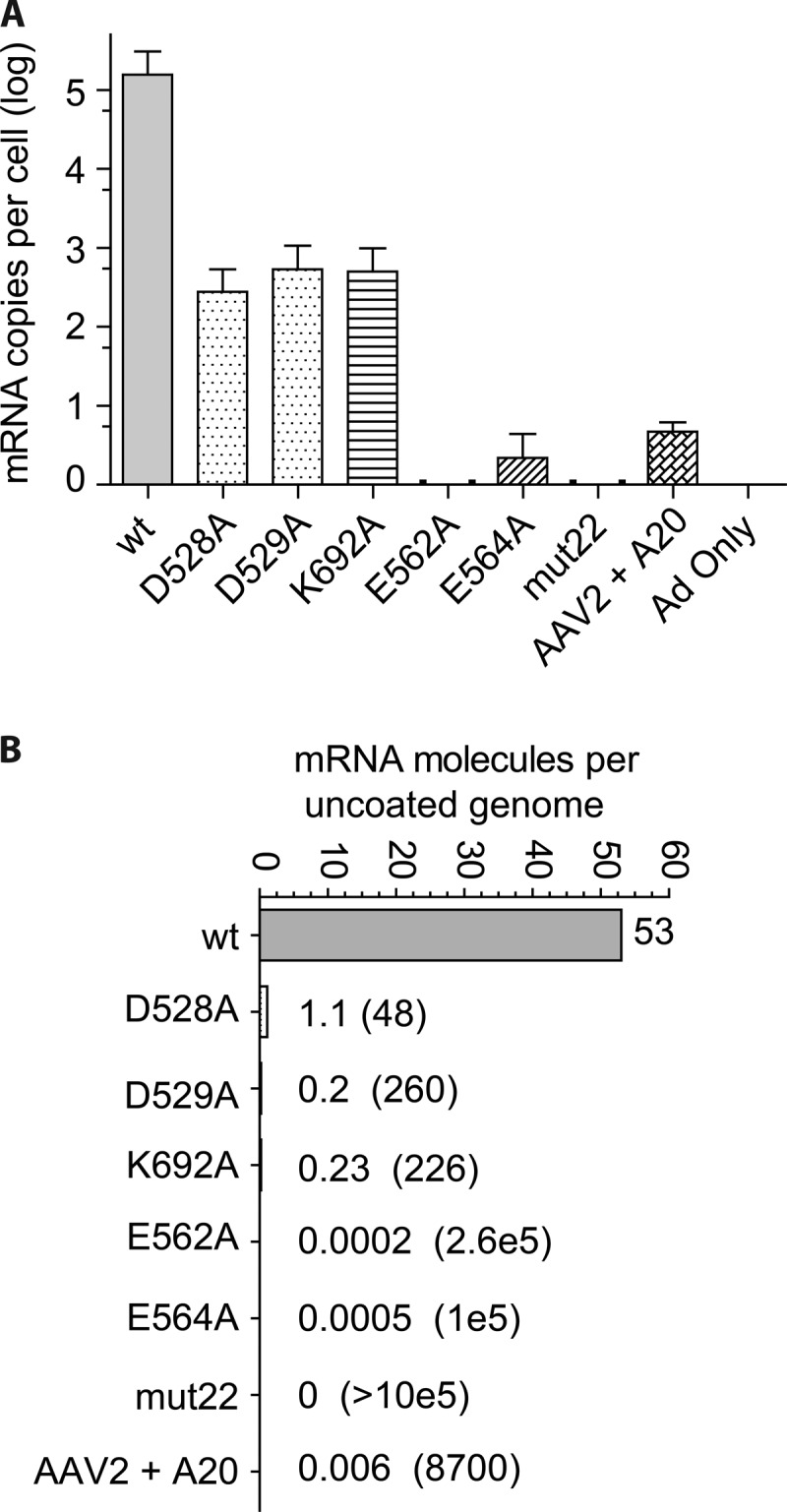
We previously reported that an amino acid substitution, Y704A, near the 2-fold interface of adeno-associated virus (AAV) was defective for transcription of the packaged genome (M. Salganik, F. Aydemir, H. J. Nam, R. McKenna, M. Agbandje-McKenna, and N. Muzyczka, J Virol 88:1071-1079, 2013, doi: http://dx.doi.org/10.1128/JVI.02093-13). In this report, we have characterized the defect in 6 additional capsid mutants located in a region ∼30 Å in diameter on the surface of the AAV type 2 (AAV2) capsid near the 2-fold interface. These mutants, which are highly conserved among primate serotypes, displayed a severe defect (3 to 6 logs) in infectivity. All of the mutants accumulated significant levels of uncoated DNA in the nucleus, but none of the mutants were able to accumulate significant amounts of genomic mRNA postinfection. In addition, wild-type (wt) capsids that were bound to the conformational antibody A20, which is known to bind the capsid surface in the region of the mutants, were also defective for transcription. In all cases, the mutant virus particles, as well as the antibody-bound wild-type capsids, were able to enter the cell, travel to the nucleus, uncoat, and synthesize a second strand but were unable to transcribe their genomes. Taken together, the phenotype of these mutants provides compelling evidence that the AAV capsid plays a role in the transcription of its genome, and the mutants map this functional region on the surface of the capsid near the 2-fold interface. This appears to be the first example of a viral structural protein that is also involved in the transcription of the viral genome that it delivers to the nucleus.
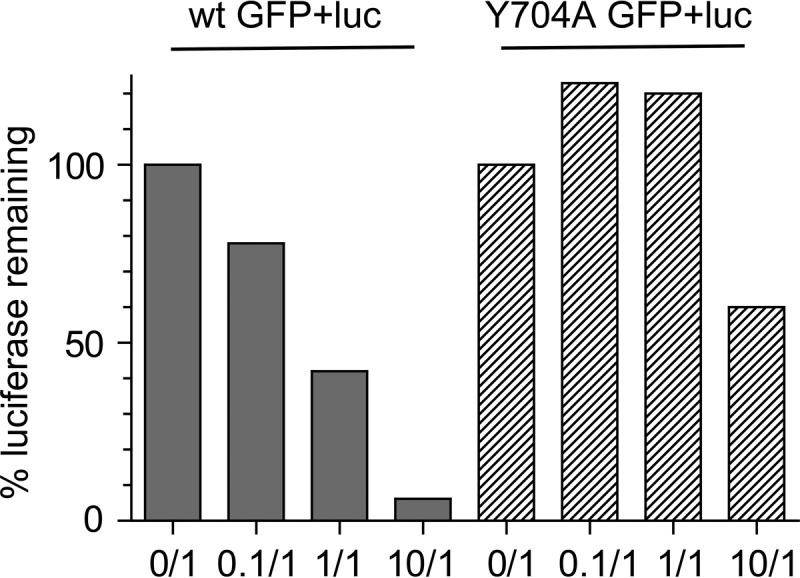
Many viruses package enzymes within their capsids that assist in expressing their genomes postinfection, e.g., retroviruses. A number of nonenveloped viruses, including AAV, carry proteases that are needed for capsid maturation or for capsid modification during infection. We describe here what appears to be the first example of a nonenveloped viral capsid that appears to have a role in promoting transcription. A total of six mutants at the AAV capsid 2-fold interface were shown to have a severe defect in expressing their genomes, and the defect was at the level of mRNA accumulation. This suggests that AAV capsids have a novel role in promoting the transcription of the genomes that they have packaged. Since wt virions could not complement the mutant viruses, and the mutant viruses did not effectively inhibit wt gene expression, our results suggest that the capsid exerts its effect on transcription in cis.
我们之前报道过,腺相关病毒(AAV)2倍界面附近的氨基酸替换Y704A对包装基因组的转录有缺陷(M. Salganik、F. Aydemir、H. J. Nam、R. McKenna、M. Agbandje-McKenna和N. Muzyczka,《病毒学杂志》88:1071 - 1079,2013年,doi: http://dx.doi.org/10.1128/JVI.02093 - 13)。在本报告中,我们对另外6个衣壳突变体的缺陷进行了表征,这些突变体位于2型AAV(AAV2)衣壳表面直径约30 Å、靠近2倍界面的区域。这些在灵长类血清型中高度保守的突变体,在感染性方面表现出严重缺陷(3至6个对数级)。所有突变体在细胞核中积累了大量未脱壳的DNA,但在感染后没有一个突变体能够积累大量的基因组mRNA。此外,与构象抗体A20结合的野生型(wt)衣壳(已知该抗体在突变体区域结合衣壳表面)在转录方面也有缺陷。在所有情况下,突变病毒颗粒以及抗体结合的野生型衣壳都能够进入细胞、转运至细胞核、脱壳并合成第二条链,但无法转录其基因组。综上所述,这些突变体的表型提供了令人信服的证据,表明AAV衣壳在其基因组转录中发挥作用,并且这些突变体将这个功能区域定位在衣壳表面靠近2倍界面的位置。这似乎是病毒结构蛋白也参与其递送至细胞核的病毒基因组转录的首个例子。
许多病毒在其衣壳内包装有助于感染后表达其基因组的酶,例如逆转录病毒。包括AAV在内的许多无包膜病毒携带衣壳成熟或感染期间衣壳修饰所需的蛋白酶。我们在此描述了一个似乎是无包膜病毒衣壳在促进转录中发挥作用的首个例子。在AAV衣壳2倍界面处的总共6个突变体在表达其基因组方面表现出严重缺陷,并且缺陷在于mRNA积累水平。这表明AAV衣壳在促进其包装的基因组转录方面具有新的作用。由于野生型病毒粒子不能互补突变病毒,并且突变病毒不能有效抑制野生型基因表达,我们的结果表明衣壳在顺式作用中对转录发挥作用。