• 文献检索
  • 文档翻译
  • 深度研究
  • 学术资讯
  • Suppr Zotero 插件Zotero 插件
  • 邀请有礼
  • 套餐&价格
  • 历史记录
应用&插件
Suppr Zotero 插件Zotero 插件浏览器插件Mac 客户端Windows 客户端微信小程序
定价
高级版会员购买积分包购买API积分包
服务
文献检索文档翻译深度研究API 文档MCP 服务
关于我们
关于 Suppr公司介绍联系我们用户协议隐私条款
关注我们

Suppr 超能文献

核心技术专利:CN118964589B侵权必究
粤ICP备2023148730 号-1Suppr @ 2026

文献检索

告别复杂PubMed语法,用中文像聊天一样搜索,搜遍4000万医学文献。AI智能推荐,让科研检索更轻松。

立即免费搜索

文件翻译

保留排版,准确专业,支持PDF/Word/PPT等文件格式,支持 12+语言互译。

免费翻译文档

深度研究

AI帮你快速写综述,25分钟生成高质量综述,智能提取关键信息,辅助科研写作。

立即免费体验

哪些人不应接受治疗:28个国家中公众对基于个人标准设定医疗保健优先顺序的态度。

Who Shall Not Be Treated: Public Attitudes on Setting Health Care Priorities by Person-Based Criteria in 28 Nations.

作者信息

Rogge Jana, Kittel Bernhard

机构信息

Department of Special Education and Rehabilitation, University Oldenburg, Oldenburg, Germany.

Department of Economic Sociology, University of Vienna, Vienna, Austria.

出版信息

PLoS One. 2016 Jun 9;11(6):e0157018. doi: 10.1371/journal.pone.0157018. eCollection 2016.

DOI:10.1371/journal.pone.0157018
PMID:27280775
原文链接:https://pmc.ncbi.nlm.nih.gov/articles/PMC4900563/
Abstract

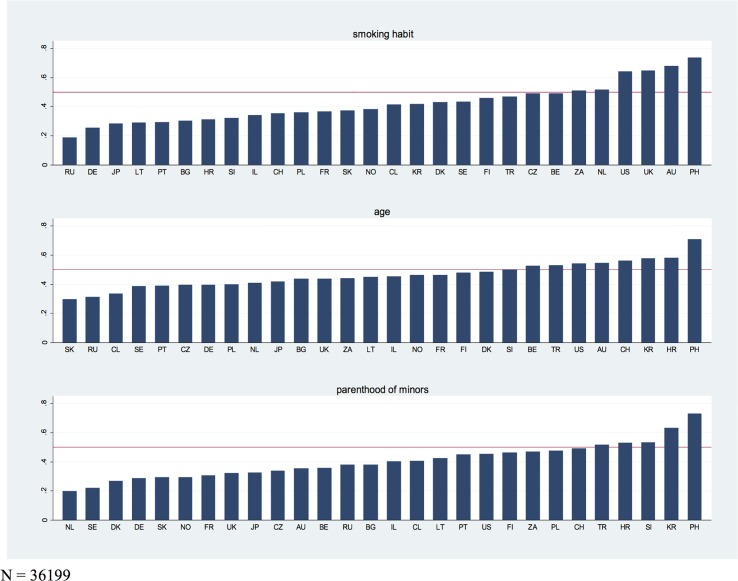
The principle of distributing health care according to medical need is being challenged by increasing costs. As a result, many countries have initiated a debate on the introduction of explicit priority regulations based on medical, economic and person-based criteria, or have already established such regulations. Previous research on individual attitudes towards setting health care priorities based on medical and economic criteria has revealed consistent results, whereas studies on the use of person-based criteria have generated controversial findings. This paper examines citizens' attitudes towards three person-based priority criteria, patients' smoking habits, age and being the parent of a young child. Using data from the ISSP Health Module (2011) in 28 countries, logistic regression analysis demonstrates that self-interest as well as socio-demographic predictors significantly influence respondents' attitudes towards the use of person-based criteria for health care prioritization. This study contributes to resolving the controversial findings on person-based criteria by using a larger country sample and by controlling for country-level differences with fixed effects models.

摘要

根据医疗需求分配医疗保健的原则正受到成本上升的挑战。因此,许多国家已开始就引入基于医学、经济和个人标准的明确优先法规展开辩论,或者已经制定了此类法规。此前关于个人对基于医学和经济标准设定医疗保健优先次序的态度的研究得出了一致的结果,而关于使用基于个人标准的研究则产生了有争议的发现。本文考察了公民对基于个人的三个优先标准的态度,即患者的吸烟习惯、年龄以及是否有年幼子女。利用来自28个国家的国际社会调查项目健康模块(2011年)的数据,逻辑回归分析表明,自身利益以及社会人口统计学预测因素显著影响受访者对使用基于个人标准进行医疗保健优先排序的态度。本研究通过使用更大的国家样本并通过固定效应模型控制国家层面的差异,有助于解决关于基于个人标准的有争议的发现。
https://cdn.ncbi.nlm.nih.gov/pmc/blobs/ff4d/4900563/3138b277e623/pone.0157018.g001.jpg

相似文献

1
Who Shall Not Be Treated: Public Attitudes on Setting Health Care Priorities by Person-Based Criteria in 28 Nations.哪些人不应接受治疗:28个国家中公众对基于个人标准设定医疗保健优先顺序的态度。
PLoS One. 2016 Jun 9;11(6):e0157018. doi: 10.1371/journal.pone.0157018. eCollection 2016.
2
[Priority setting, public opinion and health care system in Spain].[西班牙的优先事项设定、公众舆论与医疗保健系统]
Gac Sanit. 2001 May-Jun;15(3):237-44. doi: 10.1016/s0213-9111(01)71553-1.
3
Attitudes towards priority-setting and rationing in healthcare -- an exploratory survey of Swedish medical students.瑞典医学生对医疗保健中确定优先次序和资源分配的态度——一项探索性调查
Scand J Public Health. 2009 Mar;37(2):122-30. doi: 10.1177/1403494808100276. Epub 2009 Jan 13.
4
Should non-citizens have access to publicly funded health care?: a study of public attitudes and their affecting factors.非公民是否应享有公共资助的医疗保健服务?:公众态度及其影响因素研究
Public Health. 2015 Sep;129(9):1157-65. doi: 10.1016/j.puhe.2015.07.033. Epub 2015 Aug 20.
5
Citizens and rationing: analysis of a European survey.公民与定量配给:一项欧洲调查分析
Health Policy. 1999 Oct;49(1-2):75-135. doi: 10.1016/s0168-8510(99)00044-5.
6
Eliciting public preferences for healthcare: a systematic review of techniques.获取公众对医疗保健的偏好:技术的系统评价
Health Technol Assess. 2001;5(5):1-186. doi: 10.3310/hta5050.
7
[Criteria for medical prioritisation: results from a regional survey and methodological reflections].[医疗优先排序标准:区域调查结果与方法学思考]
Gesundheitswesen. 2014 Apr;76(4):221-31. doi: 10.1055/s-0033-1347267. Epub 2013 Aug 2.
8
Public preferences for allocating absolute scarce critical healthcare resources during the COVID-19 pandemic.公众在 COVID-19 大流行期间对分配绝对稀缺的关键医疗保健资源的偏好。
J Health Organ Manag. 2021 May 25;ahead-of-print(ahead-of-print). doi: 10.1108/JHOM-12-2020-0494.
9
Citizen participation in patient prioritization policy decisions: an empirical and experimental study on patients' characteristics.公民参与患者优先政策决策:基于患者特征的实证与实验研究。
PLoS One. 2012;7(5):e36824. doi: 10.1371/journal.pone.0036824. Epub 2012 May 9.
10
Value judgment of new medical treatments: Societal and patient perspectives to inform priority setting in The Netherlands.新医疗方法的价值判断:为荷兰的优先事项设定提供社会和患者视角。
PLoS One. 2020 Jul 9;15(7):e0235666. doi: 10.1371/journal.pone.0235666. eCollection 2020.

引用本文的文献

1
Public voices on tie-breaking criteria and underlying values in COVID-19 triage protocols to access critical care: a scoping review.关于新冠疫情重症监护分诊方案中打破平局标准及潜在价值观的公众声音:一项范围综述
Discov Health Syst. 2023;2(1):16. doi: 10.1007/s44250-023-00027-9. Epub 2023 May 10.
2
The sociology of rationing: Towards increased interdisciplinary dialogue - A critical interpretive literature review.配给制的社会学:迈向增进跨学科对话——批判性阐释文献综述。
Sociol Health Illn. 2022 Sep;44(8):1287-1304. doi: 10.1111/1467-9566.13507. Epub 2022 Jun 12.
3
Attitudes towards priority setting in the norwegian health care system: a general population survey.

本文引用的文献

1
Public views on principles for health care priority setting: findings of a European cross-country study using Q methodology.公众对医疗保健优先事项设定原则的看法:一项使用Q方法的欧洲跨国研究结果
Soc Sci Med. 2015 Feb;126:128-37. doi: 10.1016/j.socscimed.2014.12.023. Epub 2014 Dec 22.
2
The relevance of personal characteristics in allocating health care resources-controversial preferences of laypersons with different educational backgrounds.个人特征在医疗资源分配中的相关性——不同教育背景的外行的有争议的偏好。
Int J Environ Res Public Health. 2012 Jan;9(1):223-43. doi: 10.3390/ijerph9010223. Epub 2012 Jan 16.
3
挪威医疗保健系统中的优先排序态度:一项一般人群调查。
BMC Health Serv Res. 2022 Apr 5;22(1):444. doi: 10.1186/s12913-022-07806-9.
4
Viewpoints among experts and the public in the Netherlands on including a lifestyle criterion in the healthcare priority setting.荷兰专家和公众在将生活方式标准纳入医疗保健优先级设置方面的观点。
Health Expect. 2022 Feb;25(1):333-344. doi: 10.1111/hex.13385. Epub 2021 Nov 29.
5
Public Preferences for Allocation Principles for Scarce Medical Resources in the COVID-19 Pandemic in Korea: Comparisons With Ethicists' Recommendations.韩国 COVID-19 大流行期间稀缺医疗资源分配原则的公众偏好:与伦理学家建议的比较。
J Prev Med Public Health. 2021 Sep;54(5):360-369. doi: 10.3961/jpmph.21.333. Epub 2021 Aug 26.
6
Severity as a Priority Setting Criterion: Setting a Challenging Research Agenda.严重性作为优先设置标准:制定具有挑战性的研究议程。
Health Care Anal. 2020 Mar;28(1):25-44. doi: 10.1007/s10728-019-00371-z.
7
Clinical decision making in cancer care: a review of current and future roles of patient age.癌症护理中的临床决策:当前和未来患者年龄作用的综述。
BMC Cancer. 2018 May 9;18(1):546. doi: 10.1186/s12885-018-4456-9.
Why institutions are not the only thing that matters: twenty-five years of health care reform in New Zealand.
为什么机构不是唯一重要的因素:新西兰 25 年的医疗改革。
J Health Polit Policy Law. 2010 Aug;35(4):487-516. doi: 10.1215/03616878-2010-014.
4
[Priority setting in healthcare. What can Germany learn from other countries?].[医疗保健中的优先事项设定。德国能从其他国家学到什么?]
Bundesgesundheitsblatt Gesundheitsforschung Gesundheitsschutz. 2010 Sep;53(9):882-9. doi: 10.1007/s00103-010-1115-y.
5
Multiple imputation for missing data in epidemiological and clinical research: potential and pitfalls.流行病学和临床研究中缺失数据的多重填补:潜力与陷阱
BMJ. 2009 Jun 29;338:b2393. doi: 10.1136/bmj.b2393.
6
The fair innings argument and increasing life spans.公平寿限论点与寿命延长
J Med Ethics. 2009 Jan;35(1):53-6. doi: 10.1136/jme.2007.023762.
7
Exploring the social value of health-care interventions: a stated preference discrete choice experiment.探索医疗保健干预措施的社会价值:一项陈述偏好离散选择实验。
Health Econ. 2009 Aug;18(8):951-76. doi: 10.1002/hec.1414.
8
Priority setting in health care: Lessons from the experiences of eight countries.医疗保健中的优先事项设定:八个国家经验教训。
Int J Equity Health. 2008 Jan 21;7:4. doi: 10.1186/1475-9276-7-4.
9
Public views on priority setting for high cost medications in public hospitals in Australia.澳大利亚公众对公立医院高成本药物的优先排序看法。
Health Expect. 2007 Sep;10(3):224-35. doi: 10.1111/j.1369-7625.2007.00439.x.
10
Prioritization and resource allocation in health care: the views of older people receiving continuous public care and service.医疗保健中的优先排序与资源分配:接受持续公共护理和服务的老年人的观点。
Health Expect. 2007 Jun;10(2):117-28. doi: 10.1111/j.1369-7625.2006.00426.x.