Nakaya Kazuhiro, Tomita Taketeru, Suda Kenta, Sato Keiichi, Ogimoto Keisuke, Chappell Anthony, Sato Toshihiko, Takano Katsuhiko, Yuki Yoshio
Hokkaido University, 3-1-1, Minato-cho, Hakodate, Hokkaido 041-8611, Japan.
Okinawa Churashima Research Center, 888 Ishikawa, Motobu-cho, Okinawa 905-0206, Japan.
Sci Rep. 2016 Jun 10;6:27786. doi: 10.1038/srep27786.
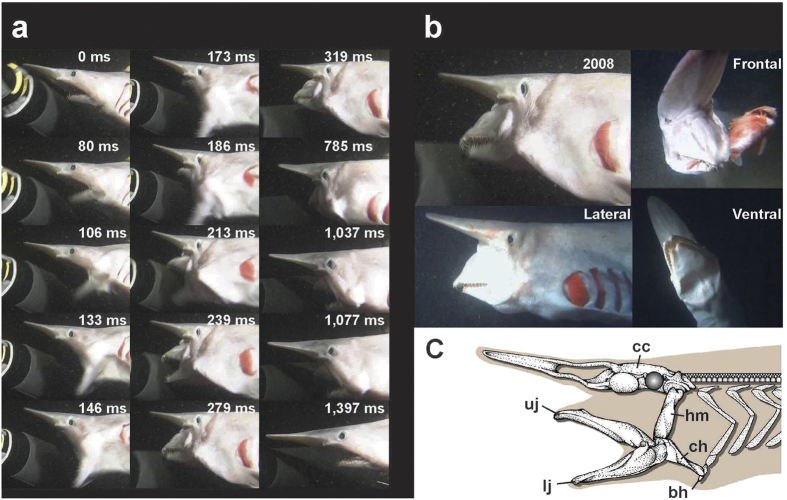
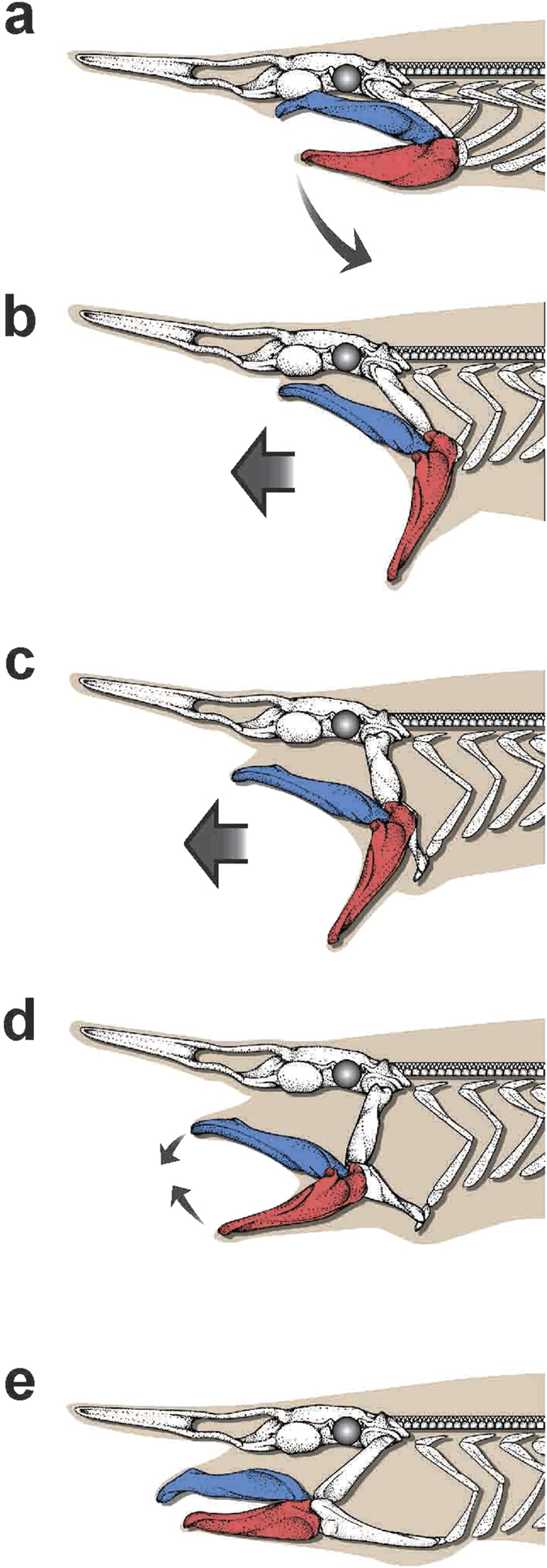
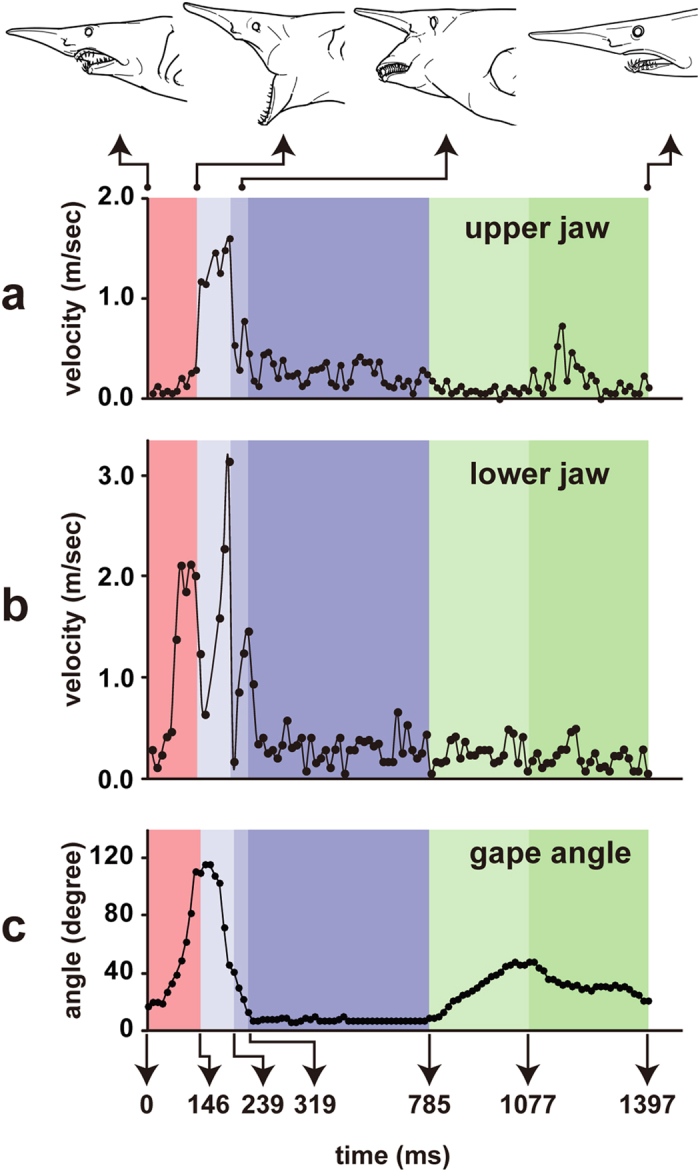
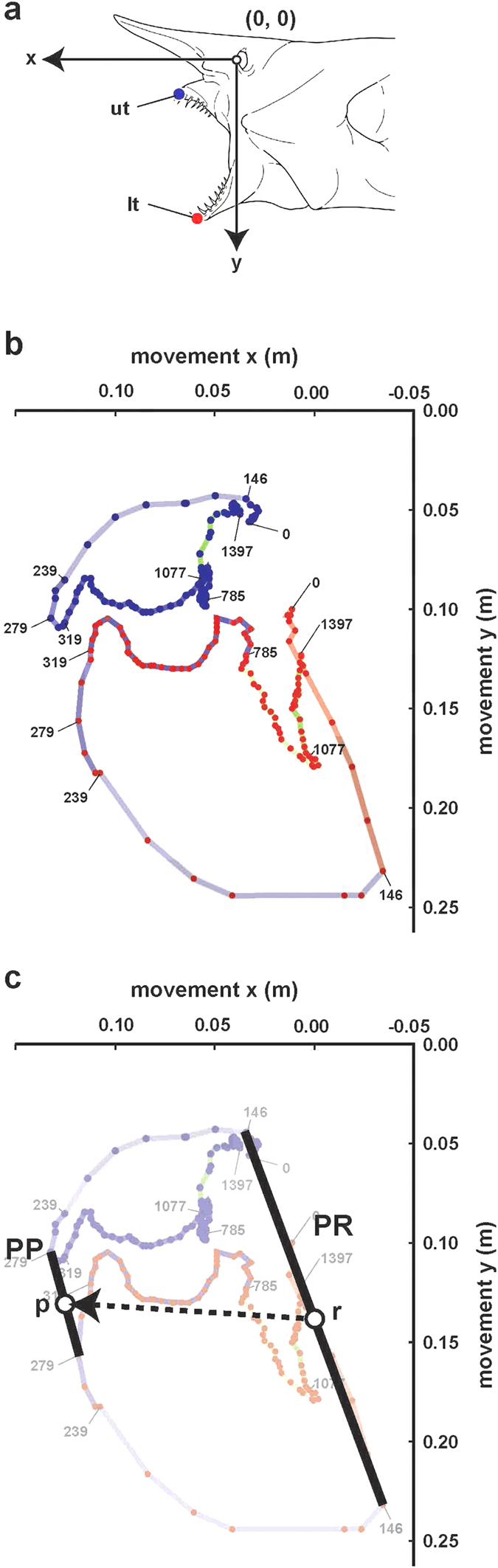
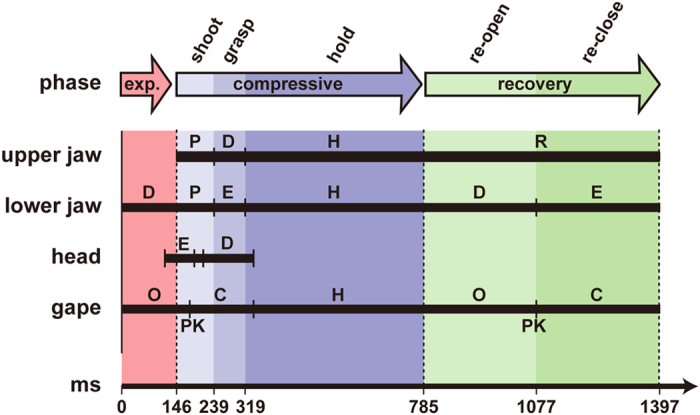
Five striking and prey capture events of two goblin sharks were videotaped at sea for the first time, showing their extraordinary biting process. The goblin sharks swung their lower jaw downward and backward to attain a huge gape and then rapidly protruded the jaws forward a considerable distance. The jaws were projected at a maximum velocity of 3.1 m/s to 8.6-9.4% of the total length of the shark, which is by far the fastest and greatest jaw protrusion among sharks. While the jaws were being retracted, the mouth opened and closed again, which was considered a novel feeding event for sharks. Phylogenetic evidence suggested that their feeding behavior has evolved as an adaptation to food-poor deep-sea environments, possibly as a trade-off for the loss of strong swimming ability.
首次在海上拍摄到两条地精鲨的五次惊人捕食事件,展示了它们非凡的咬食过程。地精鲨将下颌向下和向后摆动以获得巨大的开口,然后迅速将颌向前突出相当一段距离。颌以最高3.1米/秒的速度突出,达到鲨鱼全长的8.6 - 9.4%,这是迄今为止鲨鱼中最快且最大程度的颌突出。在颌缩回时,嘴巴再次张开和闭合,这被认为是鲨鱼一种新的进食行为。系统发育证据表明,它们的进食行为已经进化,以适应食物匮乏的深海环境,这可能是为失去强大游泳能力所做的一种权衡。