Han Shu-Yan, Han Hai-Bo, Tian Xiu-Yun, Sun Hong, Xue Dong, Zhao Can, Jiang Shan-Tong, He Xi-Ran, Zheng Wen-Xian, Wang Jing, Pang Li-Na, Li Xiao-Hong, Li Ping-Ping
Key Laboratory of Carcinogenesis and Translational Research (Ministry of Education), Peking University Cancer Hospital & Institute, Beijing 100142, PR China.
Department of Integrative Medicine and Geriatric Oncology, Peking University Cancer Hospital & Institute, Beijing 100142, PR China.
Oncotarget. 2016 Jul 5;7(27):42461-42473. doi: 10.18632/oncotarget.9886.
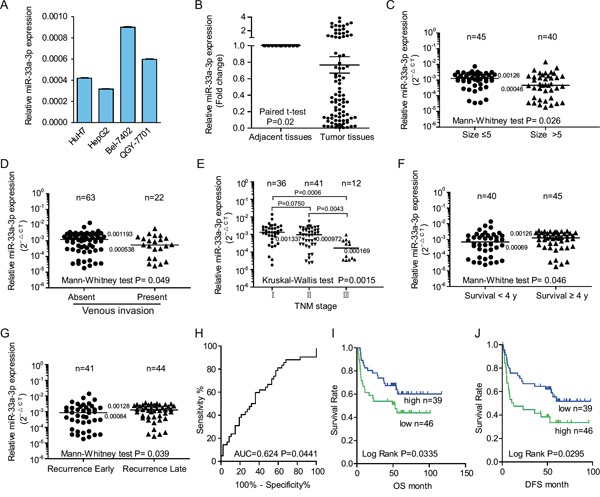
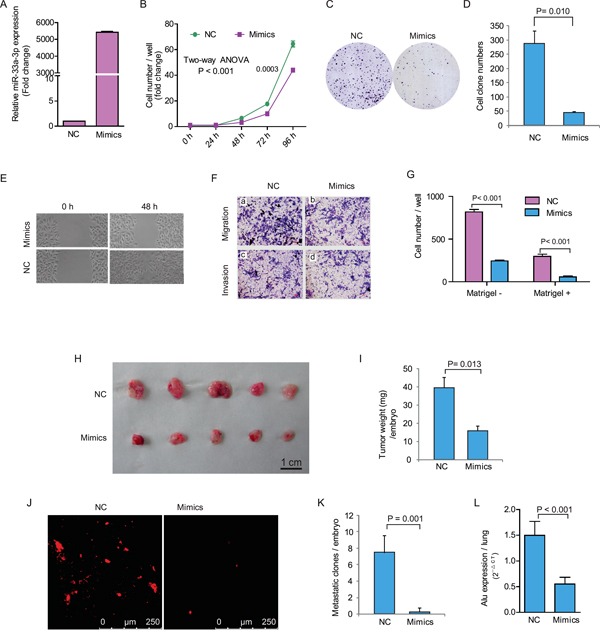
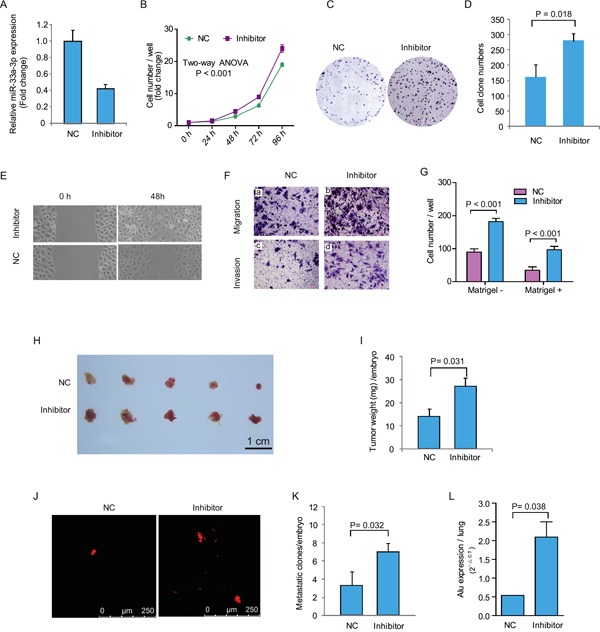
MicroRNAs (miRNAs) have been shown to function as either oncogenes or tumor suppressors by negatively regulating target genes involved in tumor initiation and progression. In this study, we demonstrated that down-regulation of miR-33a-3p in human primary hepatocellular cancer (HCC) specimens was significantly associated with metastases and poor survival. Over-expression of miR-33a-3p in HepG2 cells remarkably suppressed not only cell growth, migration and invasion, but also tumor growth and metastases in the chick embryo chorioallantoic membrane (CAM) assay, and down-regulated Pre-B-Cell Leukemia Homeobox 3 (PBX3) expression. Conversely, inhibition of miR-33a-3p in Bel-7402 cells resulted in increased of cell growth, spreading and invasion. Furthermore, rescue experiments by over-expression PBX3 completely eliminated the inhibitory effects of miR-33a-3p on tumor growth and metastasis, both in vitro and in vivo. The luciferase assay showed that 3'-untranslated regions (3'-UTRs) of PBX3 were inhibited significantly by miR-33a-3p, while mutations in the miR-33a-3p pairing residues rescued the luciferase expression. Taken together, our findings suggest that miR-33a-3p suppressed the malignant phenotype while also inhibiting PBX3 expression in hepatocellular cancer, implying that miR-33a-3p may be a promising biomarkers and therapy target for HCC intervention.
微小RNA(miRNA)已被证明可通过负向调节参与肿瘤起始和进展的靶基因,发挥癌基因或肿瘤抑制因子的作用。在本研究中,我们证明人类原发性肝细胞癌(HCC)标本中miR-33a-3p的下调与转移和不良生存显著相关。在HepG2细胞中过表达miR-33a-3p不仅显著抑制细胞生长、迁移和侵袭,还在鸡胚绒毛尿囊膜(CAM)试验中抑制肿瘤生长和转移,并下调前B细胞白血病同源盒3(PBX3)的表达。相反,在Bel-7402细胞中抑制miR-33a-3p导致细胞生长、铺展和侵袭增加。此外,通过过表达PBX3进行的拯救实验完全消除了miR-33a-3p在体外和体内对肿瘤生长和转移的抑制作用。荧光素酶报告基因检测显示,miR-33a-3p显著抑制PBX3的3'-非翻译区(3'-UTR),而miR-33a-3p配对残基的突变可挽救荧光素酶表达。综上所述,我们的研究结果表明,miR-33a-3p在肝细胞癌中抑制恶性表型,同时抑制PBX3表达,这意味着miR-33a-3p可能是HCC干预的一个有前景的生物标志物和治疗靶点。