Coyle Krysta M, Murphy J Patrick, Vidovic Dejan, Vaghar-Kashani Ahmad, Dean Cheryl A, Sultan Mohammad, Clements Derek, Wallace Melissa, Thomas Margaret L, Hundert Amos, Giacomantonio Carman A, Helyer Lucy, Gujar Shashi A, Lee Patrick W K, Weaver Ian C G, Marcato Paola
Department of Pathology, Dalhousie University, Halifax, NS, Canada.
Department of Microbiology & Immunology, Dalhousie University, Halifax, NS, Canada.
Oncotarget. 2016 Jul 12;7(28):44096-44112. doi: 10.18632/oncotarget.9858.
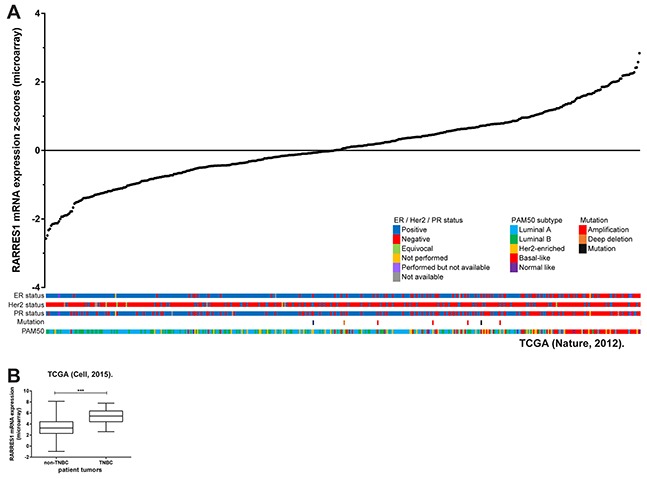
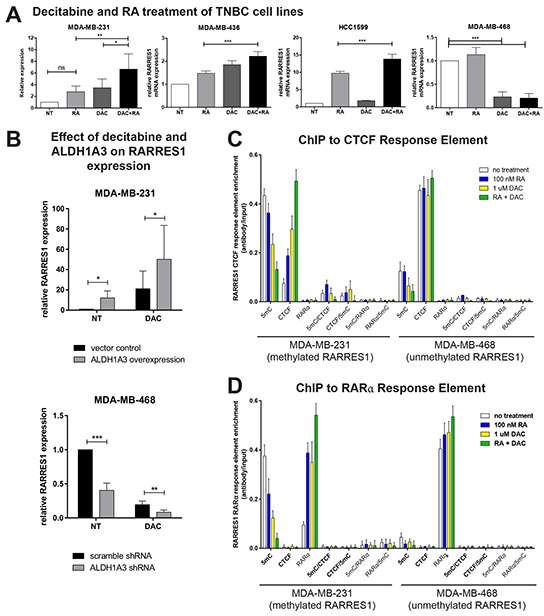
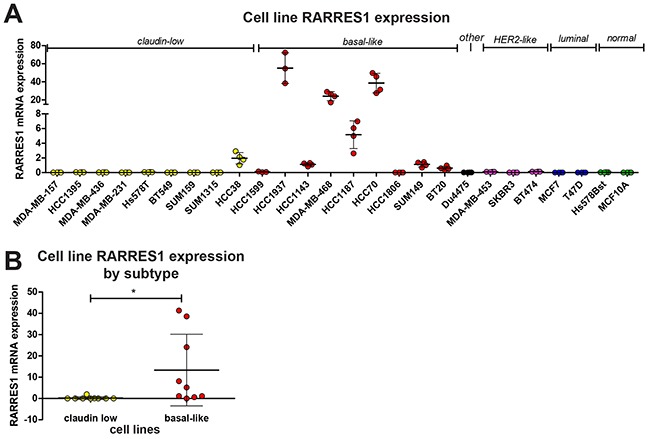
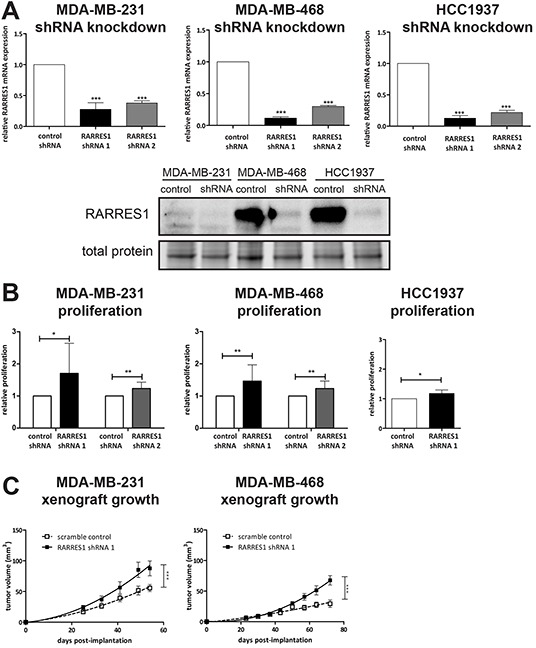
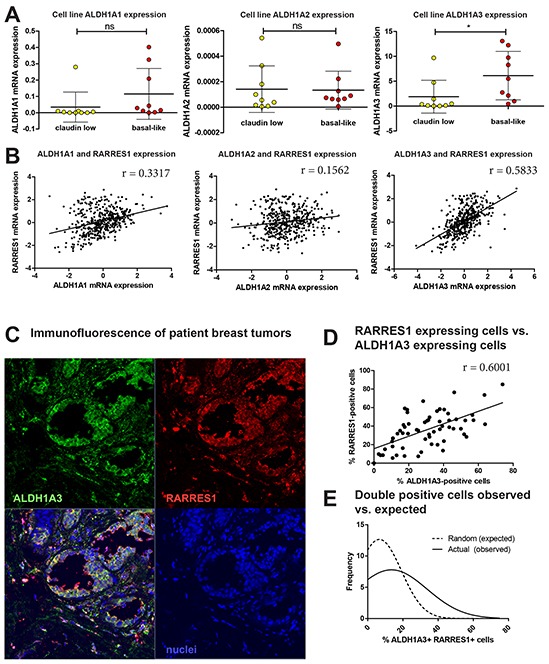
Breast cancer subtyping, based on the expression of hormone receptors and other genes, can determine patient prognosis and potential options for targeted therapy. Among breast cancer subtypes, tumors of basal-like and claudin-low subtypes are typically associated with worse patient outcomes, are primarily classified as triple-negative breast cancers (TNBC), and cannot be treated with existing hormone-receptor-targeted therapies. Understanding the molecular basis of these subtypes will lead to the development of more effective treatment options for TNBC. In this study, we focus on retinoic acid receptor responder 1 (RARRES1) as a paradigm to determine if breast cancer subtype dictates protein function and gene expression regulation. Patient tumor dataset analysis and gene expression studies of a 26 cell-line panel, representing the five breast cancer subtypes, demonstrate that RARRES1 expression is greatest in basal-like TNBCs. Cell proliferation and tumor growth assays reveal that RARRES1 is a tumor suppressor in TNBC. Furthermore, gene expression studies, Illumina HumanMethylation450 arrays, and chromatin immunoprecipitation demonstrate that expression of RARRES1 is retained in basal-like breast cancers due to hypomethylation of the promoter. Additionally, expression of the cancer stem cell marker, aldehyde dehydrogenase 1A3, which provides the required ligand (retinoic acid) for RARRES1 transcription, is also specific to the basal-like subtype. We functionally demonstrate that the combination of promoter methylation and retinoic acid signaling dictates expression of tumor suppressor RARRES1 in a subtype-specific manner. These findings provide a precedent for a therapeutically-inducible tumor suppressor and suggest novel avenues of therapeutic intervention for patients with basal-like breast cancer.
基于激素受体和其他基因的表达对乳腺癌进行亚型分类,可以确定患者的预后以及靶向治疗的潜在选择。在乳腺癌亚型中,基底样和claudin低亚型的肿瘤通常与较差的患者预后相关,主要归类为三阴性乳腺癌(TNBC),并且不能用现有的激素受体靶向疗法进行治疗。了解这些亚型的分子基础将有助于开发更有效的TNBC治疗方案。在本研究中,我们聚焦于视黄酸受体反应蛋白1(RARRES1),以确定乳腺癌亚型是否决定蛋白质功能和基因表达调控。对代表五种乳腺癌亚型的患者肿瘤数据集进行分析,并对一个包含26种细胞系的样本进行基因表达研究,结果表明RARRES1在基底样TNBC中表达最高。细胞增殖和肿瘤生长试验表明,RARRES1在TNBC中是一种肿瘤抑制因子。此外,基因表达研究、Illumina HumanMethylation450芯片分析和染色质免疫沉淀表明,由于启动子的低甲基化,RARRES1在基底样乳腺癌中得以保留表达。此外,癌症干细胞标志物醛脱氢酶1A3的表达,它为RARRES1转录提供所需配体(视黄酸),也特异性地存在于基底样亚型中。我们通过功能研究证明,启动子甲基化和视黄酸信号传导的结合以亚型特异性方式决定了肿瘤抑制因子RARRES1的表达。这些发现为一种可通过治疗诱导的肿瘤抑制因子提供了先例,并为基底样乳腺癌患者的治疗干预提出了新的途径。