Ogura Michinori, Ishida Takashi, Tsukasaki Kunihiro, Takahashi Takeshi, Utsunomiya Atae
Department of Hematology, Tokai Central Hospital, Kakamigahara, Gifu, 504-8601, Japan.
Department of Hematology and Oncology, Nagoya Daini Red Cross Hospital, Nagoya, Aichi, 466-8650, Japan.
Cancer Chemother Pharmacol. 2016 Jul;78(1):199-207. doi: 10.1007/s00280-016-3070-2. Epub 2016 Jun 11.
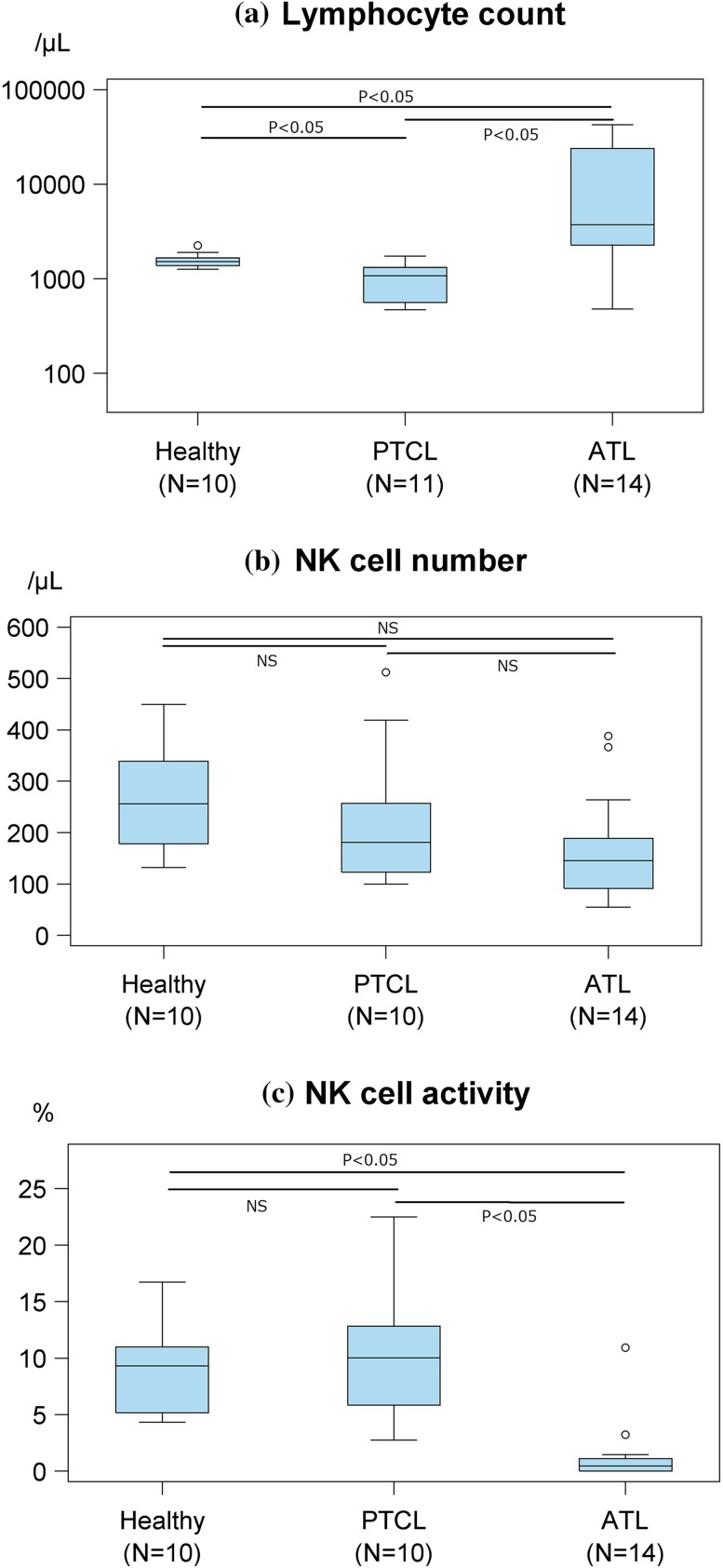
Natural killer (NK) cells are well known to be the most important effector cells mediating antibody-dependent cellular cytotoxicity (ADCC) which is an important mechanism of action of antibody drugs. We evaluated the effects of chemotherapy on the cell number and activity of NK cells from patients who received the vincristine-cyclophosphamide-doxorubicin-prednisone (VCAP), doxorubicin-ranimustine-prednisone (AMP), and vindesine-etoposide-carboplatin-prednisone (VECP) (mLSG15) or mLSG15-like (-L) regimen, which is one of the standard of cares for newly diagnosed adult T-cell leukemia-lymphoma (ATL), or the cyclophosphamide-doxorubicin-vincristine-prednisone (CHOP) or CHOP-L regimen which is another standard of care for ATL and peripheral T-cell lymphoma (PTCL).
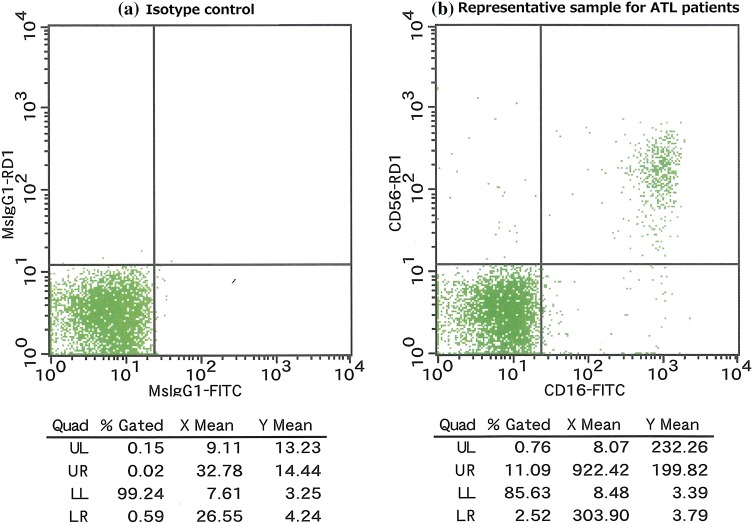
The number of lymphocytes and NK cells, and NK cell activity, were assessed using flow cytometry and a (51)Cr release assay, respectively.
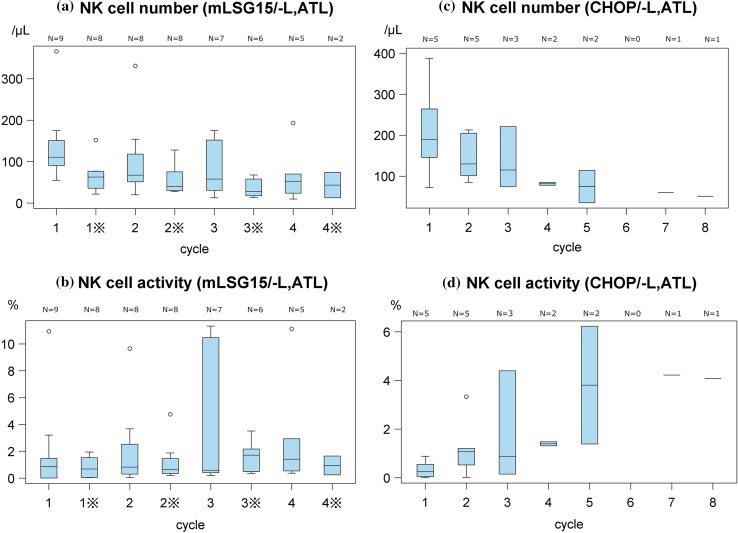
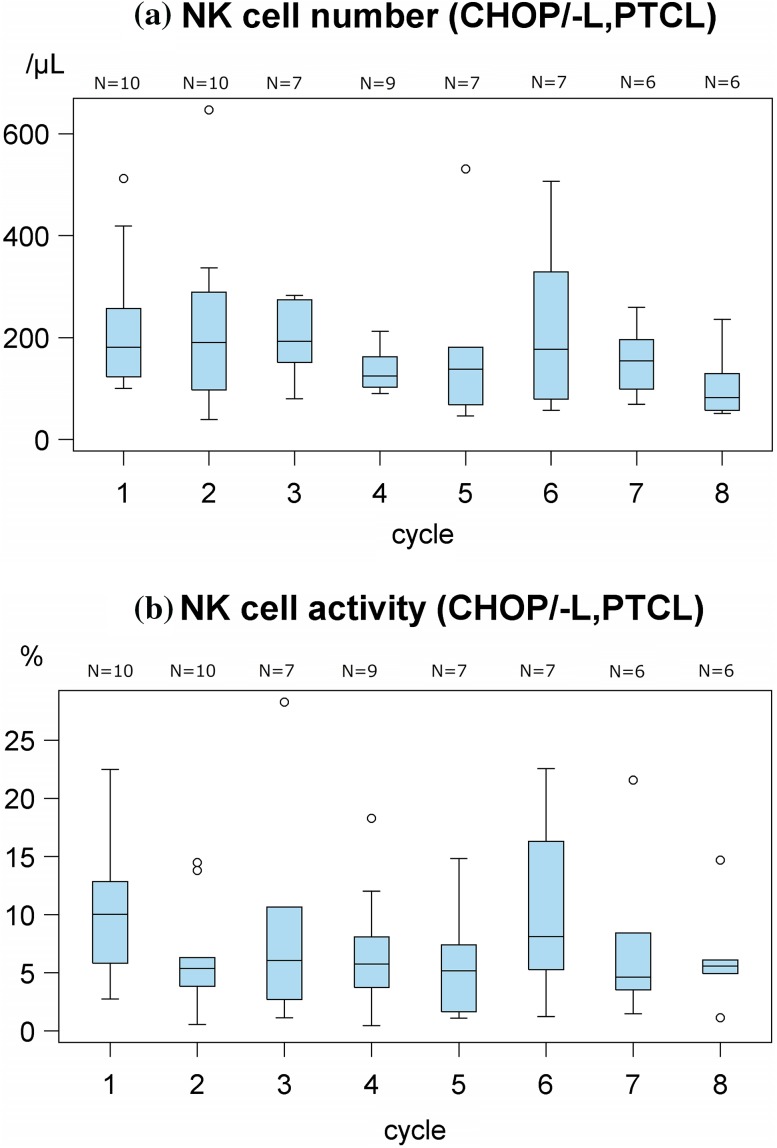
A total of 26 patients with untreated ATL or PTCL were enrolled, and blood samples from 25 patients were evaluable. NK cell number in ATL decreased after mLSG15/-L treatment, and the degree of decrease in the NK cell number was more prominent just before VECP therapy (Day 15-17 of each cycle) than just before VCAP therapy (Day 1 of each cycle). The NK cell number in ATL after CHOP/-L treatment also decreased. Interestingly, the NK cell activity showed a tendency to increase after the treatment. NK cell number in PTCL did not decrease by CHOP/-L regimen, but the activity was slightly decreased after the treatment.
These results indicate that the effects of chemotherapeutic agents on NK cells vary according to the disease type and intensity of chemotherapy.
自然杀伤(NK)细胞是介导抗体依赖性细胞毒性(ADCC)的最重要效应细胞,而ADCC是抗体药物的一种重要作用机制。我们评估了化疗对接受长春新碱-环磷酰胺-阿霉素-泼尼松(VCAP)、阿霉素-雷莫司汀-泼尼松(AMP)和长春地辛-依托泊苷-卡铂-泼尼松(VECP)(mLSG15)或类mLSG15(-L)方案治疗的患者NK细胞数量和活性的影响,mLSG15或类mLSG15(-L)方案是新诊断的成人T细胞白血病-淋巴瘤(ATL)的标准治疗方案之一,以及环磷酰胺-阿霉素-长春新碱-泼尼松(CHOP)或类CHOP(CHOP-L)方案,这是ATL和外周T细胞淋巴瘤(PTCL)的另一种标准治疗方案。
分别使用流式细胞术和(51)Cr释放试验评估淋巴细胞和NK细胞的数量以及NK细胞活性。
共纳入26例未经治疗的ATL或PTCL患者,25例患者的血样可用于评估。ATL患者经mLSG15/-L治疗后NK细胞数量减少,且在VECP治疗前(每个周期的第15 - 17天)NK细胞数量减少的程度比VCAP治疗前(每个周期的第1天)更显著。CHOP/-L治疗后ATL患者的NK细胞数量也减少。有趣的是,治疗后NK细胞活性呈增加趋势。PTCL患者经CHOP/-L方案治疗后NK细胞数量未减少,但治疗后活性略有下降。
这些结果表明化疗药物对NK细胞的影响因疾病类型和化疗强度而异。