Buck Michael D, O'Sullivan David, Klein Geltink Ramon I, Curtis Jonathan D, Chang Chih-Hao, Sanin David E, Qiu Jing, Kretz Oliver, Braas Daniel, van der Windt Gerritje J W, Chen Qiongyu, Huang Stanley Ching-Cheng, O'Neill Christina M, Edelson Brian T, Pearce Edward J, Sesaki Hiromi, Huber Tobias B, Rambold Angelika S, Pearce Erika L
Department of Immunometabolism, Max Planck Institute of Immunobiology and Epigenetics, 79108 Freiburg, Germany; Department of Pathology and Immunology, Washington University School of Medicine, St. Louis, MO 63110, USA.
Department of Immunometabolism, Max Planck Institute of Immunobiology and Epigenetics, 79108 Freiburg, Germany.
Cell. 2016 Jun 30;166(1):63-76. doi: 10.1016/j.cell.2016.05.035. Epub 2016 Jun 9.
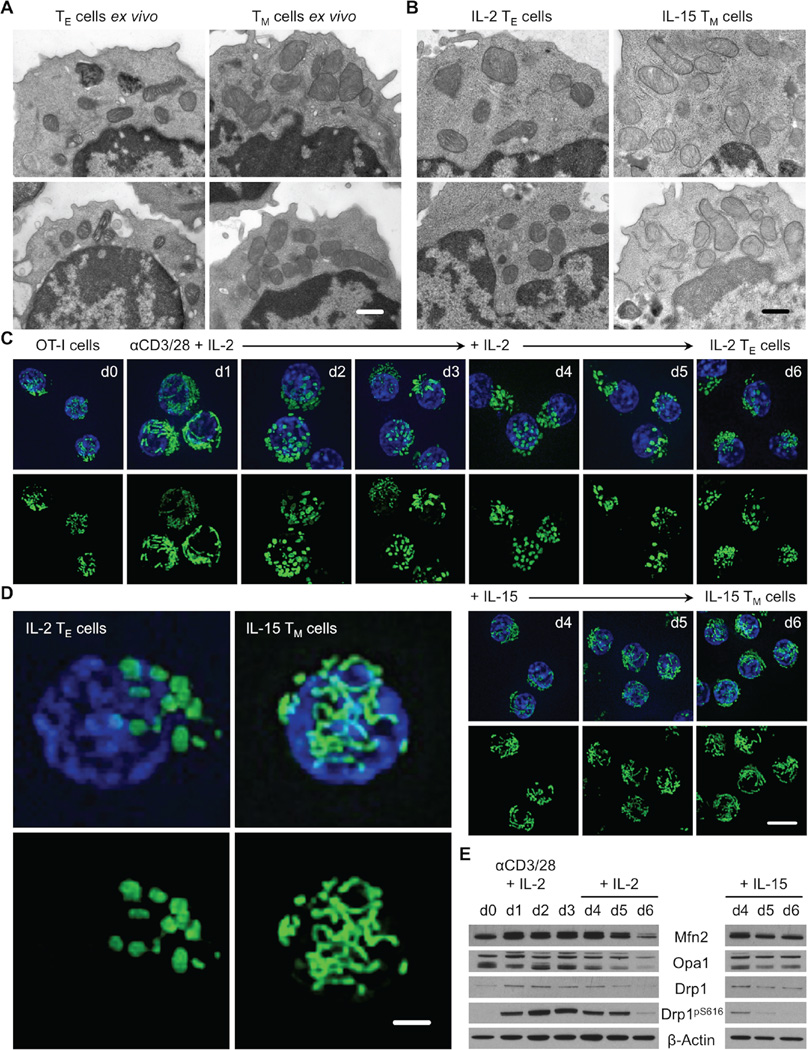
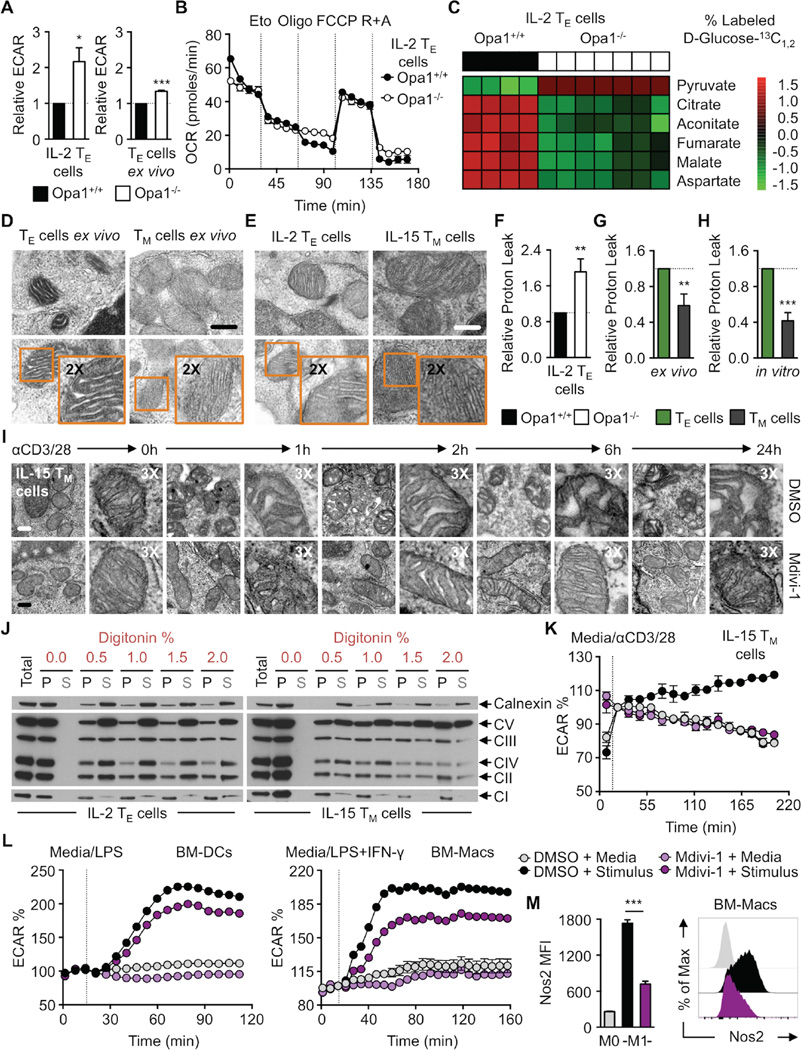
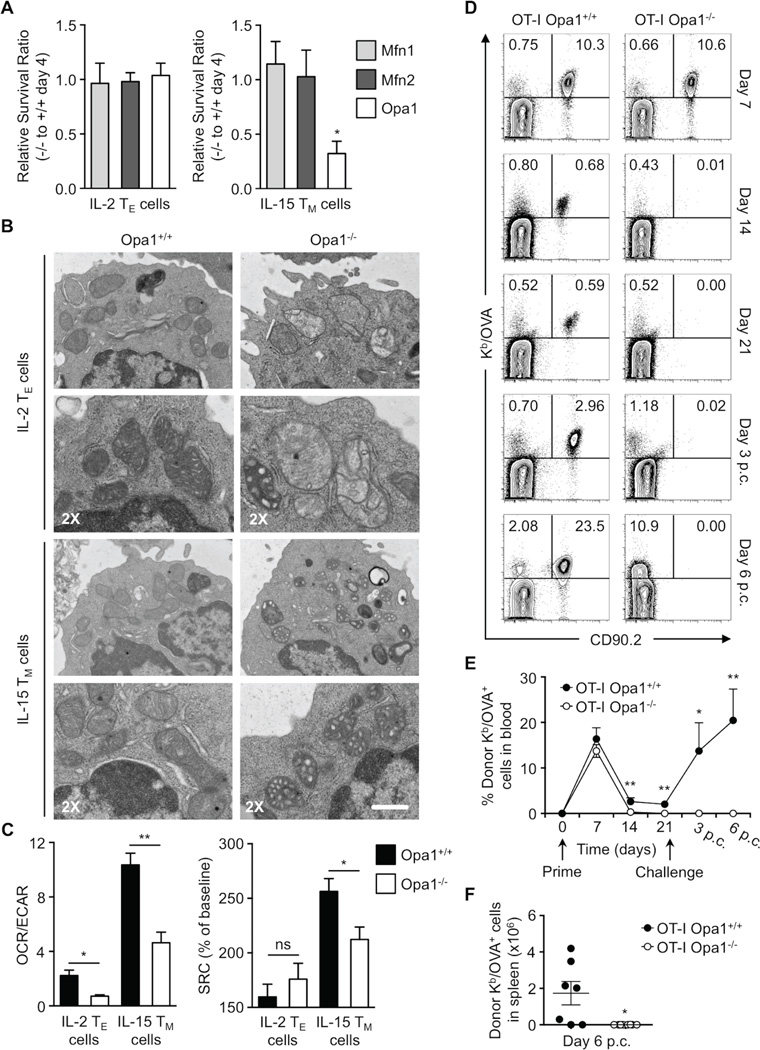
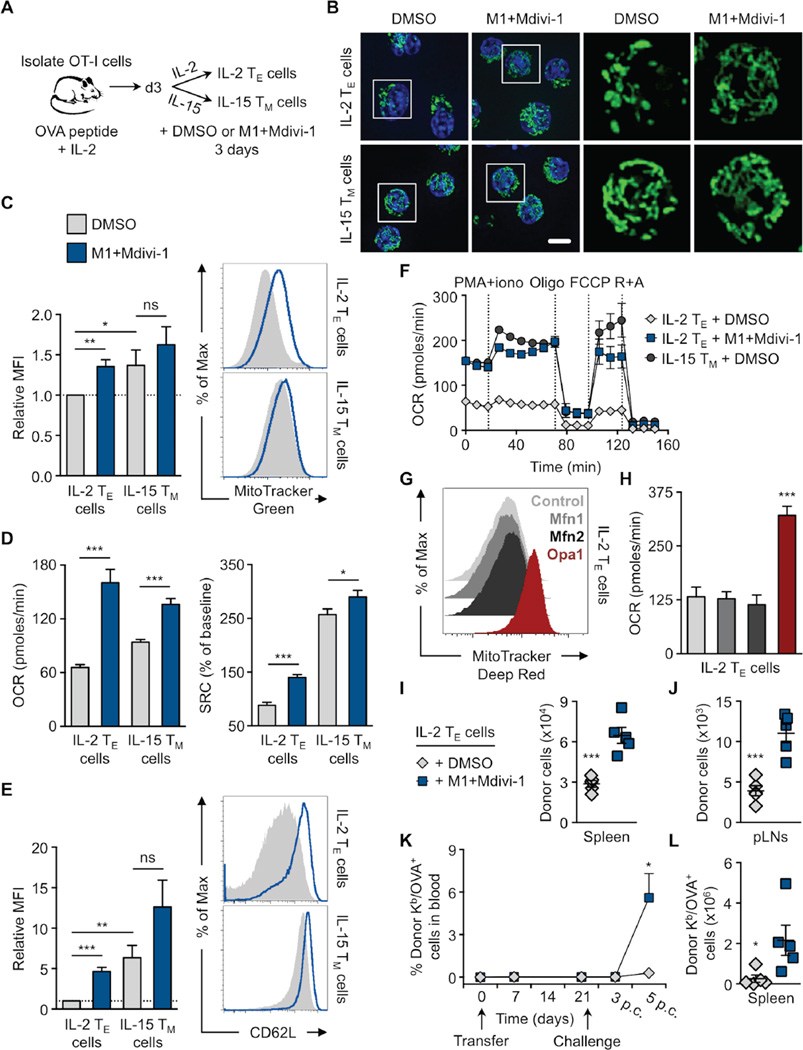
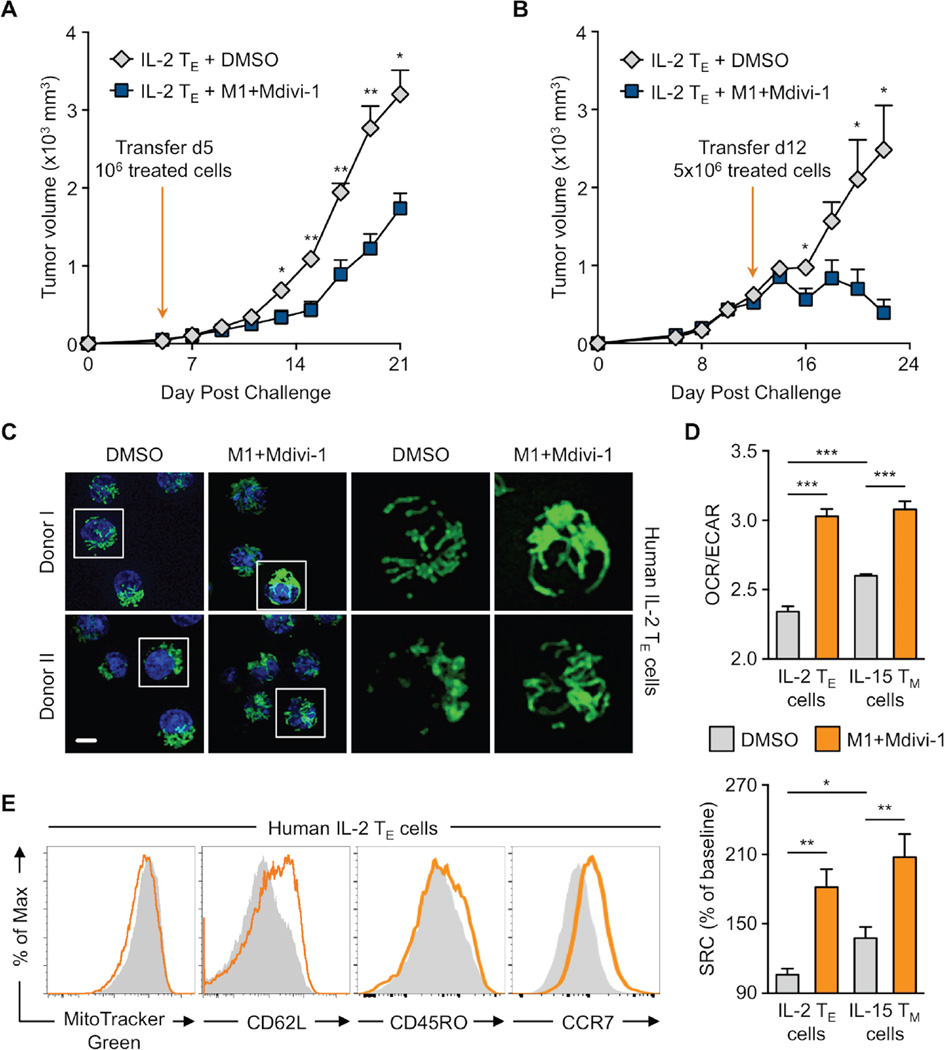
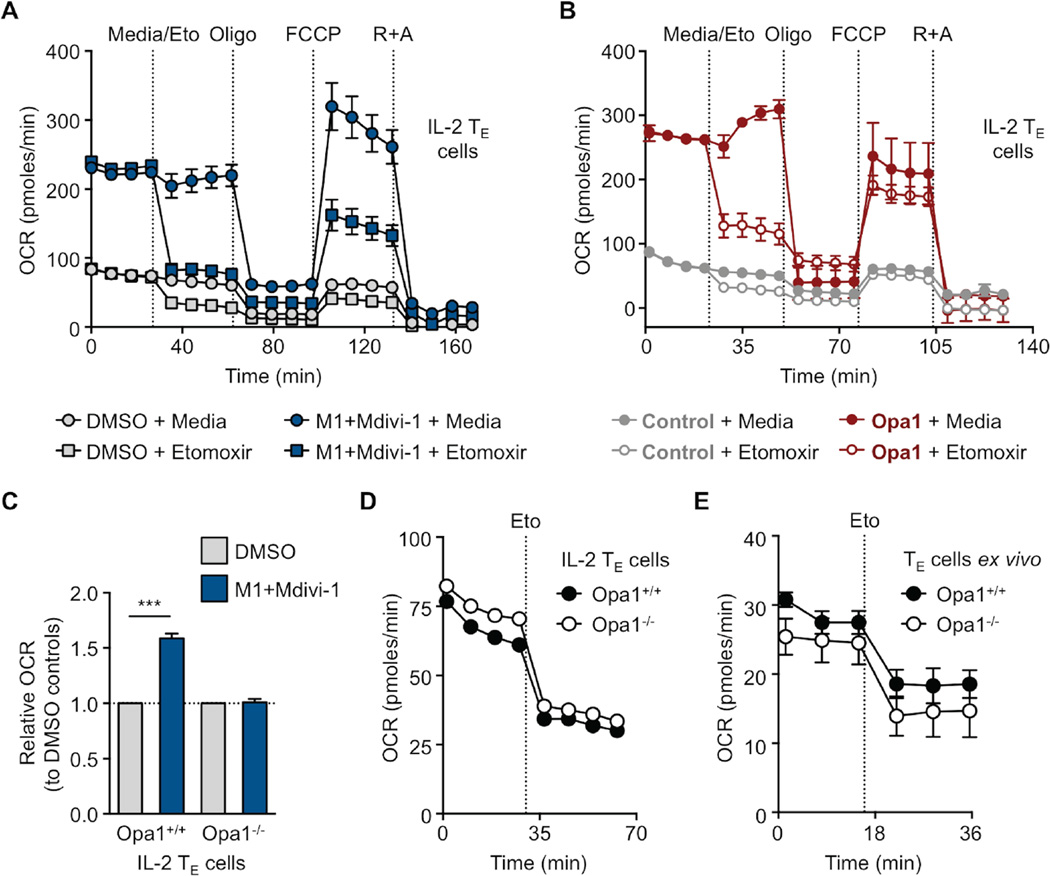
Activated effector T (TE) cells augment anabolic pathways of metabolism, such as aerobic glycolysis, while memory T (TM) cells engage catabolic pathways, like fatty acid oxidation (FAO). However, signals that drive these differences remain unclear. Mitochondria are metabolic organelles that actively transform their ultrastructure. Therefore, we questioned whether mitochondrial dynamics controls T cell metabolism. We show that TE cells have punctate mitochondria, while TM cells maintain fused networks. The fusion protein Opa1 is required for TM, but not TE cells after infection, and enforcing fusion in TE cells imposes TM cell characteristics and enhances antitumor function. Our data suggest that, by altering cristae morphology, fusion in TM cells configures electron transport chain (ETC) complex associations favoring oxidative phosphorylation (OXPHOS) and FAO, while fission in TE cells leads to cristae expansion, reducing ETC efficiency and promoting aerobic glycolysis. Thus, mitochondrial remodeling is a signaling mechanism that instructs T cell metabolic programming.
活化的效应T(TE)细胞增强代谢的合成代谢途径,如有氧糖酵解,而记忆T(TM)细胞参与分解代谢途径,如脂肪酸氧化(FAO)。然而,驱动这些差异的信号仍不清楚。线粒体是积极改变其超微结构的代谢细胞器。因此,我们质疑线粒体动力学是否控制T细胞代谢。我们发现TE细胞有线粒体点状结构,而TM细胞维持融合网络。融合蛋白Opa1对TM细胞是必需的,但感染后对TE细胞不是必需的,并且在TE细胞中强制融合赋予TM细胞特征并增强抗肿瘤功能。我们的数据表明,通过改变嵴的形态,TM细胞中的融合会配置有利于氧化磷酸化(OXPHOS)和FAO的电子传递链(ETC)复合物关联,而TE细胞中的裂变会导致嵴扩张,降低ETC效率并促进有氧糖酵解。因此,线粒体重塑是一种指导T细胞代谢编程的信号机制。