Wang Xiao, Peng Qinke, Fan Yue
Systems Engineering Institute and School of Electronic and Information Engineering, Xi'an Jiaotong University, Xi'an, Shaanxi 710049, China.
Biomed Res Int. 2016;2016:5164347. doi: 10.1155/2016/5164347. Epub 2016 May 11.
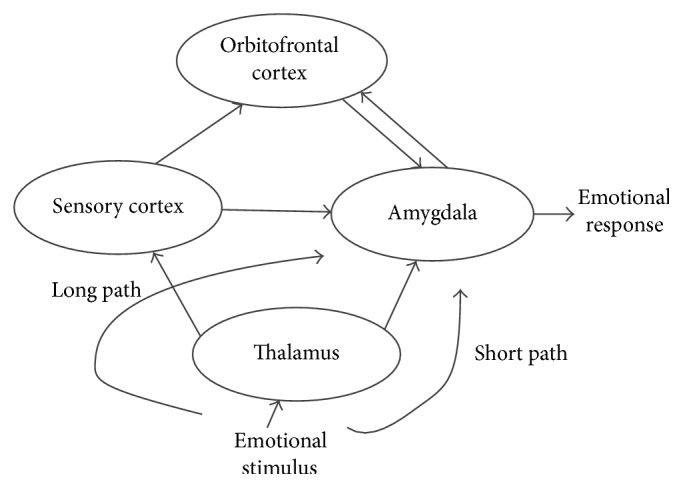
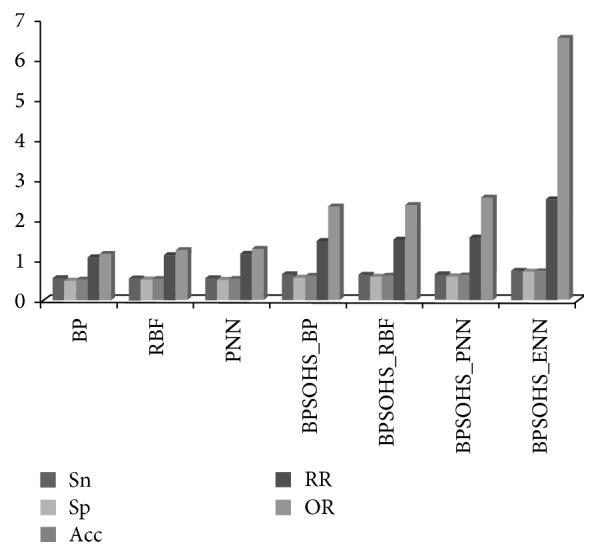
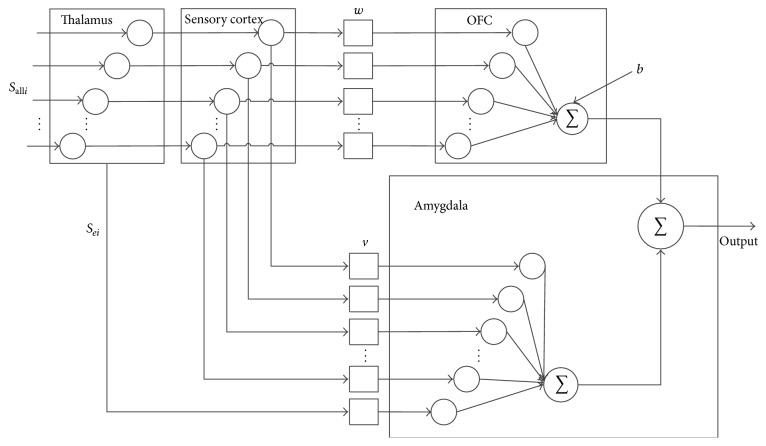
Studies for the association between diseases and informative single nucleotide polymorphisms (SNPs) have received great attention. However, most of them just use the whole set of useful SNPs and fail to consider the SNP-SNP interactions, while these interactions have already been proven in biology experiments. In this paper, we use a binary particle swarm optimization with hierarchical structure (BPSOHS) algorithm to improve the effective of PSO for the identification of the SNP-SNP interactions. Furthermore, in order to use these SNP interactions in the susceptibility analysis, we propose an emotional neural network (ENN) to treat SNP interactions as emotional tendency. Different from the normal architecture, just as the emotional brain, this architecture provides a specific path to treat the emotional value, by which the SNP interactions can be considered more quickly and directly. The ENN helps us use the prior knowledge about the SNP interactions and other influence factors together. Finally, the experimental results prove that the proposed BPSOHS_ENN algorithm can detect the informative SNP-SNP interaction and predict the breast cancer risk with a much higher accuracy than existing methods.
关于疾病与信息性单核苷酸多态性(SNP)之间关联的研究受到了极大关注。然而,其中大多数研究仅使用了整套有用的SNP,而未考虑SNP - SNP相互作用,尽管这些相互作用已在生物学实验中得到证实。在本文中,我们使用具有层次结构的二进制粒子群优化(BPSOHS)算法来提高粒子群优化(PSO)识别SNP - SNP相互作用的有效性。此外,为了在易感性分析中使用这些SNP相互作用,我们提出了一种情感神经网络(ENN),将SNP相互作用视为情感倾向。与正常架构不同,就像情感大脑一样,这种架构提供了一条处理情感值的特定路径,通过该路径可以更快、更直接地考虑SNP相互作用。ENN帮助我们将关于SNP相互作用的先验知识与其他影响因素结合起来。最后,实验结果证明,所提出的BPSOHS_ENN算法能够检测出信息性SNP - SNP相互作用,并以比现有方法高得多的准确率预测乳腺癌风险。