Wang Shujun, Zhang Xiu, Wang Shuo, Copeland Les
Key Laboratory of Food Nutrition and Safety, Ministry of Education, College of Food Engineering and Biotechnology, Tianjin University of Science &Technology, Tianjin 300457, China.
Tianjin Food Safety &Low Carbon Manufacturing Collaborative Innovation Center, Tianjin 300457, China.
Sci Rep. 2016 Jun 20;6:28271. doi: 10.1038/srep28271.
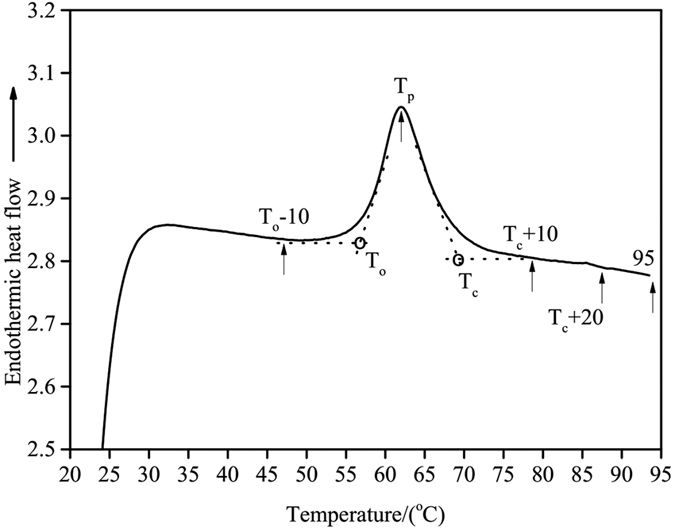
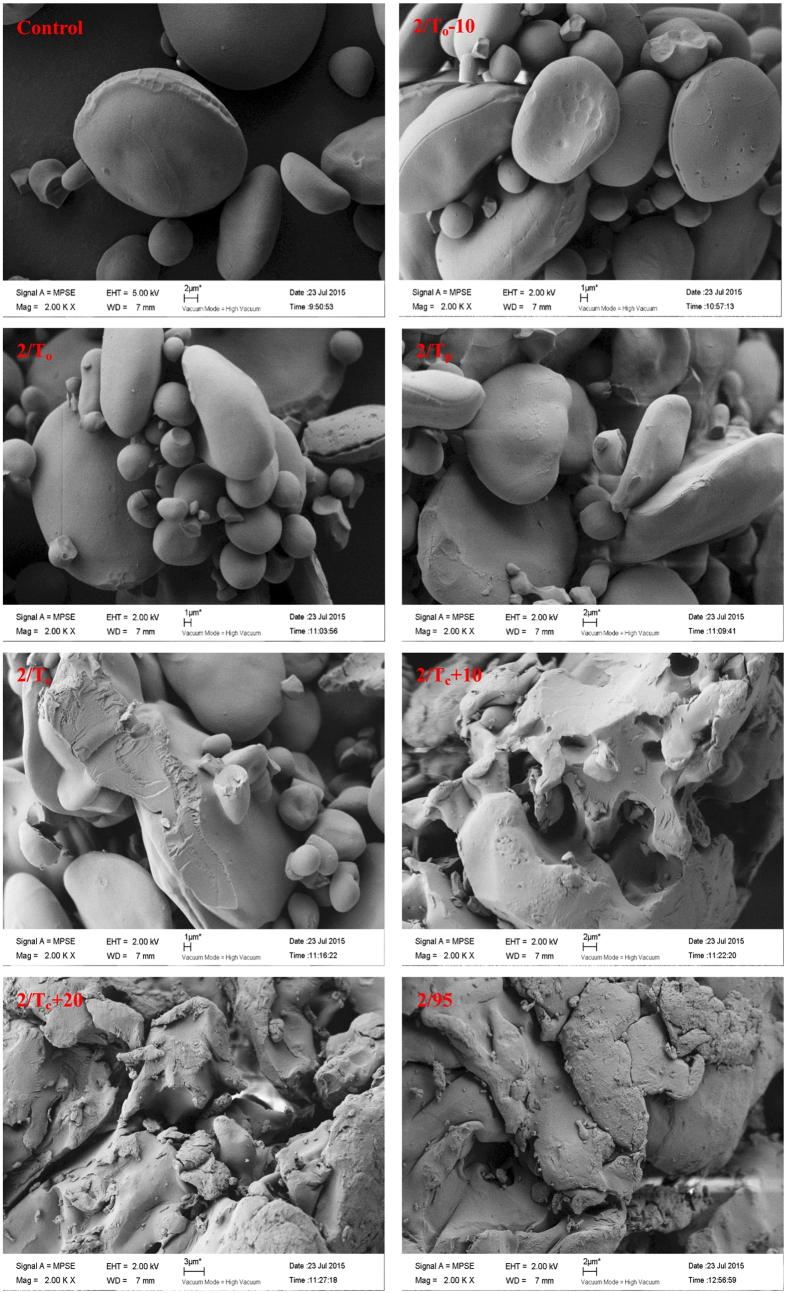
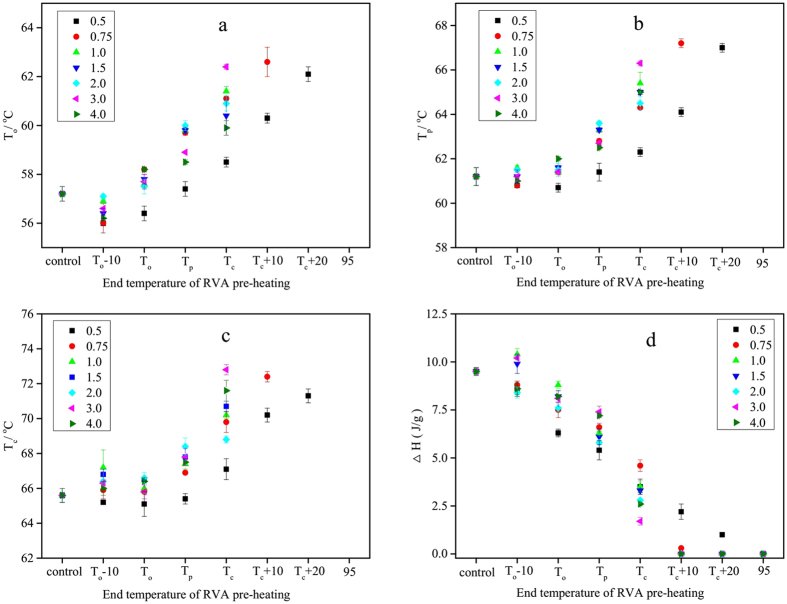
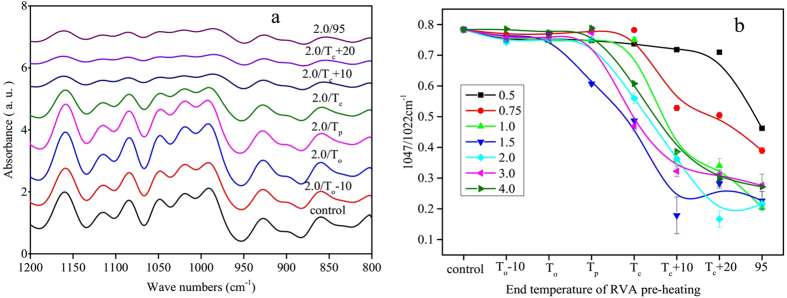
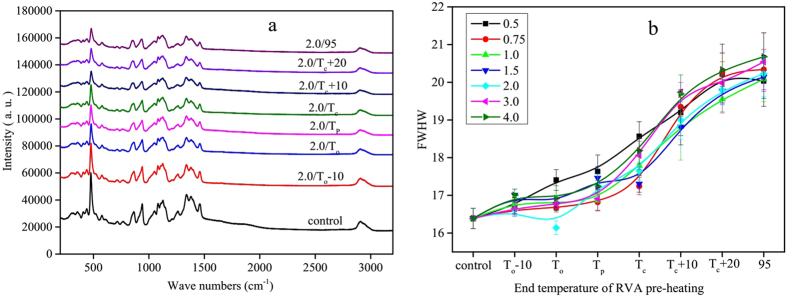
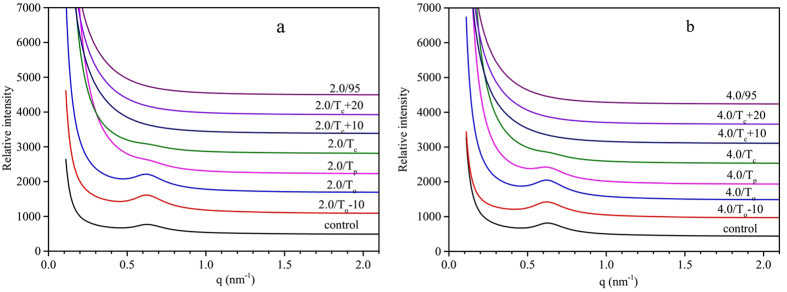
A thorough understanding of starch gelatinization is extremely important for precise control of starch functional properties for food processing and human nutrition. Here we reveal the molecular mechanism of starch gelatinization by differential scanning calorimetry (DSC) in conjunction with a protocol using the rapid viscosity analyzer (RVA) to generate material for analysis under conditions that simulated the DSC heating profiles. The results from DSC, FTIR, Raman, X-ray diffraction and small angle X-ray scattering (SAXS) analyses all showed that residual structural order remained in starch that was heated to the DSC endotherm end temperature in starch:water mixtures of 0.5 to 4:1 (v/w). We conclude from this study that the DSC endotherm of starch at a water:starch ratio of 2 to 4 (v/w) does not represent complete starch gelatinization. The DSC endotherm of starch involves not only the water uptake and swelling of amorphous regions, but also the melting of starch crystallites.
深入了解淀粉糊化对于精确控制食品加工和人类营养中淀粉的功能特性极为重要。在此,我们通过差示扫描量热法(DSC)结合一种方案揭示了淀粉糊化的分子机制,该方案使用快速粘度分析仪(RVA)在模拟DSC加热曲线的条件下生成用于分析的材料。DSC、傅里叶变换红外光谱(FTIR)、拉曼光谱、X射线衍射和小角X射线散射(SAXS)分析结果均表明,在淀粉与水的比例为0.5至4:1(v/w)的淀粉-水混合物中,加热至DSC吸热结束温度的淀粉中仍保留有残余的结构有序性。我们从这项研究中得出结论,在水与淀粉比例为2至4(v/w)时,淀粉的DSC吸热并不代表淀粉完全糊化。淀粉的DSC吸热不仅涉及无定形区域的吸水和膨胀,还涉及淀粉微晶的熔化。