Zhang Wa, Barger Carter J, Eng Kevin H, Klinkebiel David, Link Petra A, Omilian Angela, Bshara Wiam, Odunsi Kunle, Karpf Adam R
Eppley Institute for Cancer Research, University of Nebraska Medical Center, Omaha, NE, USA.
Current address: Wilmer Eye Institute, Johns Hopkins University School of Medicine, Baltimore, MD, USA.
Oncotarget. 2016 Jul 19;7(29):45352-45369. doi: 10.18632/oncotarget.9977.
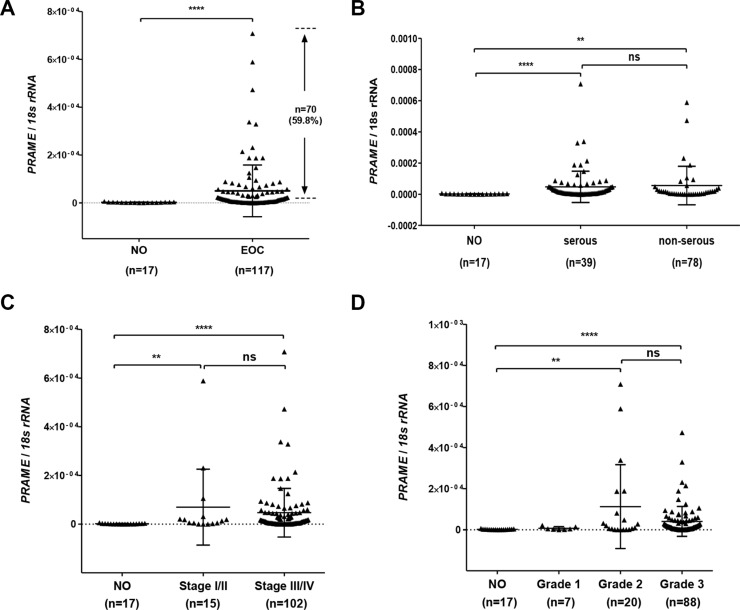
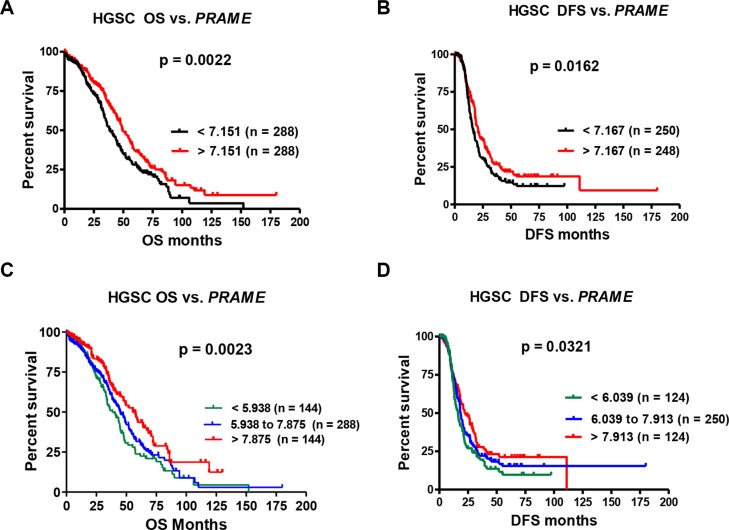
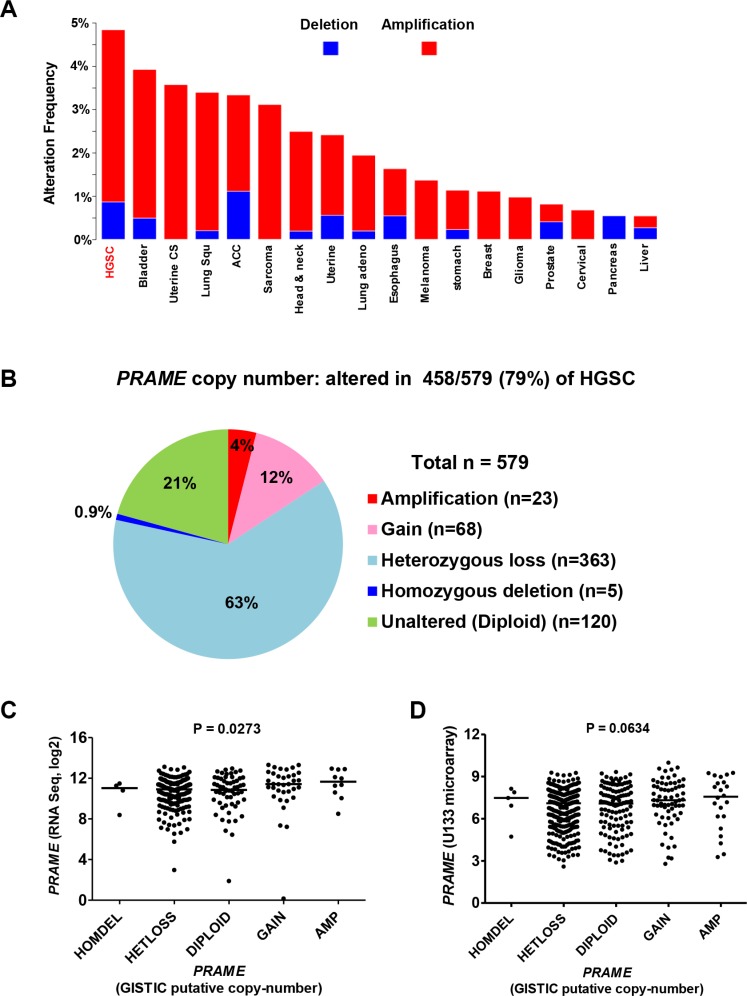
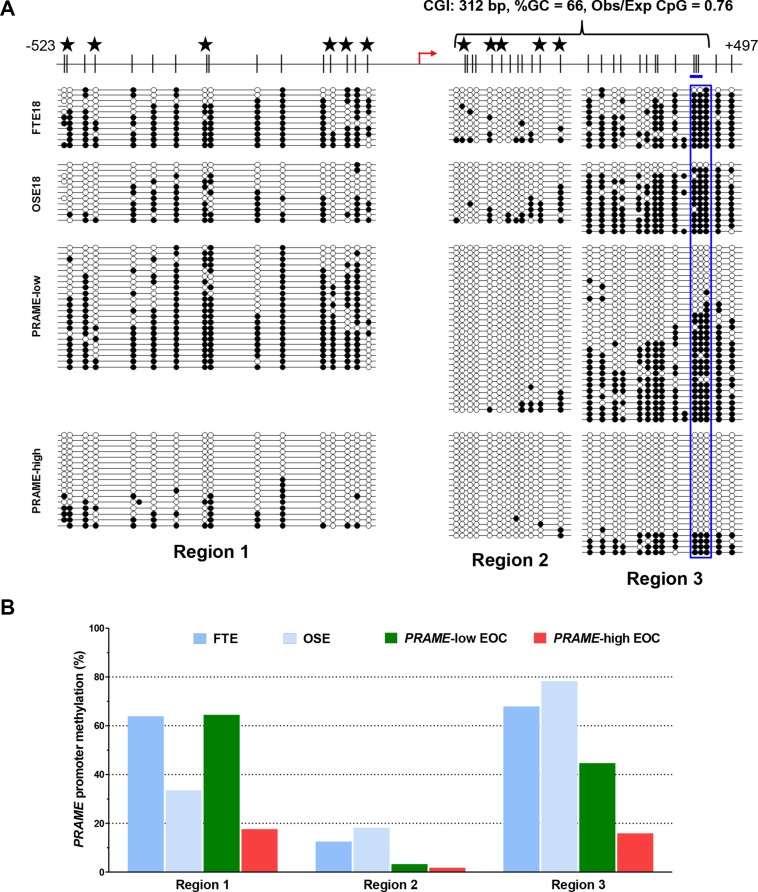
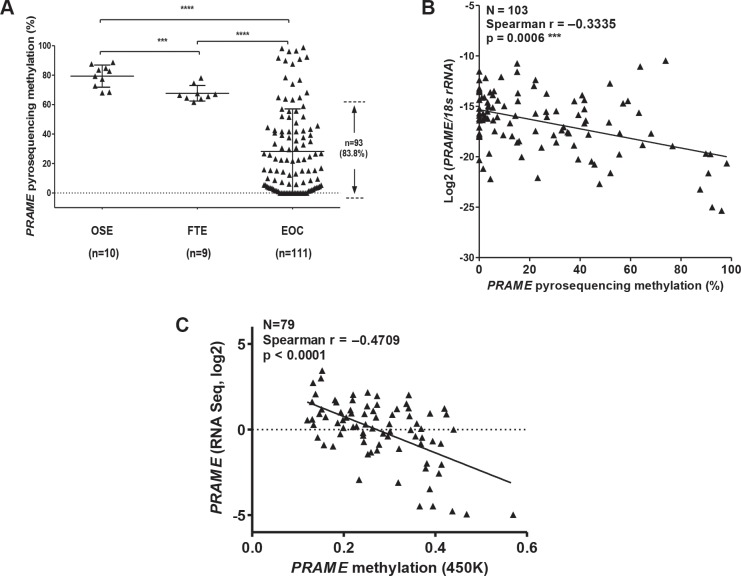
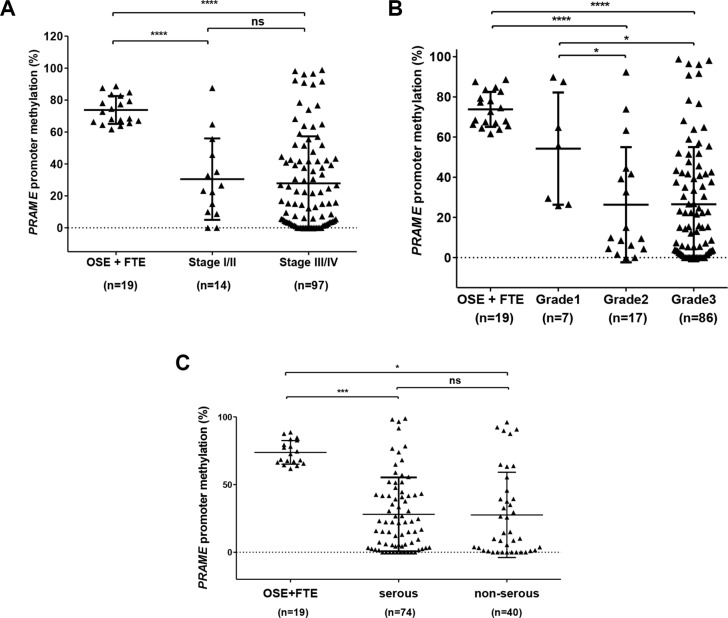
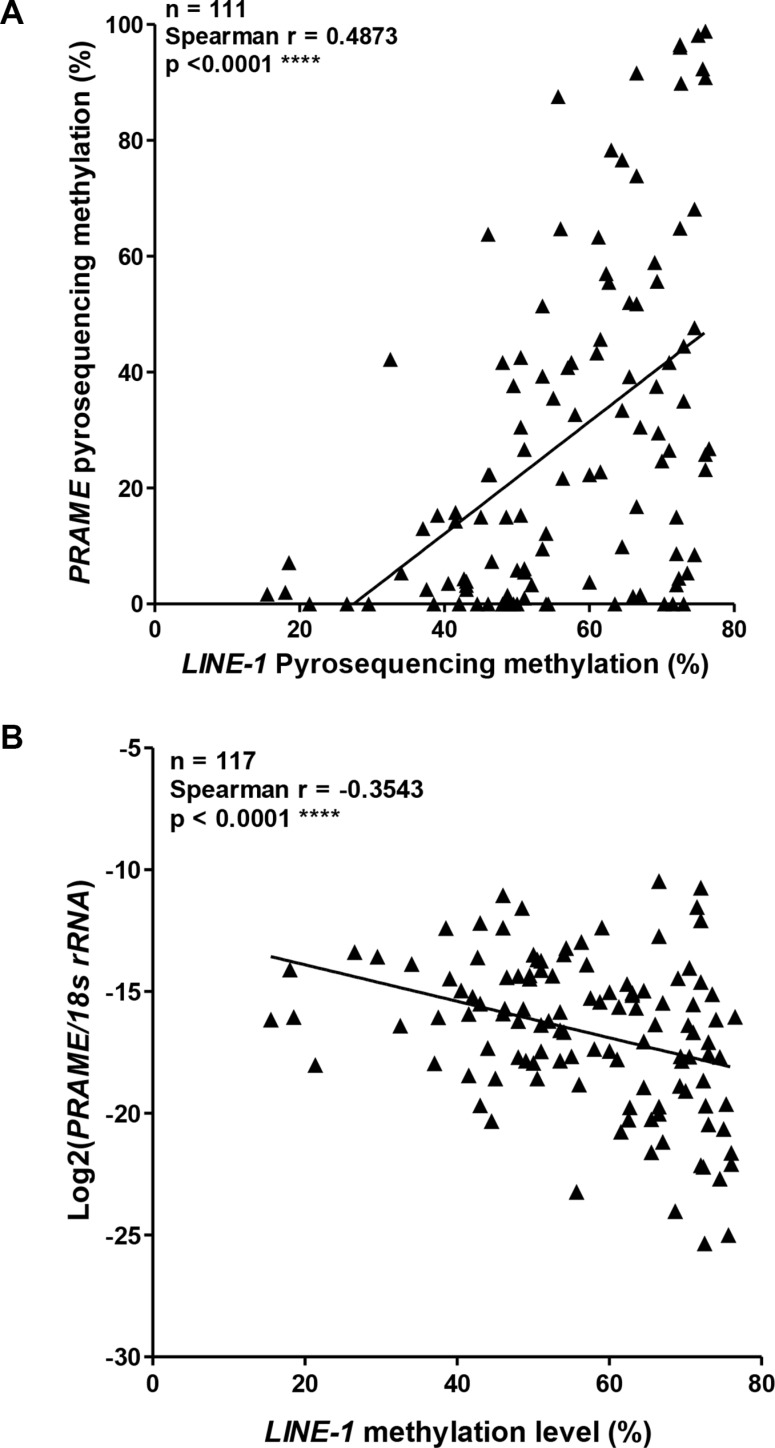
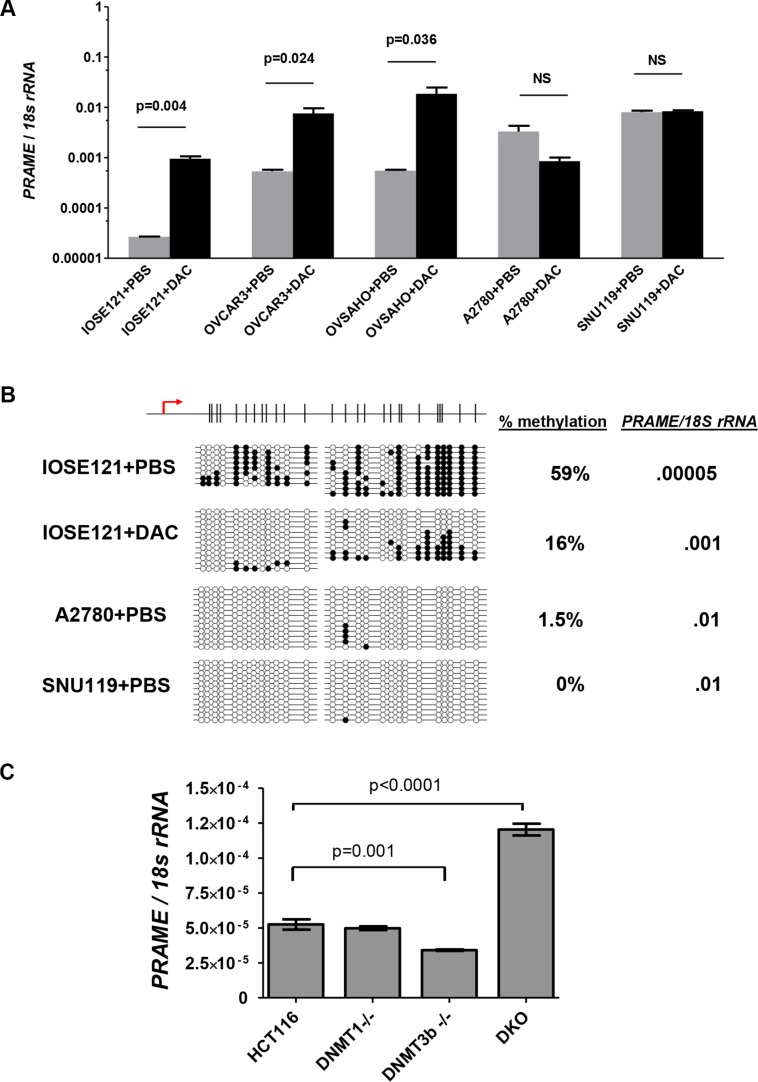
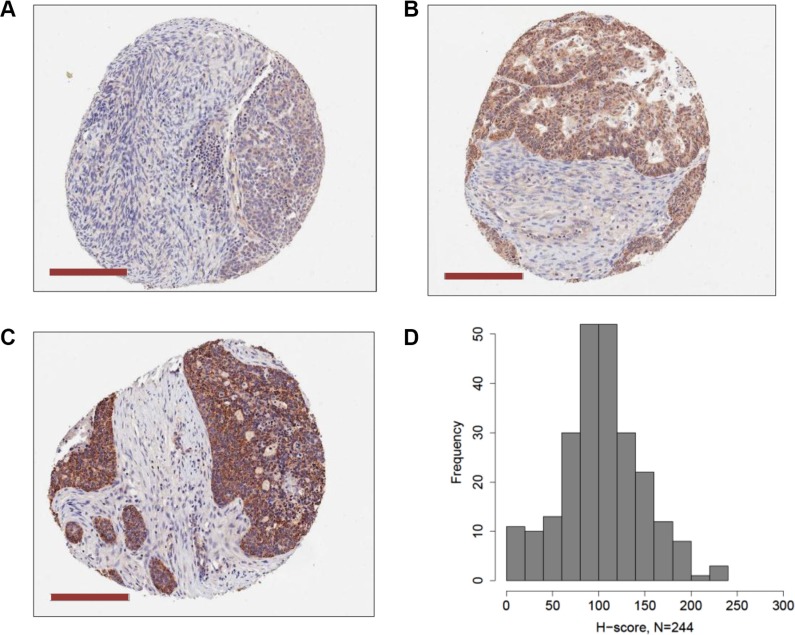
PRAME is a cancer-testis antigen (CTA) and potential immuno-therapeutic target, but has not been well-studied in epithelial ovarian cancer (EOC) or its high grade serous (HGSC) subtype. Compared to normal ovary, PRAME expression was significantly increased most EOC, regardless of stage and grade. Interestingly, PRAME mRNA expression was associated with improved survival in the HGSC subtype. The PRAME locus was a frequent target for copy number alterations (CNA) in HGSC but most changes were heterozygous losses, indicating that elevated PRAME expression is not typically due to CNA. In contrast, PRAME promoter DNA hypomethylation was very common in EOC and HGSC and correlated with increased PRAME expression. PRAME expression and promoter hypomethylation both correlated with LINE-1 hypomethylation, a biomarker of global DNA hypomethylation. Pharmacologic or genetic disruption of DNA methyltransferase (DNMT) enzymes activated PRAME expression in EOC cells. Immunohistochemistry (IHC) of PRAME in EOC revealed frequent, but low level, protein expression, and expression was confined to epithelial cells and localized to the cytoplasm. Cytoplasmic PRAME expression was positively associated with PRAME mRNA expression and negatively associated with promoter methylation, but the latter correlation was not statistically significant. PRAME protein expression did not correlate with EOC clinicopathology or survival. In summary, PRAME is frequently expressed in EOC at the mRNA and protein levels, and DNA methylation is a key mechanism regulating its expression. These data support PRAME as an immunotherapy target in EOC, and suggest treatment with DNMT inhibitors as a means to augment PRAME immunotherapy.
PRAME是一种癌-睾丸抗原(CTA)及潜在的免疫治疗靶点,但在上皮性卵巢癌(EOC)或其高级别浆液性(HGSC)亚型中尚未得到充分研究。与正常卵巢相比,PRAME在大多数EOC中表达显著增加,与分期和分级无关。有趣的是,PRAME mRNA表达与HGSC亚型患者的生存改善相关。PRAME基因座是HGSC中拷贝数改变(CNA)的常见靶点,但大多数改变是杂合性缺失,表明PRAME表达升高通常不是由于CNA所致。相反,PRAME启动子DNA低甲基化在EOC和HGSC中非常常见,且与PRAME表达增加相关。PRAME表达和启动子低甲基化均与LINE-1低甲基化相关,LINE-1低甲基化是全基因组DNA低甲基化的生物标志物。DNA甲基转移酶(DNMT)酶的药理学或基因破坏激活了EOC细胞中PRAME的表达。EOC中PRAME的免疫组织化学(IHC)显示蛋白表达频繁但水平较低,且表达局限于上皮细胞并定位于细胞质。细胞质PRAME表达与PRAME mRNA表达呈正相关,与启动子甲基化呈负相关,但后者的相关性无统计学意义。PRAME蛋白表达与EOC临床病理或生存无关。总之,PRAME在EOC中mRNA和蛋白水平均频繁表达,DNA甲基化是调节其表达的关键机制。这些数据支持PRAME作为EOC的免疫治疗靶点,并提示用DNMT抑制剂治疗作为增强PRAME免疫治疗的一种手段。