Kahen Elliot, Yu Diana, Harrison Douglas J, Clark Justine, Hingorani Pooja, Cubitt Christopher L, Reed Damon R
Sunshine Project Translational Research Lab, H. Lee Moffitt Cancer Center and Research Institute, Tampa, FL, USA.
Division of Pediatrics, MD Anderson Cancer Center, Houston, TX, USA.
Cancer Chemother Pharmacol. 2016 Aug;78(2):313-23. doi: 10.1007/s00280-016-3077-8. Epub 2016 Jun 20.
Systemic therapy has improved rhabdomyosarcoma event-free and overall survival; however, approximately 40 % of patients will have progressive or recurrent disease which is difficult to cure and remains a considerable challenge. Minimal progress has been made in improving outcomes for metastatic or relapsed RMS due to a lack of effective therapeutic agents. Targeted therapies are likely to be incorporated into regimens which rely on conventional cytotoxic chemotherapy. A system to evaluate novel combinations of interest is needed.
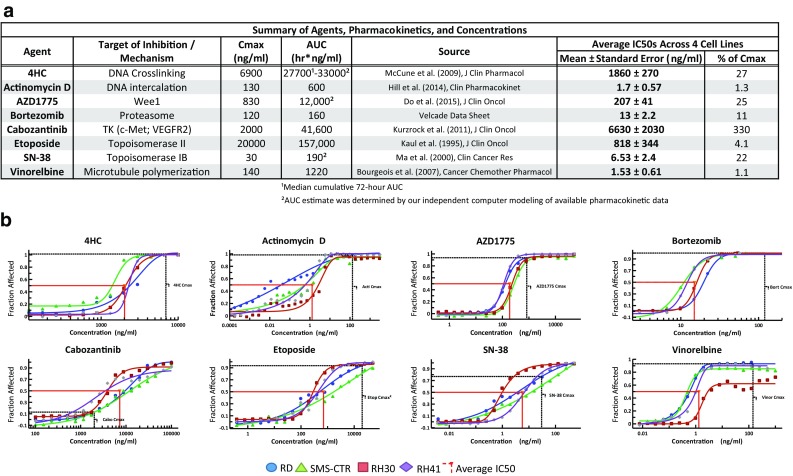
In this study, we explored 8 agents, 5 that are routinely used or similar to agents used in the clinical management of RMS and 3 biologically targeted agents with novel mechanisms of action, the Wee1 inhibitor AZD1775, the tyrosine kinase inhibitor cabozantinib, and the proteasome inhibitor bortezomib. All were tested individually at clinically achievable concentrations for activity in 4 RMS cell lines and then for potential synergy in two-drug combinations.
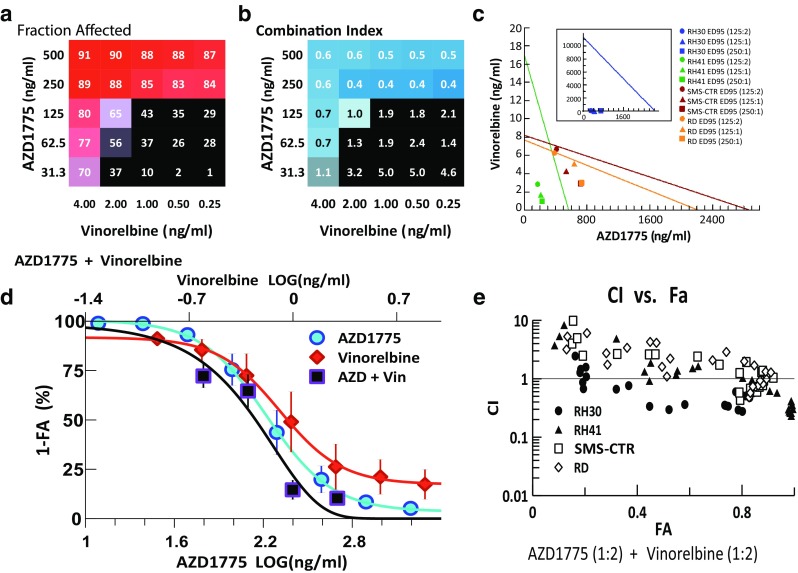
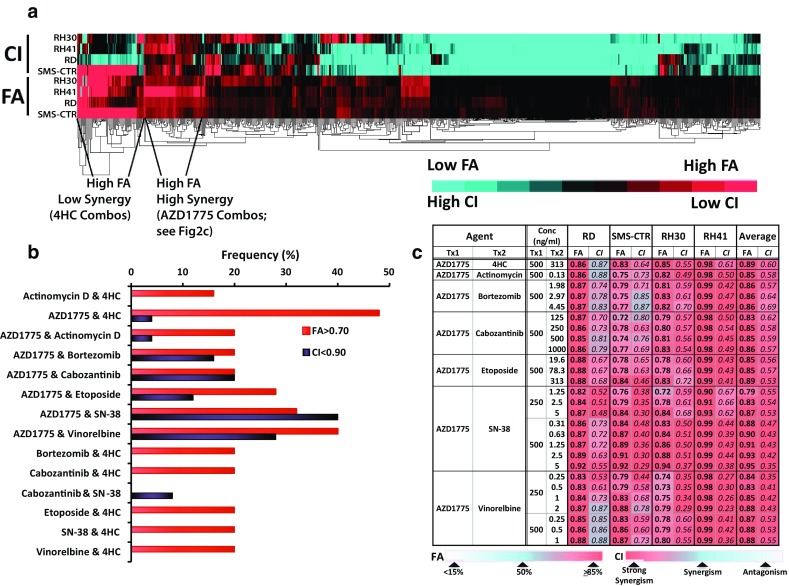
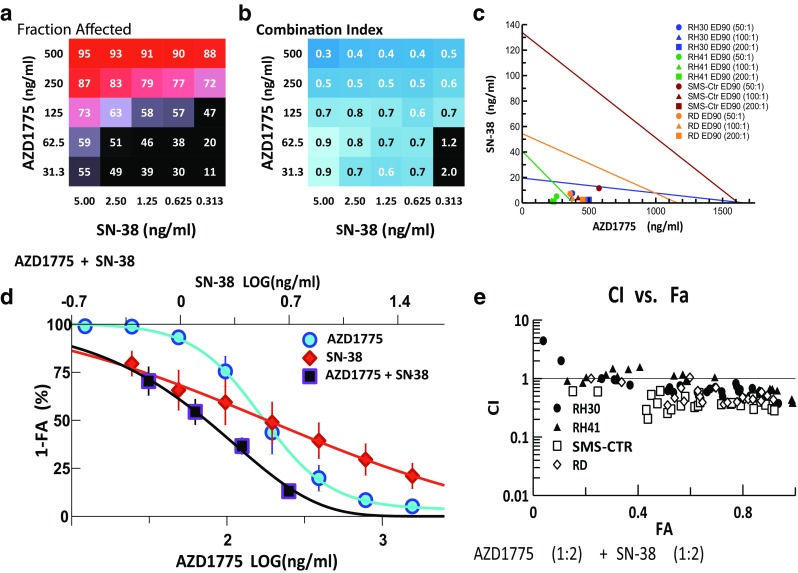
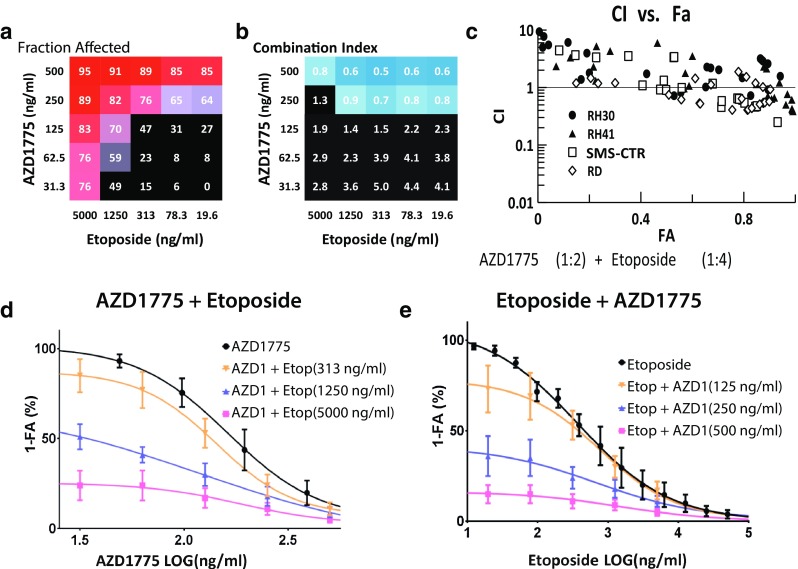
We found single-agent activity in five of the agents (or their active metabolites) that constitute the standard of care in RMS and for AZD1775 with mean IC50 values of 207 ng/ml, well below clinically achievable levels. In addition, the combination of individual cytotoxic chemotherapeutics currently used for RMS demonstrated largely synergistic activity with higher, but clinically achievable concentrations of AZD1775 in our assays.
Prioritization of chemotherapeutics in RMS is possible using an in vitro system that can define novel drug combinations worthy of future investigation. AZD1775 exhibits single-agent activity, as well as synergy with conventional cytotoxic chemotherapy, and is a novel targeted agent that warrants further study in RMS.
全身治疗已改善了横纹肌肉瘤的无事件生存期和总生存期;然而,约40%的患者会出现疾病进展或复发,难以治愈,仍然是一个巨大的挑战。由于缺乏有效的治疗药物,转移性或复发性横纹肌肉瘤在改善预后方面进展甚微。靶向治疗可能会被纳入依赖传统细胞毒性化疗的方案中。需要一个系统来评估感兴趣的新型联合用药。
在本研究中,我们探索了8种药物,其中5种是常规使用的或类似于横纹肌肉瘤临床管理中使用的药物,以及3种具有新作用机制的生物靶向药物,即Wee1抑制剂AZD1775、酪氨酸激酶抑制剂卡博替尼和蛋白酶体抑制剂硼替佐米。所有药物均在临床可达到的浓度下单独测试其对4种横纹肌肉瘤细胞系的活性,然后测试两药联合的潜在协同作用。
我们发现构成横纹肌肉瘤治疗标准的5种药物(或其活性代谢物)以及AZD1775具有单药活性,其平均IC50值为207 ng/ml,远低于临床可达到的水平。此外,目前用于横纹肌肉瘤的个别细胞毒性化疗药物的联合在我们的试验中与更高但临床可达到浓度的AZD1775表现出很大的协同活性。
使用能够确定值得未来研究的新型药物联合的体外系统,可以对横纹肌肉瘤的化疗药物进行优先级排序。AZD1775具有单药活性,以及与传统细胞毒性化疗的协同作用,是一种新型靶向药物,值得在横纹肌肉瘤中进一步研究。