Tan Perciliz L, Bowes Rickman Catherine, Katsanis Nicholas
Center for Human Disease Modeling, Duke University Medical Center, Durham, NC, 27710, USA.
Department of Cell Biology, Duke University Medical Center, Durham, NC, 27710, USA.
Hum Genomics. 2016 Jun 21;10(1):23. doi: 10.1186/s40246-016-0079-x.
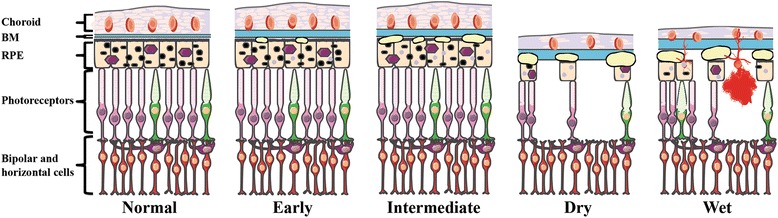
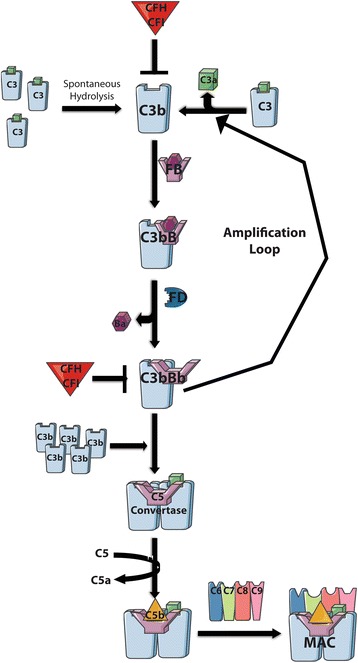
Age-related macular degeneration (AMD) is an ocular neurodegenerative disorder and is the leading cause of legal blindness in Western societies, with a prevalence of up to 8 % over the age of 60, which continues to increase with age. AMD is characterized by the progressive breakdown of the macula (the central region of the retina), resulting in the loss of central vision including visual acuity. While its molecular etiology remains unclear, advances in genetics and genomics have illuminated the genetic architecture of the disease and have generated attractive pathomechanistic hypotheses. Here, we review the genetic architecture of AMD, considering the contribution of both common and rare alleles to susceptibility, and we explore the possible mechanistic links between photoreceptor degeneration and the alternative complement pathway, a cascade that has emerged as the most potent genetic driver of this disorder.
年龄相关性黄斑变性(AMD)是一种眼部神经退行性疾病,是西方社会法定失明的主要原因,60岁以上人群中的患病率高达8%,且随着年龄的增长持续上升。AMD的特征是黄斑(视网膜的中央区域)逐渐受损,导致包括视力在内的中心视力丧失。虽然其分子病因尚不清楚,但遗传学和基因组学的进展已经阐明了该疾病的遗传结构,并提出了有吸引力的发病机制假说。在这里,我们回顾了AMD的遗传结构,考虑了常见和罕见等位基因对易感性的贡献,并探讨了光感受器变性与替代补体途径之间可能的机制联系,替代补体途径是这一疾病最有力的遗传驱动因素。