Nan Yue-Min, Su Shan-Shan, Niu Xue-Min, Zhao Su-Xian, Zhang Yu-Guo, Wang Rong-Qi, Kong Ling-Bo, He Huan, Zheng Huan-Wei, Sun Dian-Xing
Department of Traditional and Western Medical Hepatology, Third Hospital of Hebei Medical University, Shijiazhuang, China
Department of Traditional and Western Medical Hepatology, Third Hospital of Hebei Medical University, Shijiazhuang, China.
J Int Med Res. 2016 Aug;44(4):806-16. doi: 10.1177/0300060516647548. Epub 2016 Jun 21.
To investigate the regulation mechanism of T cell immunoglobulin and mucin domain-3 (Tim-3) combined with toll-like receptor 3 (TLR3) or TLR4 on antiviral immune and inflammatory response in patients with chronic hepatitis C virus (HCV) infection.
Patients with chronic HCV infection and healthy control subjects were recruited. Patients received interferon (IFN)-α based therapy. Plasma galectin-9 (Gal-9) was quantitated. Peripheral blood mononuclear cells (PBMCs) were cultured with TLR3 or TLR4 agonists, alone or in combination with Tim-3 antagonist. Levels of IFN-α, TNF-α, and 2'-5' oligoadenylate synthetase (2'-5'OAS), myxovirus resistance protein A (MxA) and suppressor of cytokine 1 (SOCS1) RNA in PBMC cultures were evaluated.
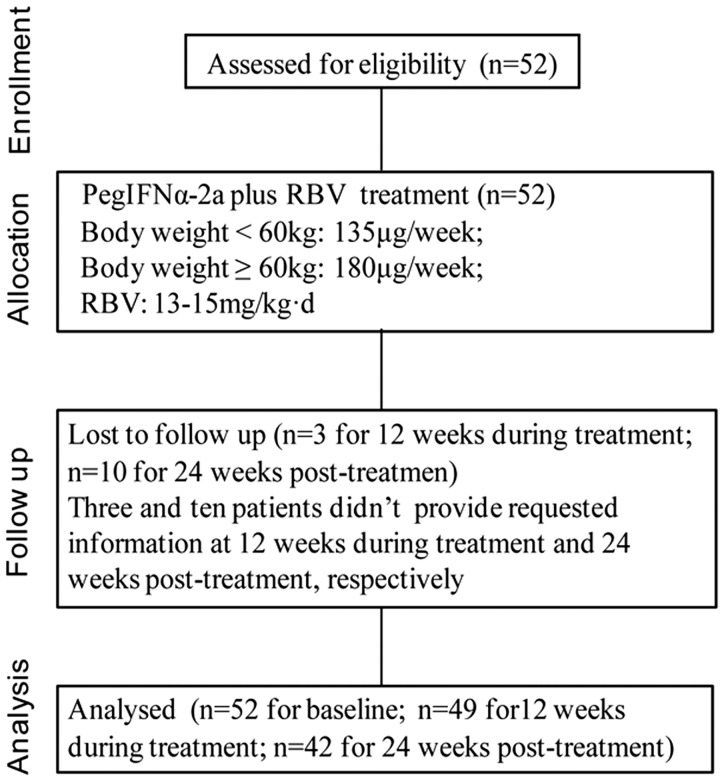
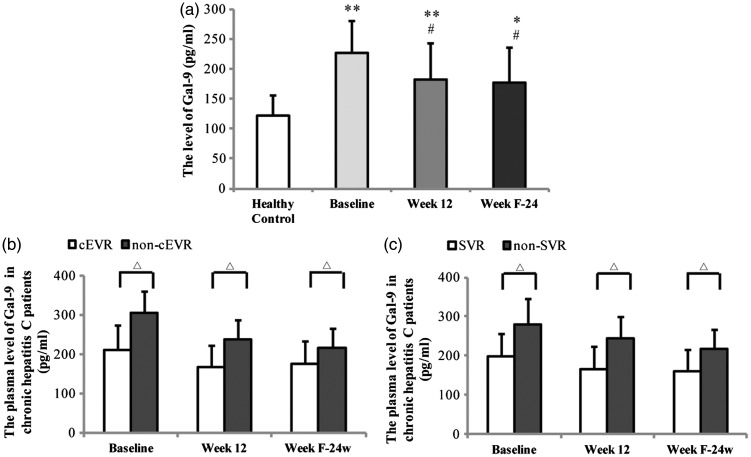
Plasma Gal-9 levels were increased in patients (n = 52) compared with controls (n = 20) and significantly declined at treatment week 12 and 24 weeks post-treatment. IFN-α, 2'-5'OAS, MxA, TNF-α and SOCS1 were upregulated by TLR3 and TLR4 agonists. TNF-α and SOCS1 levels were suppressed by the addition of Tim-3 antagonist.
Tim-3 blockade in combination with TLR activation induces the expression of antiviral molecules without a significant increase in TNF-α or SOCS1.
探讨T细胞免疫球蛋白黏蛋白结构域3(Tim-3)与Toll样受体3(TLR3)或TLR4结合对慢性丙型肝炎病毒(HCV)感染患者抗病毒免疫和炎症反应的调节机制。
招募慢性HCV感染患者和健康对照者。患者接受基于干扰素(IFN)-α的治疗。定量检测血浆半乳糖凝集素-9(Gal-9)。外周血单个核细胞(PBMC)与TLR3或TLR4激动剂单独或联合Tim-3拮抗剂培养。评估PBMC培养物中IFN-α、肿瘤坏死因子-α(TNF-α)、2'-5'寡腺苷酸合成酶(2'-5'OAS)、抗黏液病毒蛋白A(MxA)和细胞因子1抑制因子(SOCS1)RNA的水平。
与对照组(n = 20)相比,患者组(n = 52)血浆Gal-9水平升高,且在治疗后第12周和第24周显著下降。TLR3和TLR4激动剂上调IFN-α、2'-5'OAS、MxA、TNF-α和SOCS1。添加Tim-3拮抗剂可抑制TNF-α和SOCS1水平。
Tim-3阻断与TLR激活联合可诱导抗病毒分子表达,而不会显著增加TNF-α或SOCS1。