Bleyle Lisa, Huidekoper Hidde H, Vaz Frederic M, Singh Renu, Steiner Robert D, DeBarber Andrea E
BioAnalytical Shared Resource Facility, Department of Physiology & Pharmacology, Oregon Health & Science University (OHSU), Portland, OR, United States.
Department of Pediatrics, Center for Lysosomal and Metabolic Diseases, Erasmus Medical Center, Rotterdam, The Netherlands; Department of Pediatrics, Academic Medical Center, Amsterdam, The Netherlands.
Mol Genet Metab Rep. 2016 Mar 12;7:11-5. doi: 10.1016/j.ymgmr.2016.02.002. eCollection 2016 Jun.
Cerebrotendinous xanthomatosis (CTX) is a rare genetic disorder of bile acid synthesis that can cause progressive neurological damage and premature death. Detection of CTX in the newborn period would be beneficial since an effective treatment is available. We previously described a liquid chromatography-electrospray ionization-tandem mass spectrometry (LC-ESI-MS/MS) test with potential to screen newborn dried bloodspots (DBS) for CTX. We report here modifications to the methodology and application of the modified test to analysis of DBS from a CTX-affected and unaffected newborns.
The testing methodology utilizes keto derivatization to enable sensitive LC-ESI-MS/MS measurement of elevated 7α,12α-dihydroxy-4-cholesten-3-one (7α12αC4) in CTX newborn DBS. We report here method modifications, including use of a DBS extraction procedure used in newborn screening laboratories and a reduced analysis time of 2 min per sample.
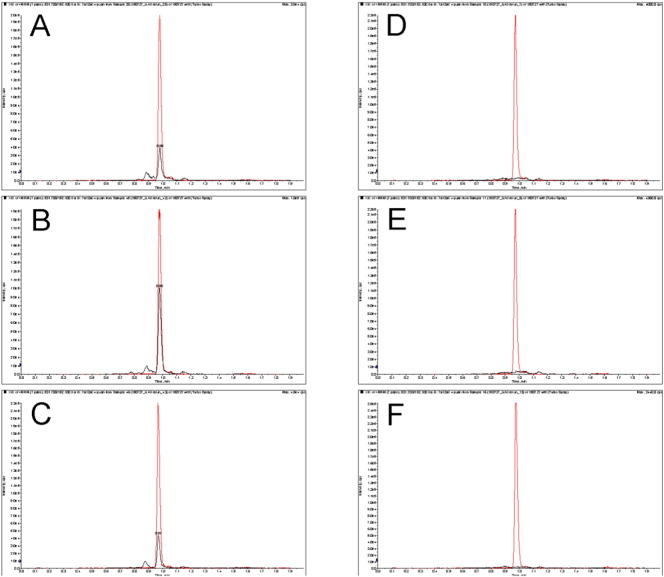
Rapid isotope-dilution LC-ESI/MS/MS quantification of the ketosterol bile acid precursor 7α12αC4 provides a test that could readily discriminate a CTX positive newborn DBS sample (with a concentration of 104.4 ng/ml) from unaffected newborn samples (with a mean concentration of 4.1 ± 3.4 ng/ml; range 0.2-15.6 ng/ml, n = 39) analyzed in a blinded manner.
We provide additional evidence suggesting 7α12αC4 may be a promising test marker to screen newborn DBS for CTX. Early detection and intervention through newborn screening would greatly benefit those affected with CTX, preventing morbidity and mortality.
脑腱黄瘤病(CTX)是一种罕见的胆汁酸合成遗传疾病,可导致进行性神经损伤和过早死亡。由于有有效的治疗方法,在新生儿期检测CTX将是有益的。我们之前描述了一种液相色谱 - 电喷雾电离 - 串联质谱(LC - ESI - MS/MS)测试,该测试有潜力用于筛查新生儿干血斑(DBS)中的CTX。我们在此报告该方法的改进以及将改进后的测试应用于分析来自CTX患病和未患病新生儿的DBS。
该测试方法利用酮衍生化,以实现对CTX新生儿DBS中升高的7α,12α - 二羟基 - 4 - 胆甾烯 - 3 - 酮(7α12αC4)进行灵敏的LC - ESI - MS/MS测量。我们在此报告方法改进,包括使用新生儿筛查实验室中使用的DBS提取程序以及将每个样品的分析时间缩短至2分钟。
对酮固醇胆汁酸前体7α12αC4进行快速同位素稀释LC - ESI/MS/MS定量分析,该测试能够轻松区分CTX阳性新生儿DBS样本(浓度为104.4 ng/ml)与以盲法分析的未患病新生儿样本(平均浓度为4.1±3.4 ng/ml;范围0.2 - 15.6 ng/ml,n = 39)。
我们提供了更多证据表明7α12αC4可能是用于筛查新生儿DBS中CTX的有前景的测试标志物。通过新生儿筛查进行早期检测和干预将极大地造福于CTX患者,预防发病和死亡。