Ha You-Jung, Choi Yong Seok, Kang Eun Ha, Shin Kichul, Kim Tae Kyun, Song Yeong Wook, Lee Yun Jong
Division of Rheumatology, Department of Internal Medicine, Seoul National University Bundang Hospital, Seongnam, Korea.
Department of Internal Medicine, Seoul National University Borame Medical Center, Seoul, Korea.
Exp Mol Med. 2016 Jun 24;48(6):e241. doi: 10.1038/emm.2016.47.
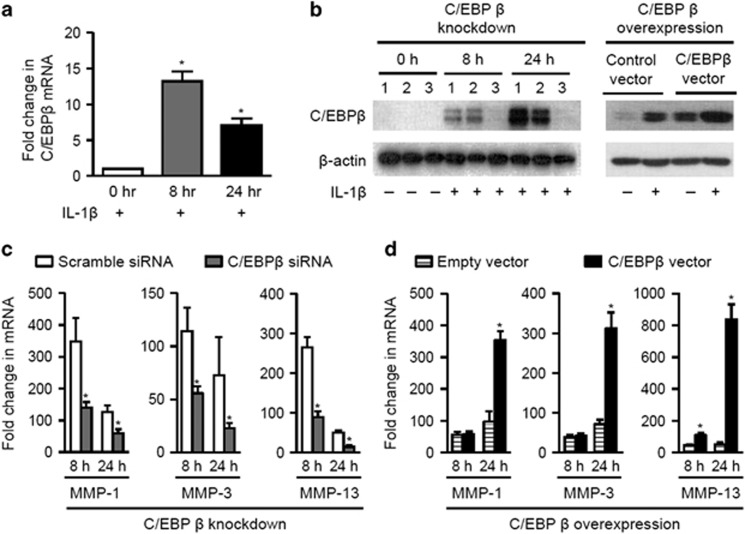
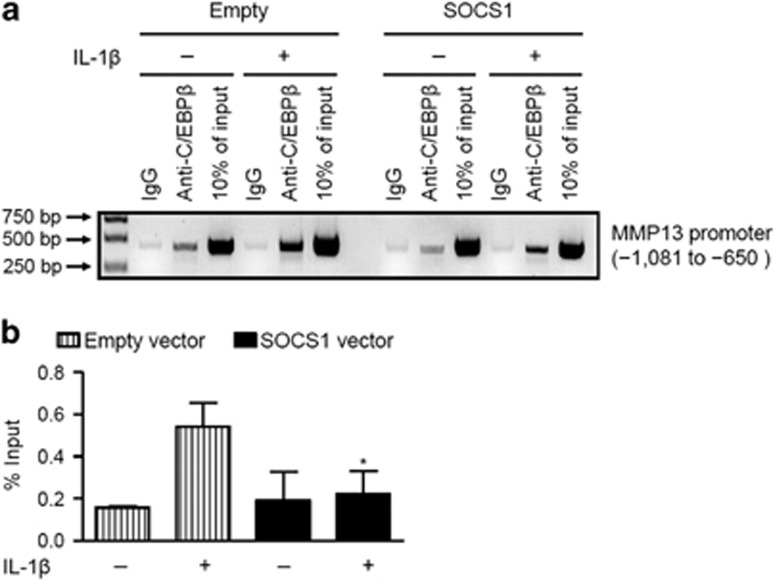
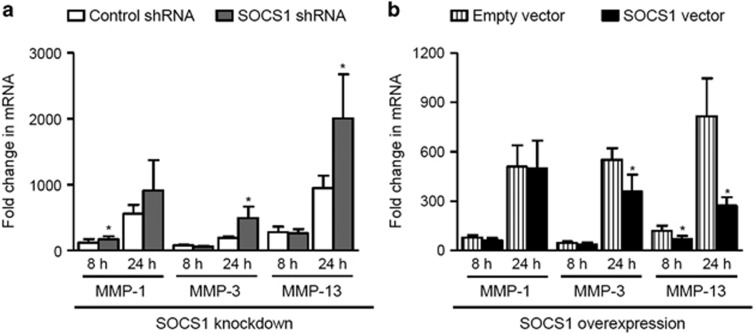
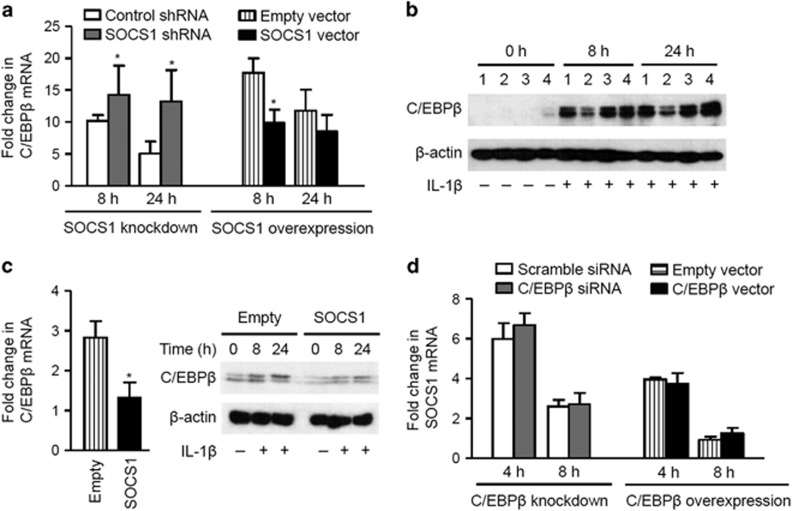
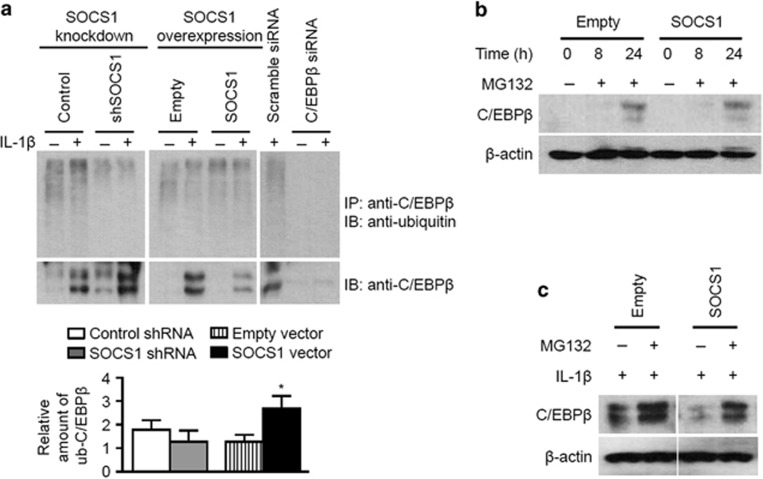
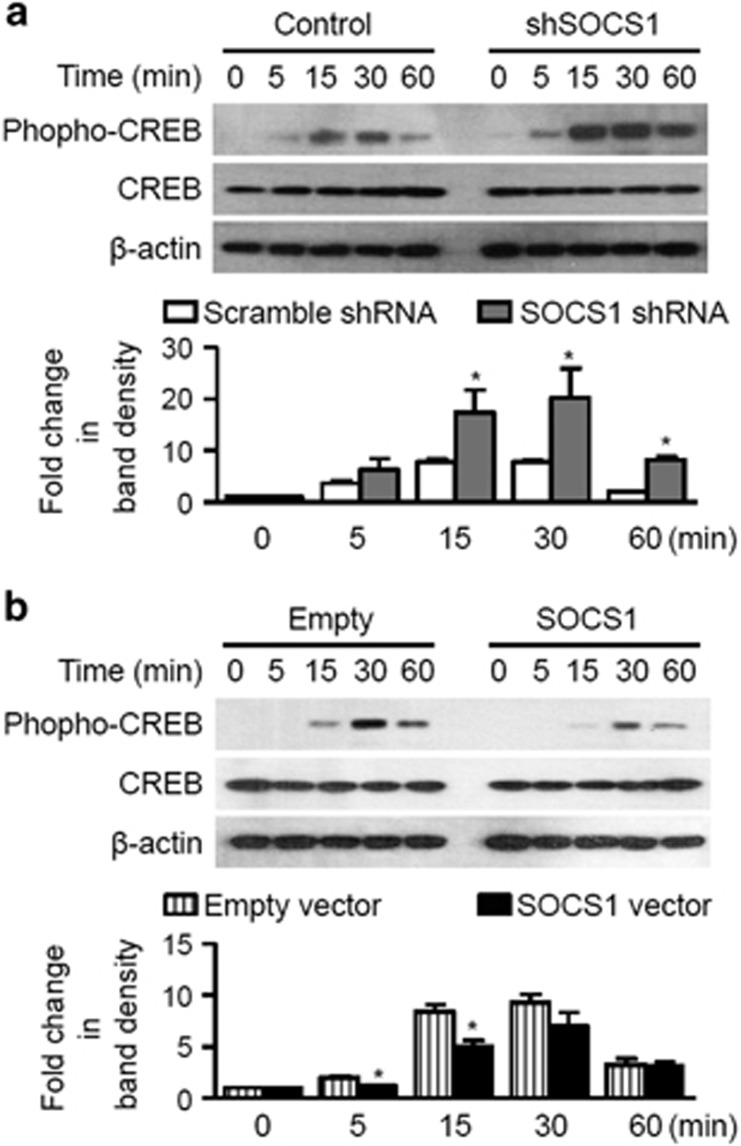
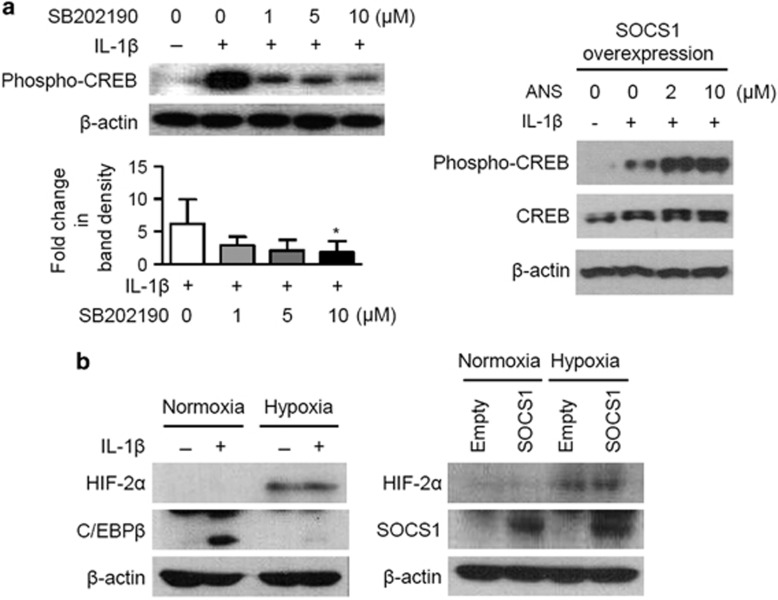
CAAT/enhancer-binding protein-beta (C/EBPβ) is a transcription factor that regulates interleukin-1β (IL-1β)-induced catabolic pathways, including the expression of matrix metalloproteinases (MMPs), in chondrocytes. We previously reported that suppressor of cytokine signaling 1 (SOCS1) inhibits IL-1β signaling in chondrocytes. However, the effect of SOCS1 on C/EBPβ has not been explored. To investigate the interaction between SOCS1 and C/EBPβ, we established human SW1353 cells with overexpression or knockdown of SOCS1 or C/EBPβ. Both SOCS1 and C/EBPβ were involved in transcription of MMP-3 and MMP-13. When stimulated with IL-1β, C/EBPβ levels were significantly increased by SOCS1 knockdown and decreased by SOCS1 overexpression. A similar change in IL-1β-induced C/EBPβ expression was observed in SOCS1-transfected human articular chondrocytes. However, C/EBPβ overexpression or knockdown did not change the levels of IL-1β-induced SOCS1. SOCS1 regulated the levels of C/EBPβ mRNA by ubiquitination of C/EBPβ as well as transcriptional regulation. Furthermore, it suppressed the phosphorylation of cAMP response element-binding protein (CREB), an active transcription factor of C/EBPβ. In addition, p38 mitogen-activated protein kinases, a target of SOCS1, was involved in CREB phosphorylation. The chromatin immunoprecipitation assay confirmed that SOCS1 overexpression led to reduced binding of C/EBPβ to the MMP-13 promoter. Taken together, our results demonstrate that SOCS1 downregulates the p38-CREB-C/EBPβ pathway resulting in increased expression of MMPs in chondrocytes.
CCAAT/增强子结合蛋白β(C/EBPβ)是一种转录因子,可调节白细胞介素-1β(IL-1β)诱导的分解代谢途径,包括软骨细胞中基质金属蛋白酶(MMPs)的表达。我们之前报道过,细胞因子信号转导抑制因子1(SOCS1)可抑制软骨细胞中的IL-1β信号传导。然而,尚未探究过SOCS1对C/EBPβ的影响。为了研究SOCS1与C/EBPβ之间的相互作用,我们建立了过表达或敲低SOCS1或C/EBPβ的人SW1353细胞系。SOCS1和C/EBPβ均参与了MMP-3和MMP-13的转录。用IL-1β刺激时,敲低SOCS1可使C/EBPβ水平显著升高,而过表达SOCS1则使其降低。在转染了SOCS1的人关节软骨细胞中也观察到IL-1β诱导的C/EBPβ表达有类似变化。然而,过表达或敲低C/EBPβ并未改变IL-1β诱导的SOCS1水平。SOCS1通过C/EBPβ的泛素化以及转录调控来调节C/EBPβ mRNA的水平。此外,它还抑制了C/EBPβ的活性转录因子——环磷酸腺苷反应元件结合蛋白(CREB)的磷酸化。另外,作为SOCS1靶点的p38丝裂原活化蛋白激酶参与了CREB的磷酸化。染色质免疫沉淀试验证实,过表达SOCS1会导致C/EBPβ与MMP-13启动子的结合减少。综上所述,我们的结果表明,SOCS1下调p38-CREB-C/EBPβ途径,导致软骨细胞中MMPs表达增加。