Tahara Shinichiro, Nojima Satoshi, Ohshima Kenji, Hori Yumiko, Kurashige Masako, Wada Naoki, Ikeda Jun-Ichiro, Morii Eiichi
Department of Pathology, Osaka University Graduate School of Medicine, Osaka, Japan.
Cancer Sci. 2016 Sep;107(9):1345-52. doi: 10.1111/cas.12999. Epub 2016 Aug 12.
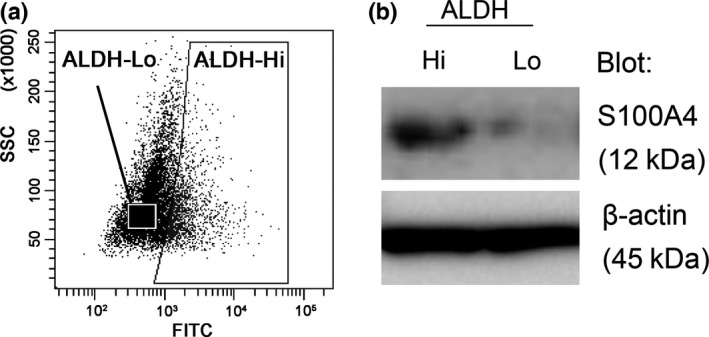
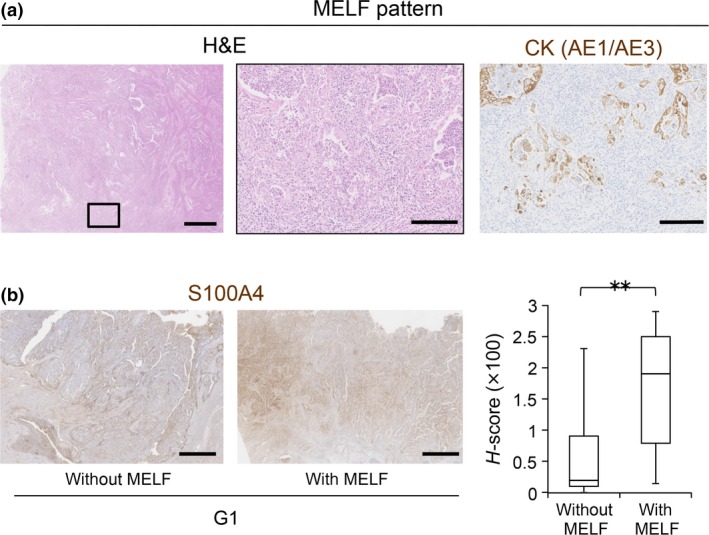
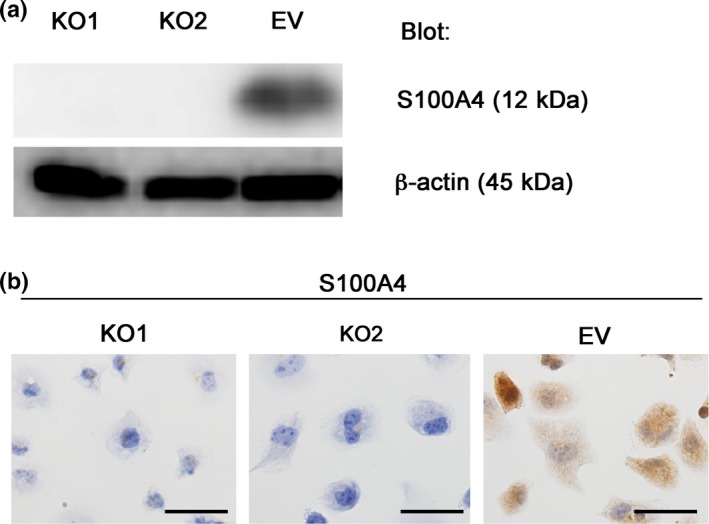
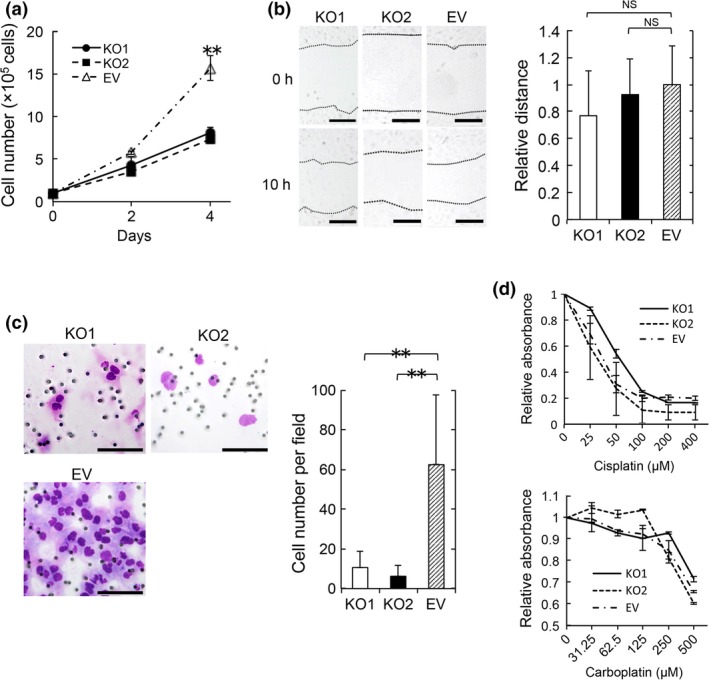
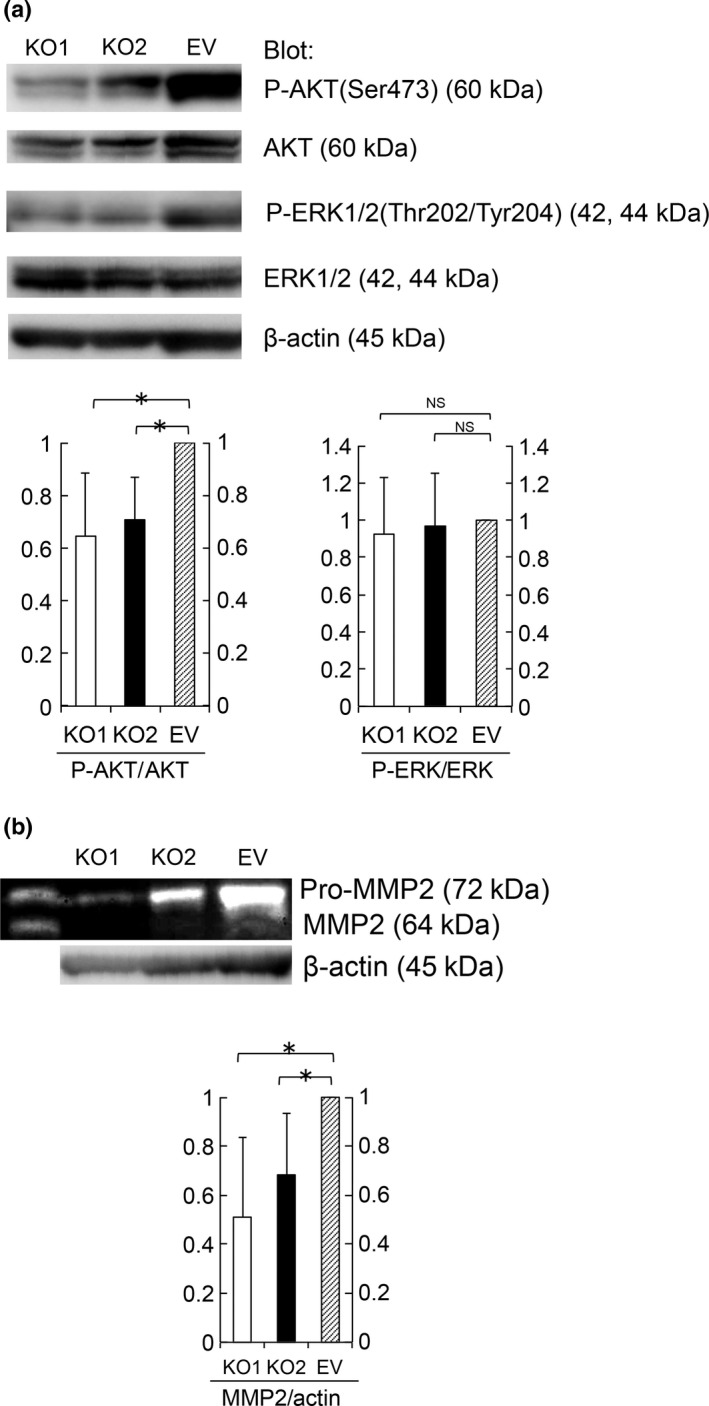
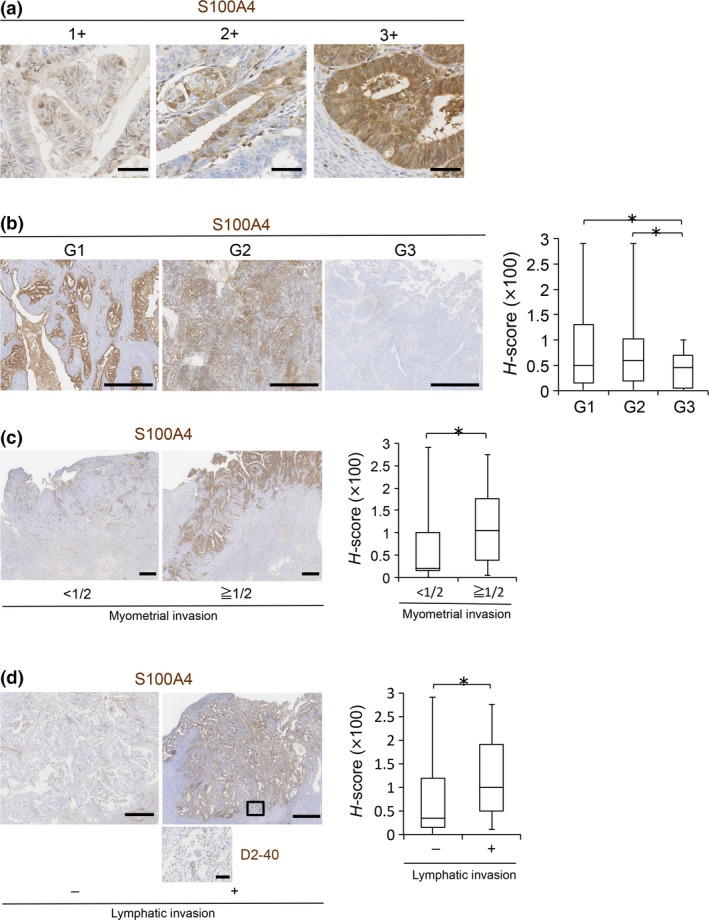
Endometrioid carcinoma (EC) is one of the most common malignancies of the female genital system. Although the behavior of EC ranges from an excellent prognosis to aggressive disease with a poor outcome, the factors that determine its diversity have not been determined. Here, we show that S100A4, a calcium-binding protein of the EF-hand type, is correlated with the proliferation and invasion ability of EC. We demonstrated previously that EC cells with high aldehyde dehydrogenase (ALDH) activity were more tumorigenic than ALDH-lo cells. Screening by shotgun proteomics demonstrated that the expression level of S100A4 in ALDH-hi EC cells was significantly higher than that in ALDH-lo cells. S100A4-knockout cells generated by the CRISPR/Cas9 system showed reduced proliferation and invasion. These cells showed impaired AKT phosphorylation and matrix metalloproteinase-2 activation, accounting for their impaired proliferation and invasion, respectively. Furthermore, in clinical EC samples, elevated expression of S100A4 was highly related to myometrial and lymphatic invasion in well to moderately differentiated EC. Notably, strong and diffuse expression of S100A4 was observed in tumor tissues with a microcystic, elongated and fragmented ("MELF") pattern, which is associated with a highly invasive EC phenotype. Collectively, our results demonstrate not only that high expression of S100A4 contributes to an aggressive phenotype of EC, but also that its elevated expression is closely related to the MELF histopathological pattern.
子宫内膜样癌(EC)是女性生殖系统最常见的恶性肿瘤之一。尽管EC的生物学行为从预后良好到侵袭性疾病且预后较差不等,但决定其多样性的因素尚未明确。在此,我们表明S100A4,一种EF手型钙结合蛋白,与EC的增殖和侵袭能力相关。我们先前证明,具有高醛脱氢酶(ALDH)活性的EC细胞比ALDH低表达细胞更具致瘤性。通过鸟枪法蛋白质组学筛选表明,S100A4在ALDH高表达EC细胞中的表达水平显著高于ALDH低表达细胞。通过CRISPR/Cas9系统产生的S100A4基因敲除细胞显示增殖和侵袭能力降低。这些细胞分别表现出AKT磷酸化受损和基质金属蛋白酶-2激活受损,这分别解释了它们增殖和侵袭能力受损的原因。此外,在临床EC样本中,S100A4表达升高与高分化至中分化EC的肌层浸润和淋巴浸润高度相关。值得注意的是,在具有微囊状、细长和碎片化(“MELF”)模式的肿瘤组织中观察到S100A4的强弥漫性表达,这与高度侵袭性的EC表型相关。总之,我们的结果不仅表明S100A4的高表达促成了EC的侵袭性表型,而且其表达升高与MELF组织病理学模式密切相关。