Liu W, Wang J, Wang L, Qian C, Qian Y, Xuan H, Zhuo W, Li X, Yu J, Si J
Department of Gastroenterology, Sir Run Run Shaw Hospital, Zhejiang University, Hangzhou, China.
Institute of Gastroenterology, Zhejiang University, Hangzhou, China.
Oncogenesis. 2016 Jun 27;5(6):e237. doi: 10.1038/oncsis.2016.24.
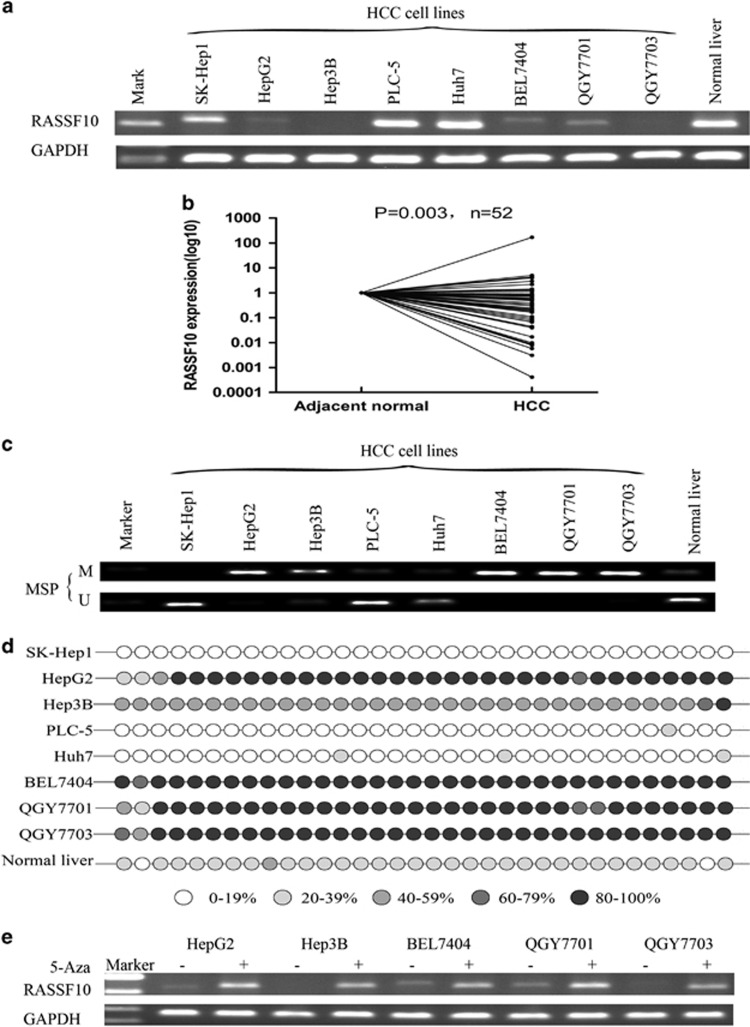
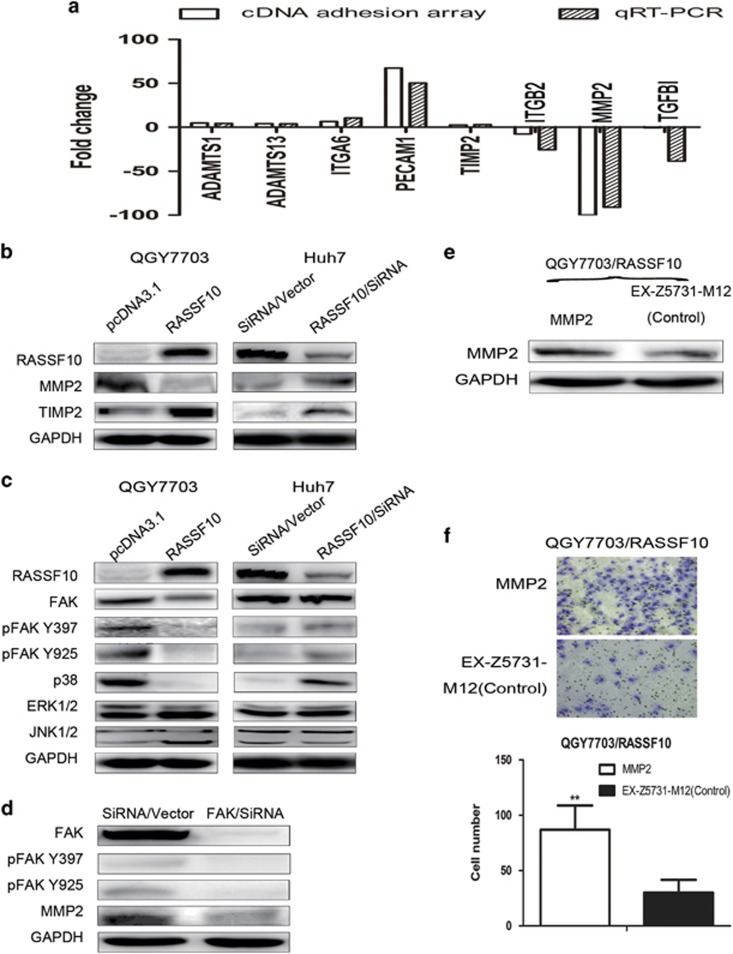
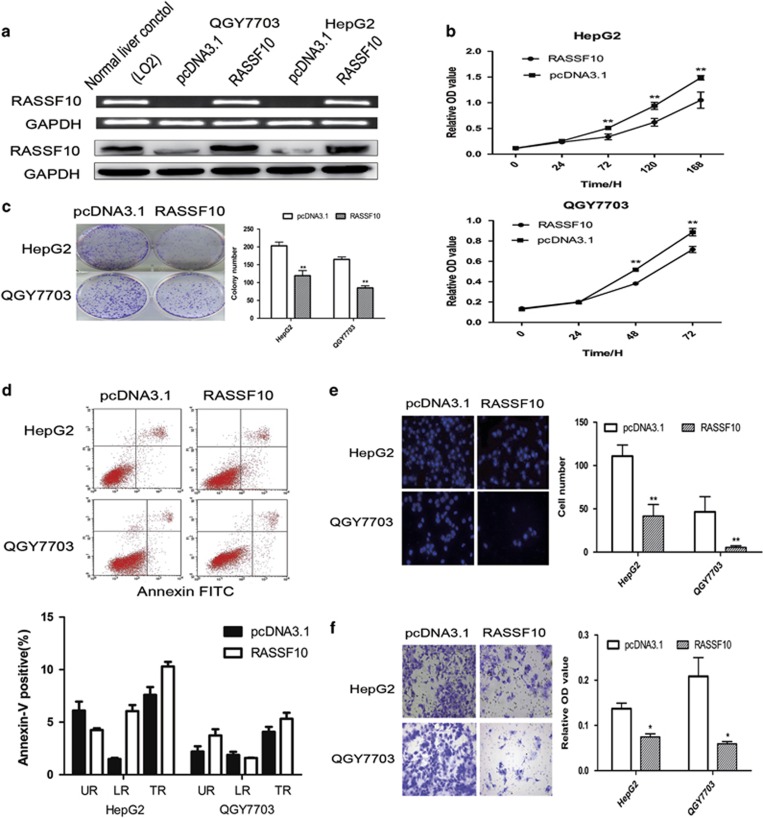
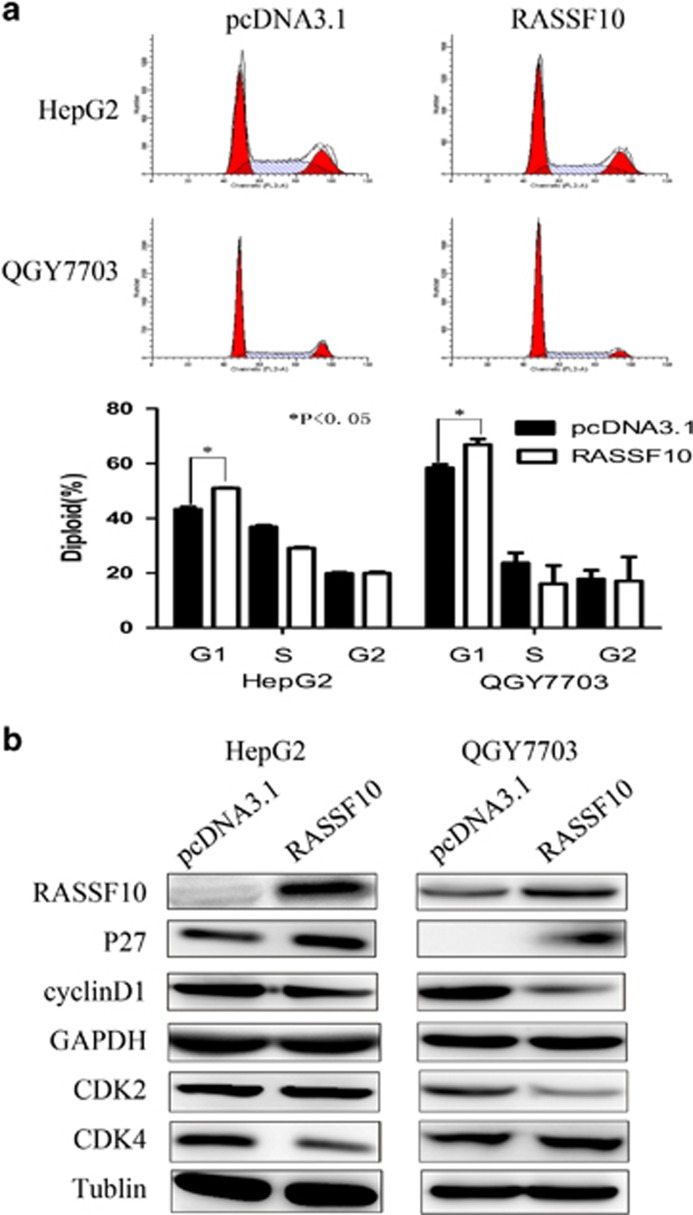
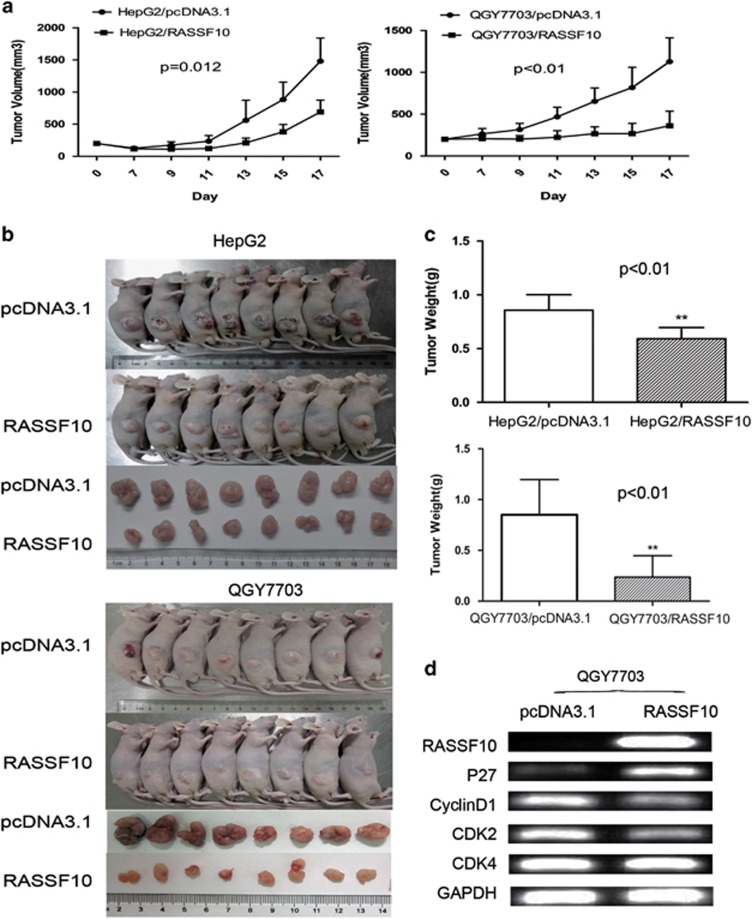
Ras-Association Domain Family 10 (RASSF10) is the last identified member of the RASSF family. The functional characteristics of this new gene in human cancers remain largely unclear. Here, we examined RASSF10 for the biological functions and related molecular mechanisms in hepatocellular carcinoma (HCC). We found that RASSF10 is expressed in normal human liver tissue, but is silenced or down-regulated in 62.5% (5/8) of HCC cell lines. The mean expression level of RASSF10 was significantly lower in primary HCCs compared with their adjacent normal tissues (P<0.005, n=52). The promoter methylation contributes to the inactivation of RASSF10 as demonstrated by bisulfite genomic sequencing and demethylation treatment analyses. Transgenic expression of RASSF10 in silenced HCC cell lines suppressed cell viability, colony formation and inhibited tumor growth in nude mice (QGY7703, P<0.01; HepG2, P<0.05). Furthermore, RASSF10 was shown to induce the cell accumulation in G1 phase with the increase of p27, as well as the decrease of cyclinD1 and CDK2/CDK4. Over-expression of RASSF10 also inhibited HCC cells migration (P<0.01) or invasion (P<0.05). Adhesion genes array revealed that Matrix Metalloproteinase 2 (MMP2) was a downstream effector of RASSF10. RASSF10 acting as a tumor suppressor to inhibit HCC invasion partially mediated by Focal Adhesion Kinase or p38 MAPK to decrease the accumulation of MMP2. Our study suggests that RASSF10 acts as a tumor suppressor for HCC.
Ras 关联结构域家族 10(RASSF10)是 RASSF 家族中最后被鉴定出的成员。该新基因在人类癌症中的功能特性在很大程度上仍不清楚。在此,我们研究了 RASSF10 在肝细胞癌(HCC)中的生物学功能及相关分子机制。我们发现 RASSF10 在正常人类肝脏组织中表达,但在 62.5%(5/8)的 HCC 细胞系中沉默或下调。与相邻正常组织相比,原发性 HCC 中 RASSF10 的平均表达水平显著降低(P<0.005,n = 52)。亚硫酸氢盐基因组测序和去甲基化处理分析表明,启动子甲基化导致 RASSF10 失活。RASSF10 在沉默的 HCC 细胞系中的转基因表达抑制了细胞活力、集落形成,并抑制了裸鼠肿瘤生长(QGY7703,P<0.01;HepG2,P<0.05)。此外,RASSF10 显示随着 p27 的增加以及细胞周期蛋白 D1 和 CDK2/CDK4 的减少,诱导细胞在 G1 期积累。RASSF10 的过表达也抑制了 HCC 细胞的迁移(P<0.01)或侵袭(P<0.05)。黏附基因阵列显示基质金属蛋白酶 2(MMP2)是 RASSF10 的下游效应物。RASSF10 作为肿瘤抑制因子抑制 HCC 侵袭,部分是通过粘着斑激酶或 p38 MAPK 介导,以减少 MMP2 的积累。我们的研究表明 RASSF10 作为 HCC 的肿瘤抑制因子发挥作用。