Kraus Shane W, Martino Steve, Potenza Marc N
Department of Psychology, Bowling Green State University , Bowling Green, OH, USA.
VISN 1 New England MIRECC, VA Connecticut Healthcare System , West Haven, CT, USA.
J Behav Addict. 2016 Jun;5(2):169-78. doi: 10.1556/2006.5.2016.036. Epub 2016 Jun 27.
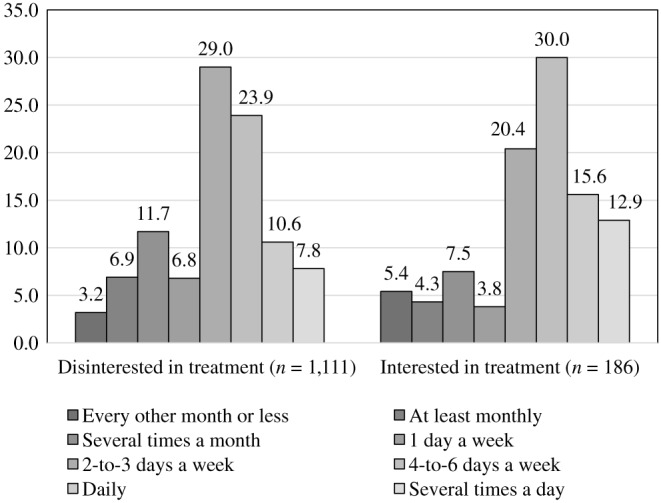
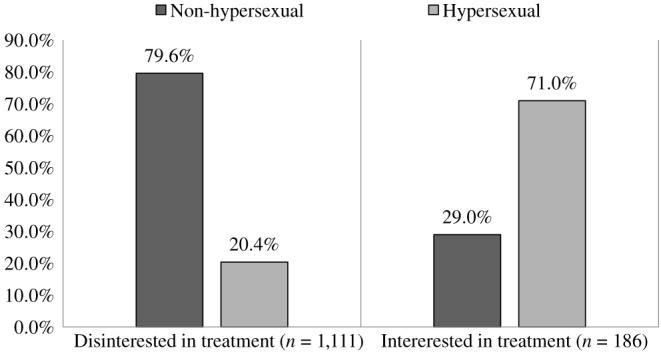
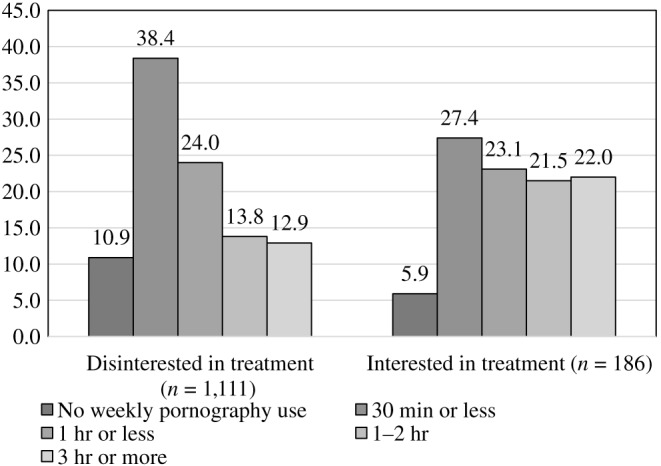
Background and aims This study examined the prevalence of, and factors associated with, men's interest in seeking treatment for use of pornography. Methods Using an Internet-based data-collection procedure, we recruited 1,298 male pornography users to complete questionnaires assessing demographic and sexual behaviors, hypersexuality, pornography-use characteristics, and current interest in seeking treatment for use of pornography. Results Approximately 14% of men reported an interest in seeking treatment for use of pornography, whereas only 6.4% of men had previously sought treatment for use of pornography. Treatment-interested men were 9.5 times more likely to report clinically significant levels of hypersexuality compared with treatment-disinterested men (OR = 9.52, 95% CI = 6.72-13.49). Bivariate analyses indicated that interest-in-seeking-treatment status was associated with being single/unmarried, viewing more pornography per week, engaging in more solitary masturbation in the past month, having had less dyadic oral sex in the past month, reporting a history of seeking treatment for use of pornography, and having had more past attempts to either "cut back" or quit using pornography completely. Results from a binary logistic regression analysis indicated that more frequent cut back/quit attempts with pornography and scores on the Hypersexual Behavior Inventory - Control subscale were significant predictors of interest-in-seeking-treatment status. Discussion and conclusions Study findings could be used to inform current screening practices aimed at identifying specific aspects of sexual self-control, impulsivity, and/or compulsivity associated with problematic use of pornography among treatment-seeking individuals.
背景与目的 本研究调查了男性寻求色情制品使用治疗的患病率及相关因素。方法 通过基于网络的数据收集程序,我们招募了1298名男性色情制品使用者,以完成评估人口统计学和性行为、性亢进、色情制品使用特征以及当前寻求色情制品使用治疗兴趣的问卷。结果 约14%的男性表示有兴趣寻求色情制品使用治疗,而只有6.4%的男性曾因色情制品使用寻求过治疗。与对治疗不感兴趣的男性相比,对治疗感兴趣的男性报告临床上显著的性亢进水平的可能性高9.5倍(OR = 9.52,95% CI = 6.72 - 13.49)。双变量分析表明,寻求治疗的兴趣状态与单身/未婚、每周观看更多色情制品、在过去一个月内进行更多的独自手淫、在过去一个月内进行更少的双方口交、报告有过因色情制品使用寻求治疗的历史以及过去有更多“减少”或完全戒掉色情制品使用的尝试有关。二元逻辑回归分析结果表明,更频繁的减少/戒掉色情制品使用尝试以及性亢进行为量表 - 控制子量表得分是寻求治疗兴趣状态的显著预测因素。讨论与结论 研究结果可用于为当前旨在识别与寻求治疗个体中色情制品使用问题相关的性自我控制、冲动性和/或强迫性特定方面的筛查实践提供信息。