Atzaba-Poria Naama, Deater-Deckard Kirby, Bell Martha Ann
Ben-Gurion University of the Negev.
Virginia Tech.
Child Dev. 2017 Mar;88(2):544-554. doi: 10.1111/cdev.12583. Epub 2016 Jun 29.
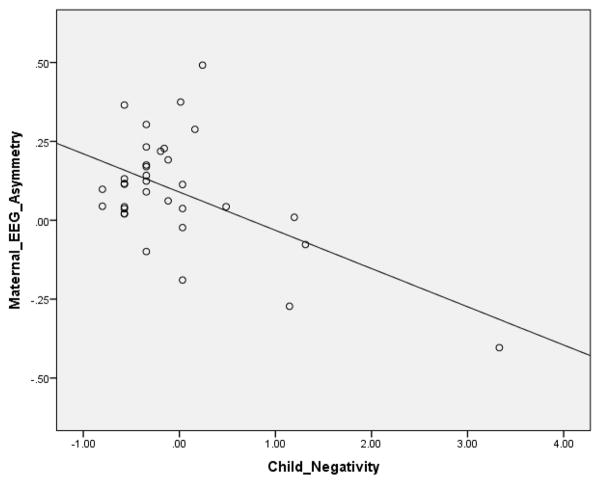
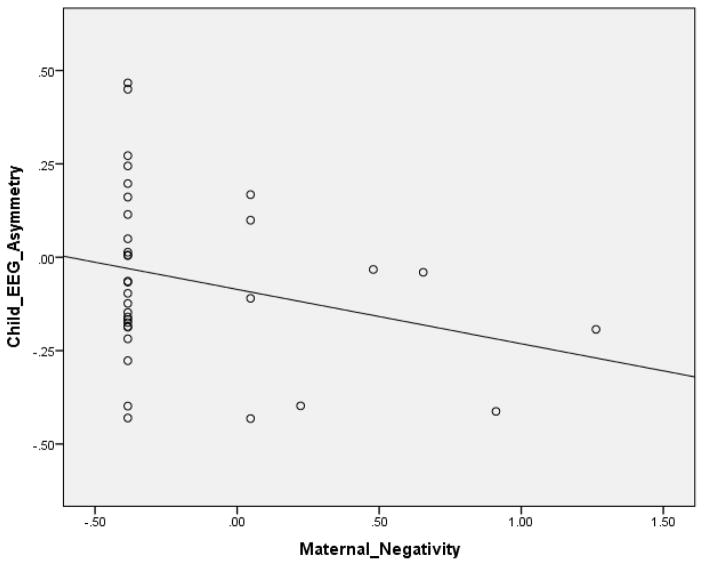
It is well accepted that parent-child interactions are bidirectional by nature, yet not much is known about the psychophysiological activity underlying these interactions. This study examined, during a parent-child interaction, how a child's negativity statistically predicted maternal frontal electroencephalograph (EEG) asymmetry and how a mother's negativity statistically predicted child frontal EEG asymmetry. Thirty-four mother-child dyads participated in the study. Maternal and child behaviors and physiology were measured during a puzzle task. Results indicated that mothers whose children exhibited more challenging behaviors during the dyadic interaction displayed more right (relative to left) asymmetry, as did children whose mothers were high in negativity during the interaction. These findings suggest that mothers and children react to each other's signals not only behaviorally but also physiologically.
亲子互动本质上是双向的,这一点已被广泛接受,但对于这些互动背后的心理生理活动却知之甚少。本研究在亲子互动过程中,考察了儿童的消极情绪如何通过统计学方法预测母亲额叶脑电图(EEG)不对称性,以及母亲的消极情绪如何通过统计学方法预测儿童额叶EEG不对称性。34对母婴参与了这项研究。在拼图任务中测量了母亲和孩子的行为及生理状况。结果表明,在二元互动中孩子表现出更多挑战性行为的母亲,以及在互动中消极情绪较高的母亲所生的孩子,都表现出更多的右侧(相对于左侧)不对称性。这些发现表明,母亲和孩子不仅在行为上,而且在生理上都会对彼此的信号做出反应。